













Reducing Lost Containers in Yards – The Role of Computer Vision

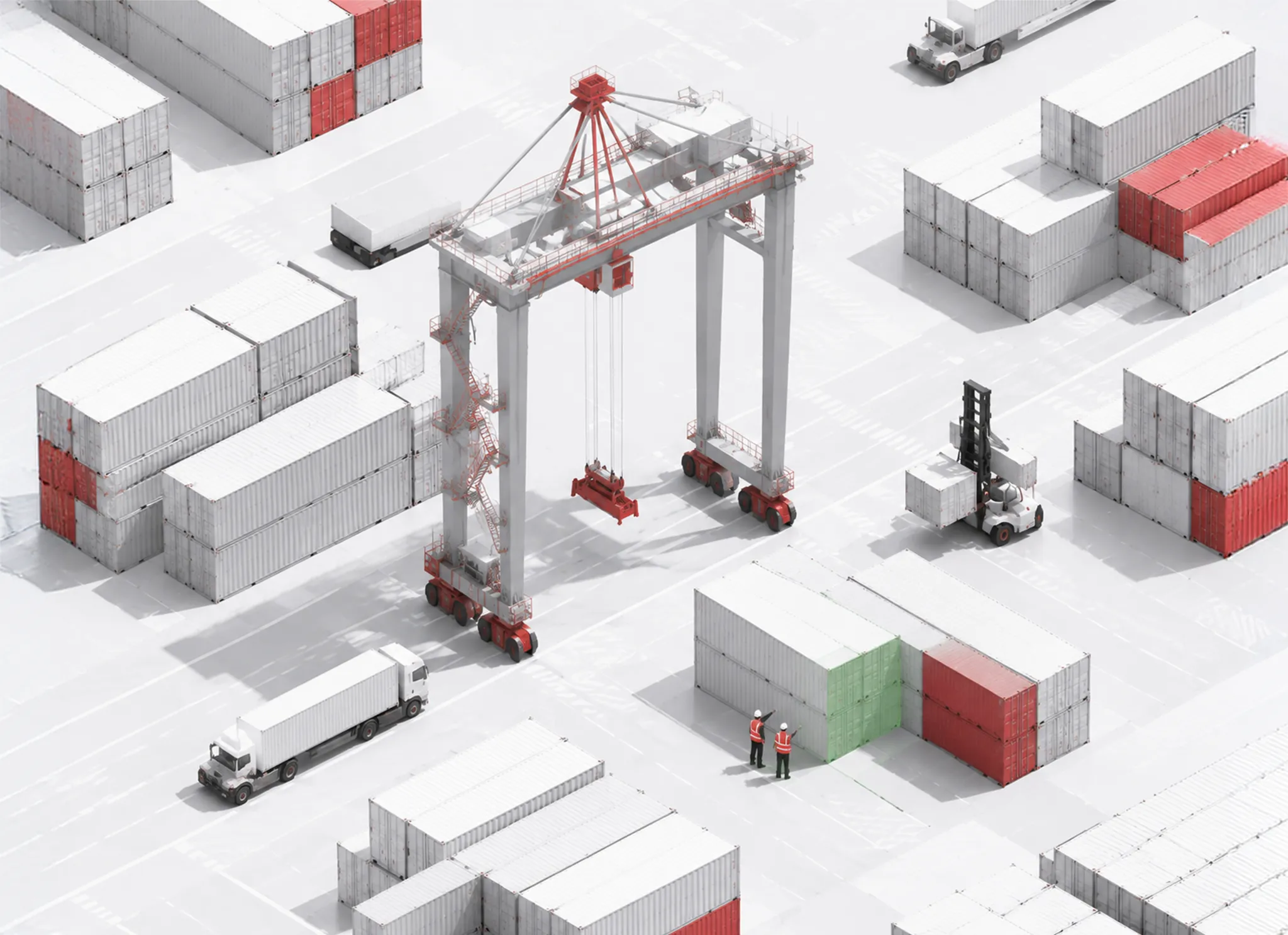
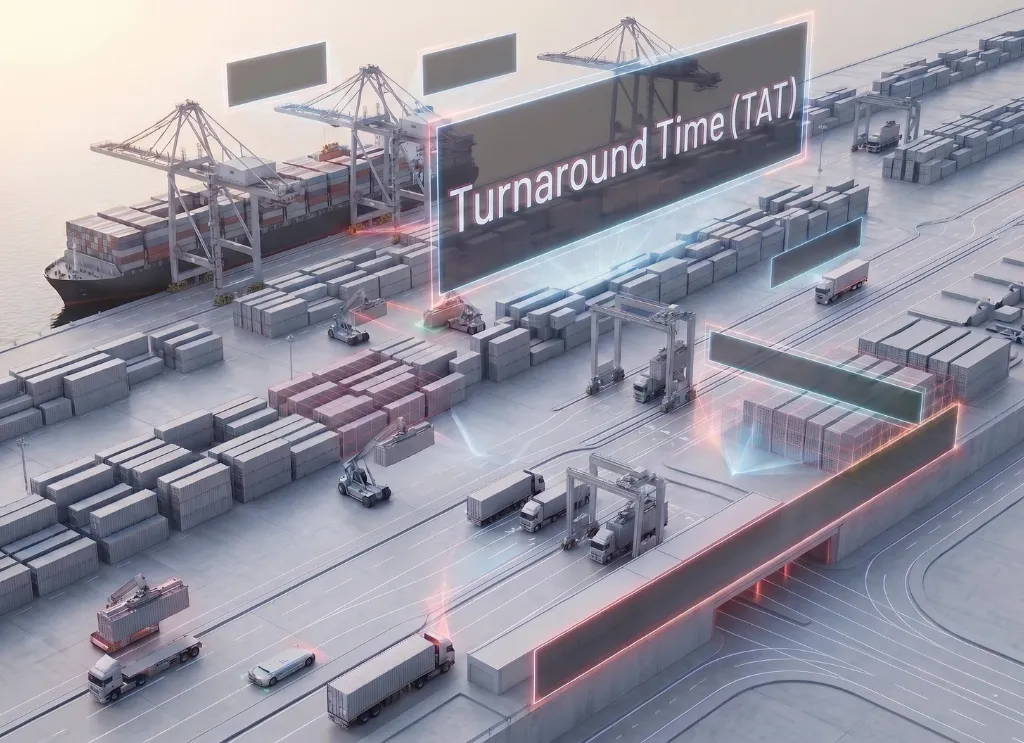
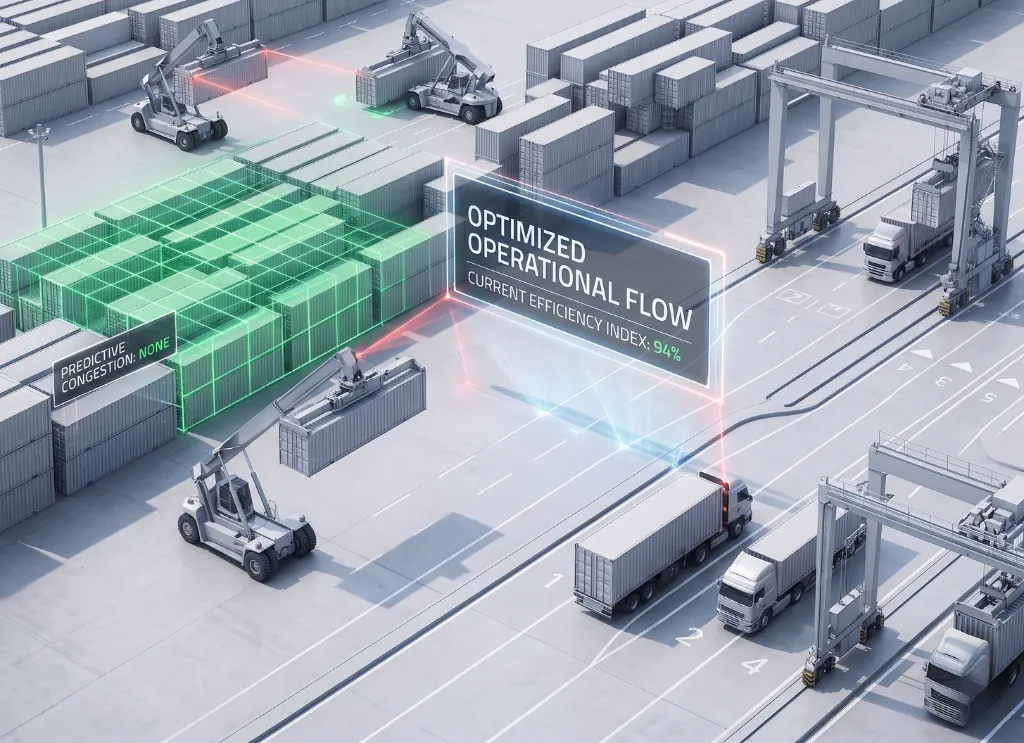
Modern container ports handle immense volumes of cargo, moving millions of containers through their yards each year. Amid this scale, even a tiny fraction of misplaced containers can cause significant operational losses. A lost container in the yard, typically one put in the wrong slot or recorded incorrectly, can cause shipping delays, extra labor, and economic losses.

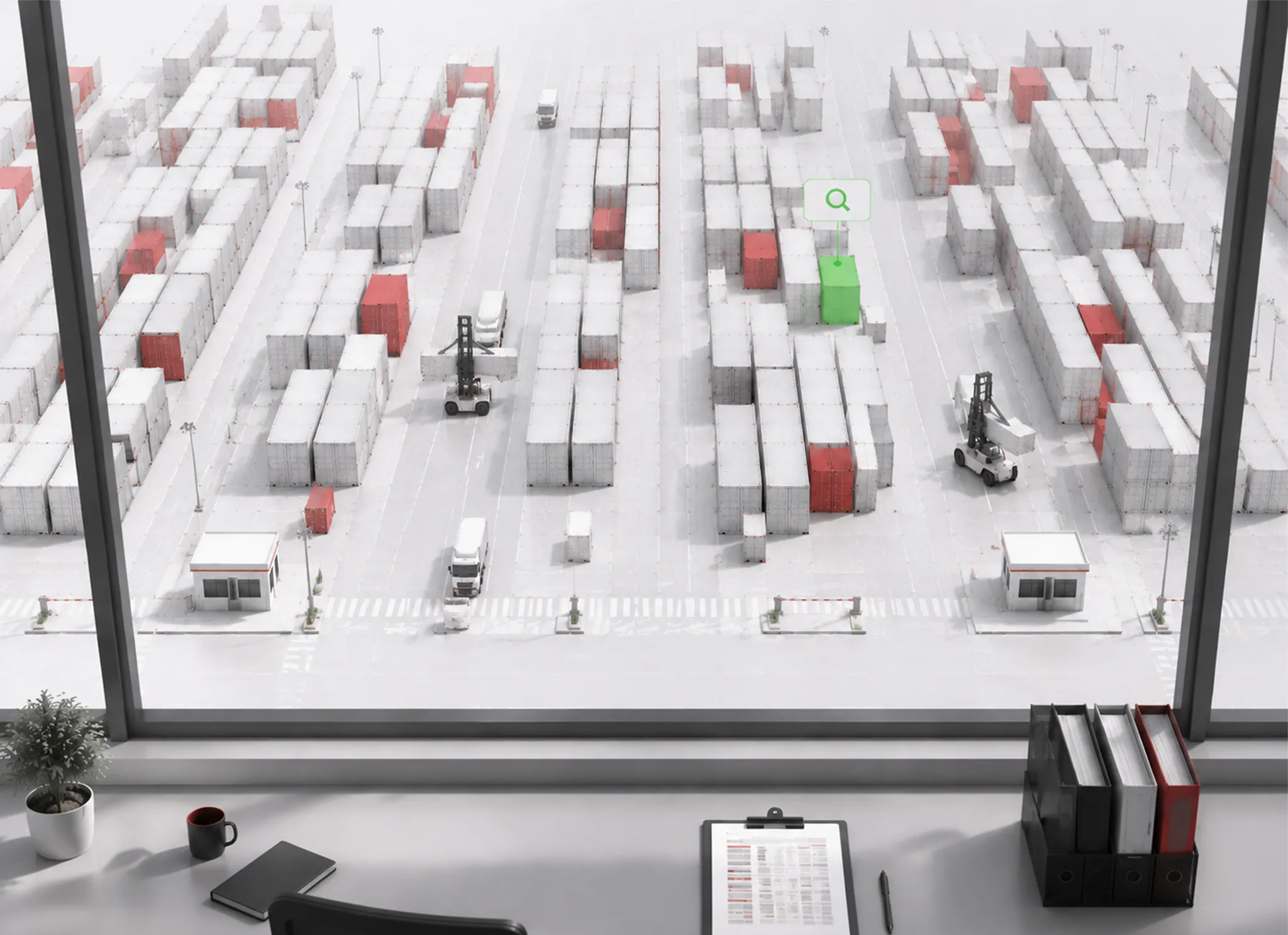
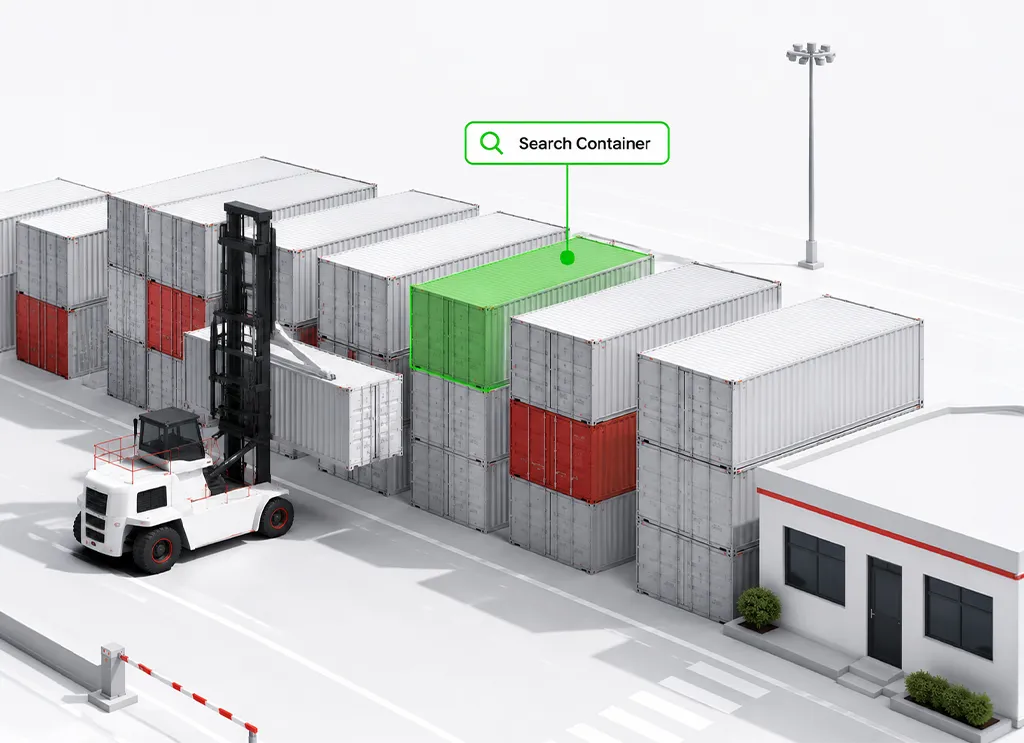
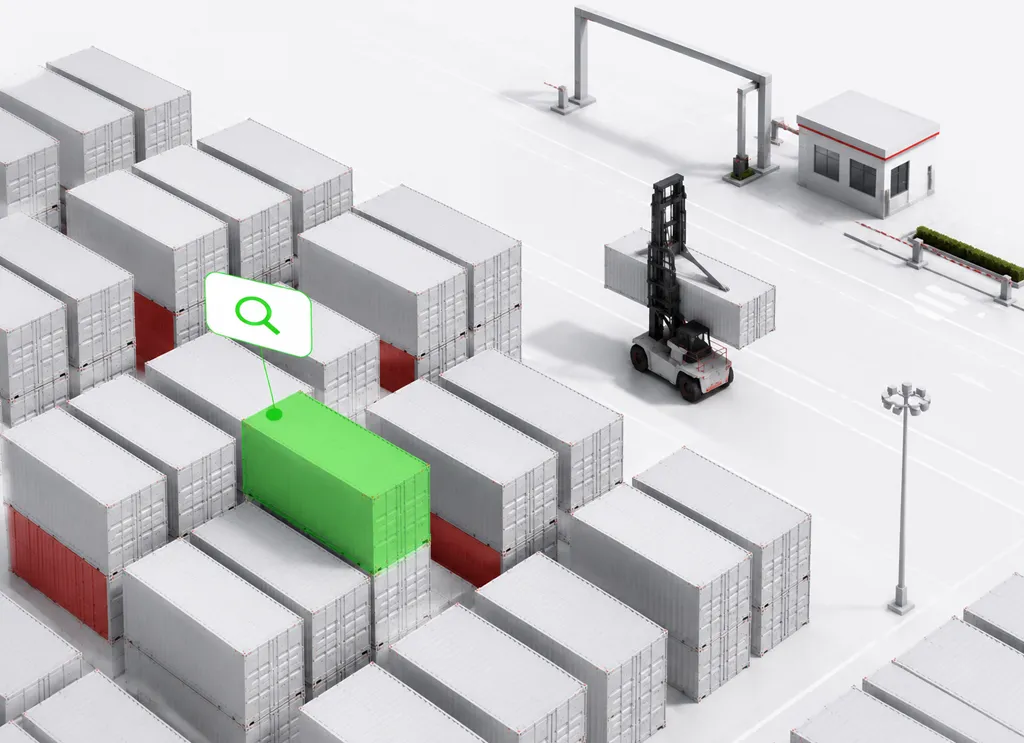
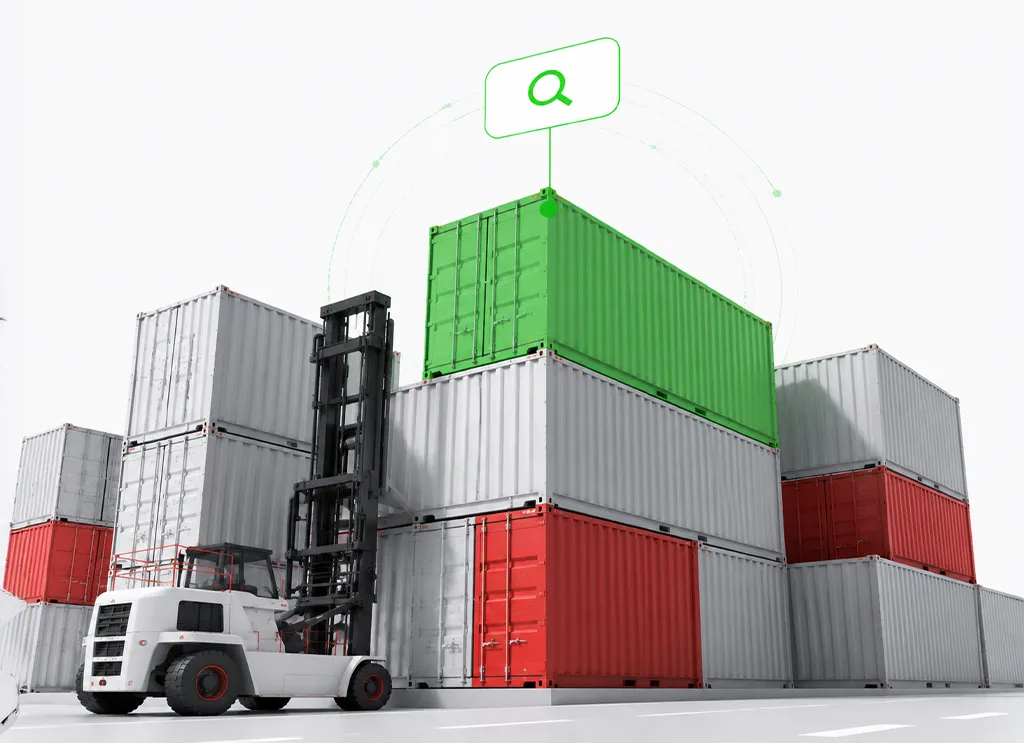
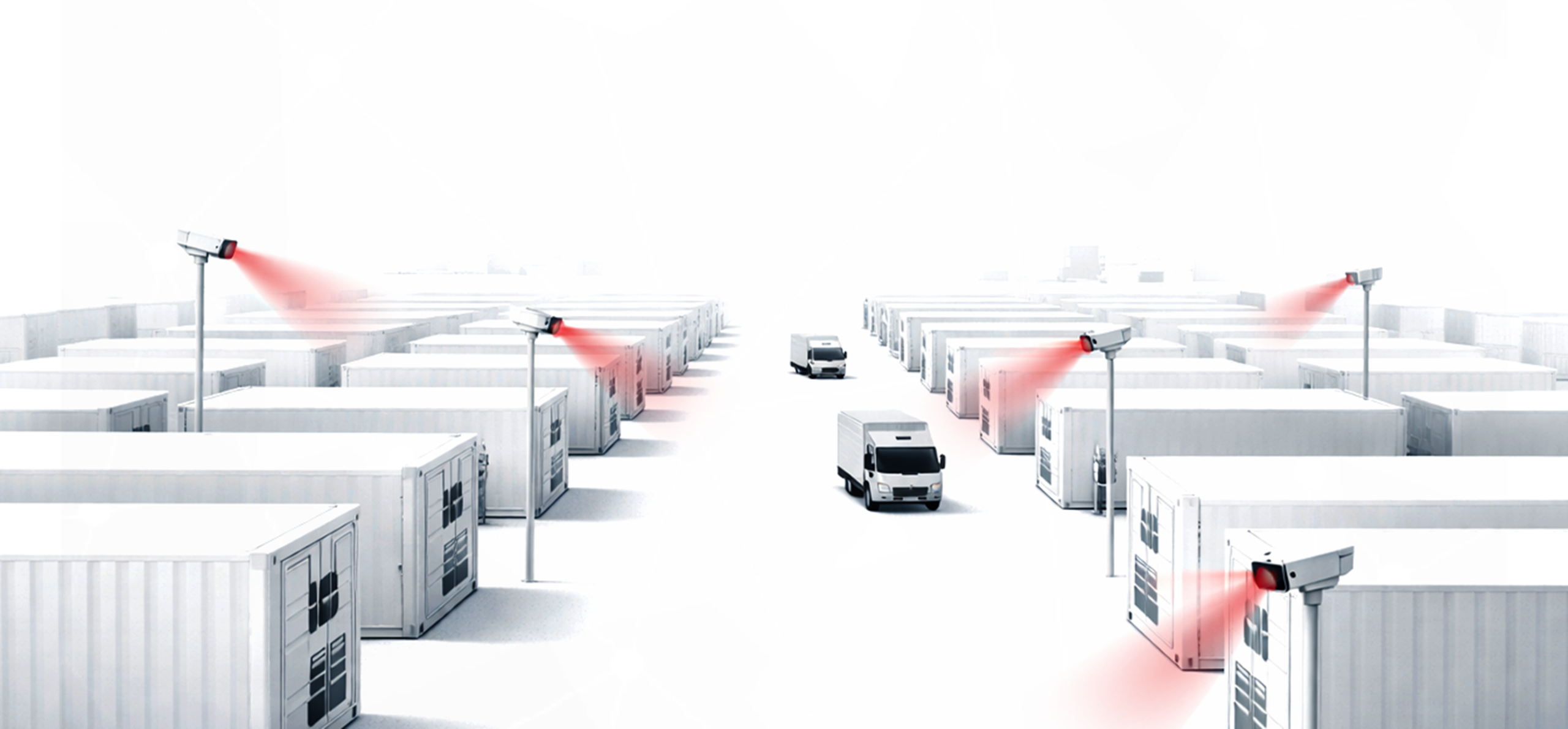
In this blog, we explore how computer vision technologies, especially AI-powered cameras mounted on container handling equipment like Kalmars, are reducing container misplacement in port yards.

The Hidden Cost of Misplaced Containers in Port Yards

In the fast-paced port yard, misplaced containers are more common than one might think. If inventory accuracy even slips by a tenth of a percent, the impact is huge at scale.

For instance, the worlds busiest port, Shanghai, handled about 47.3 million TEU in 2022, if just 0.1% of those containers were lost or mis-placed, that would mean over 47,000 containers missing in a year. Each misplaced container is not just a needle in a haystack, its like a domino that can disrupt operations.

When a container isnt where the manual system thinks it is, cranes and trucks are forced to wait, reducing productivity. In worst cases, a vessel may have to depart without loading a container that cant be located in time, a costly failure in customer service.

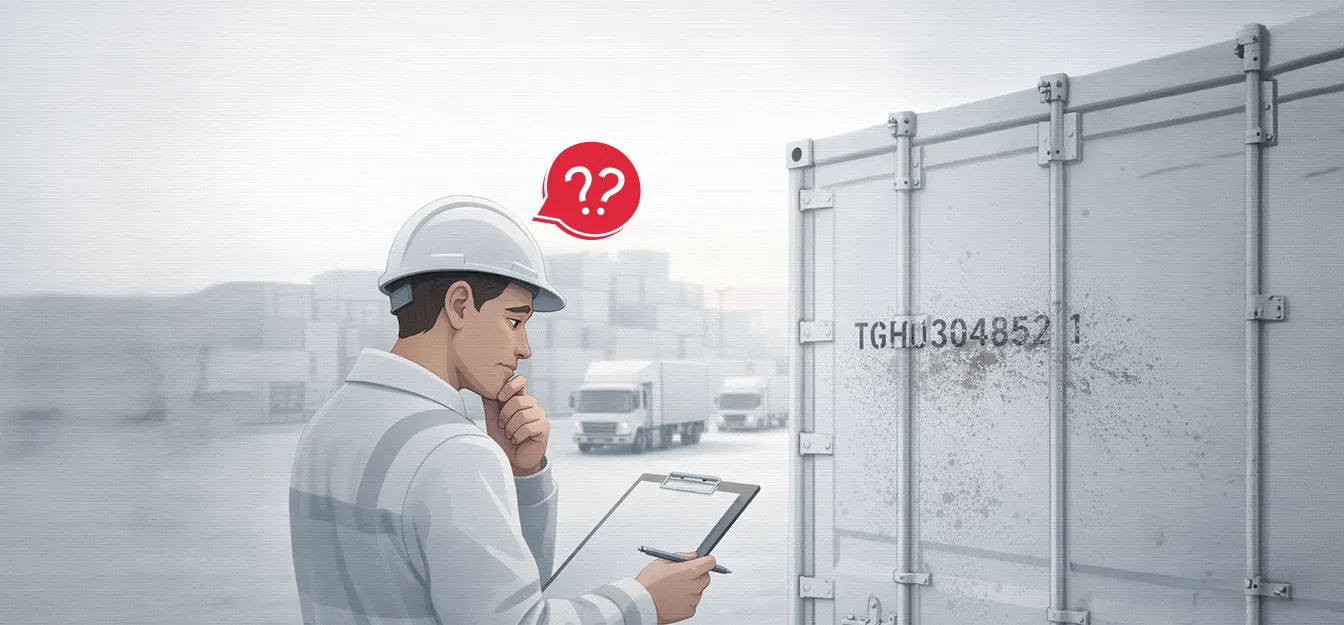
Misplaced containers trigger a snowball effect in the yard. It often starts with a simple logging error: a driver might place a container in the wrong slot and hit OK on the terminal operating system, unaware of the mistake. The TOS now has incorrect location data. When another container is later assigned to that same slot (unaware its already occupied), the driver finds it blocked and must improvise, perhaps putting the container in an alternate spot.

If they dont report this deviation, one misplaced container leads to others, as each subsequent move happens into further exceptions. Over time, such floating containers, present in the yard but not where theyre supposed to be, accumulate, decreasing yard inventory accuracy.

ai-computer-vision-container-tracking

Challenges of Traditional Yard Management

Why do containers get misplaced in the first place? Traditional yard management face several challenges that open the door to human error and chaos:

  • Manual Record-Keeping : In many yards, especially historically, container locations were logged by pen and paper or later via handheld devices. This is slow and prone to mistakes. Writing down or manually keying in container numbers can lead to transcription errors and illegible notes. Manual processes have high error rates, and misidentified or missed entries can lead to misplaced containers and billing errors.
  • Complex Yard Operations : A busy terminal is a maze of thousands of containers stacked high, with dozens of handling machines working under tight time windows. Under such pressure, even well-trained drivers can make mistakes. If guidance systems are outdated or reliant on memory and paperwork, the entire placement decision rests on the driver. They might inadvertently put the right container in the wrong place or the wrong container in the right place when rushed.
  • Communication Gaps : Yard teams include crane operators, equipment drivers, and ground staff, sometimes from multiple companies. Miscommunication or lack of real-time updates can result in containers being taken to a different block than intended. If one move isnt immediately reflected in the TOS, subsequent moves might conflict. Containers can effectively vanish from the systems view due to these unlogged shuffles.
  • Outdated Tracking Technology : Many ports still lack precise real-time positioning for yard equipment and containers. Without GPS or RFID-based tracking, the TOS relies solely on driver inputs for container positions. If a driver hits the confirm key at the wrong location, the system is none the wiser.

In summary, traditional yard management is a juggling act of people and machines with limited technology support.

Consequences of a Misplaced Container

When a container goes missing in the yard, the consequences reverberate through port operations and beyond:

  • Delayed Ship Operations : If a container scheduled for loading cant be found in the yard, the loading sequence is disrupted. In a worst-case scenario, if the container isnt found in a reasonable time, the ship may depart without it. That container then has to catch a later vessel, delaying its cargo delivery by days or weeks.
  • Yard Rehandles : A single misplacement often forces additional unplanned moves. Suppose container A was wrongly left in slot X. When another container B is supposed to go to X, the driver finds A already there. Now the driver must find a temporary home for B. Perhaps B goes to slot Y. But slot Y was meant for container C, and so on. This means multiple containers end up in wrong locations. Each extra rehandle not only wastes fuel and time but increases risk of equipment wear-and-tear or accidents.
  • Truck and Rail Disruptions : Ports are tightly integrated with truck schedules and sometimes rail timetables. If an import container cannot be located when a trucker arrives for pickup, that truck may have to wait hours or leave empty. Likewise, a container intended for an outgoing train might miss its slot, affecting inland logistics.
  • Labor and Resource Drain : When a box is lost, the terminal launches an intensive search operation. This could involve yard supervisors, equipment operators, and even security teams combing through stacks. As one solution provider described, without automated tracking, locating a container among tens of thousands can take days, whereas knowing its last known position turns a search into a simple pickup.
  • Security and Safety Risks : Initially, a misplaced container is an operational problem, but it can escalate to a security concern. If a container truly cannot be found, terminals must consider theft or smuggling possibilities. They will notify authorities, check if the box left the premises, or if its contents pose a risk.

Computer Vision – A Game-Changer for Yard Operations

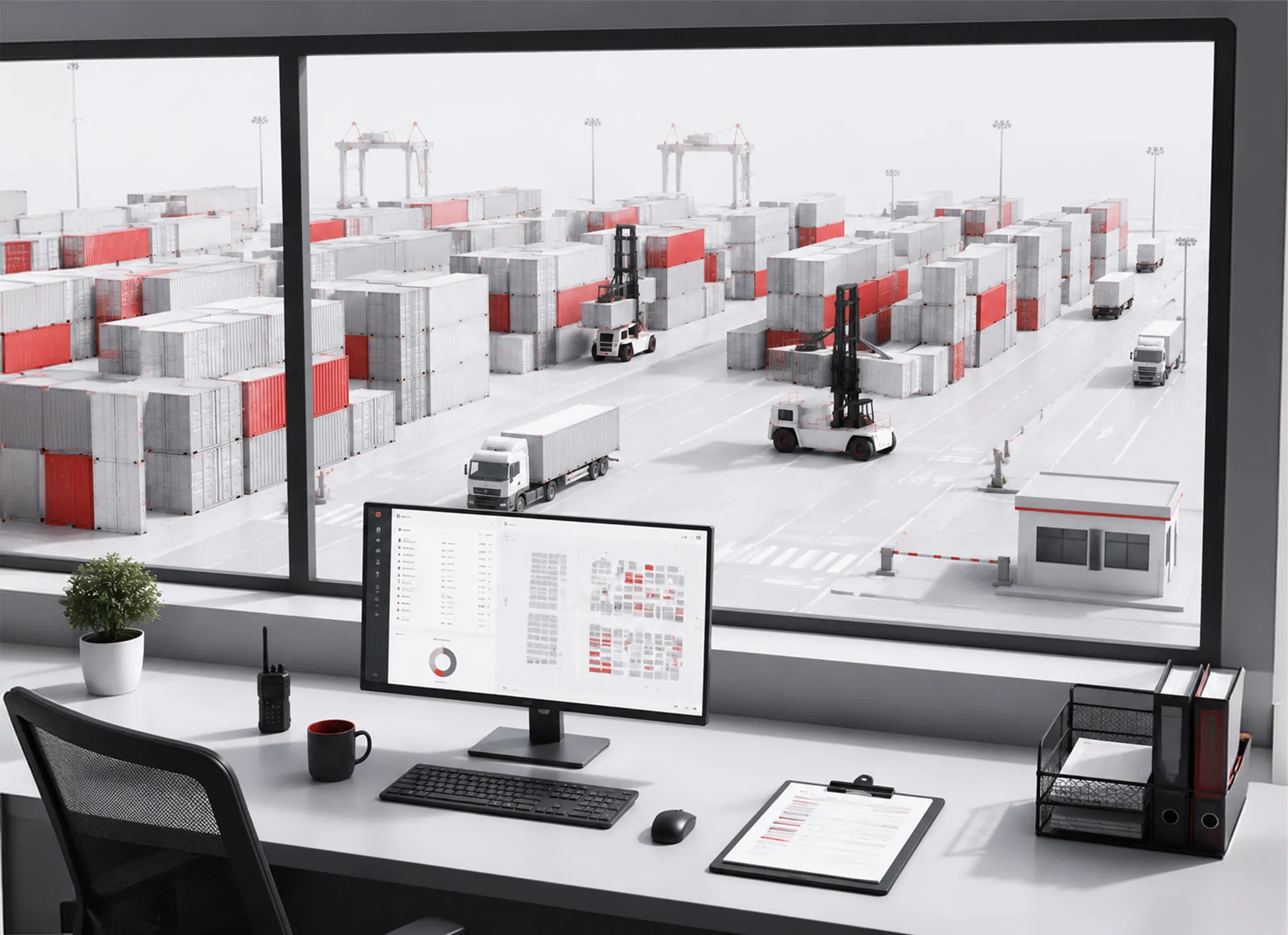
Artificial intelligence (AI) and computer vision technologies are addressing the very root causes of container misplacement. By leveraging cameras, sensors, and smart algorithms, modern ports can automatically track container movements with minimal human input.

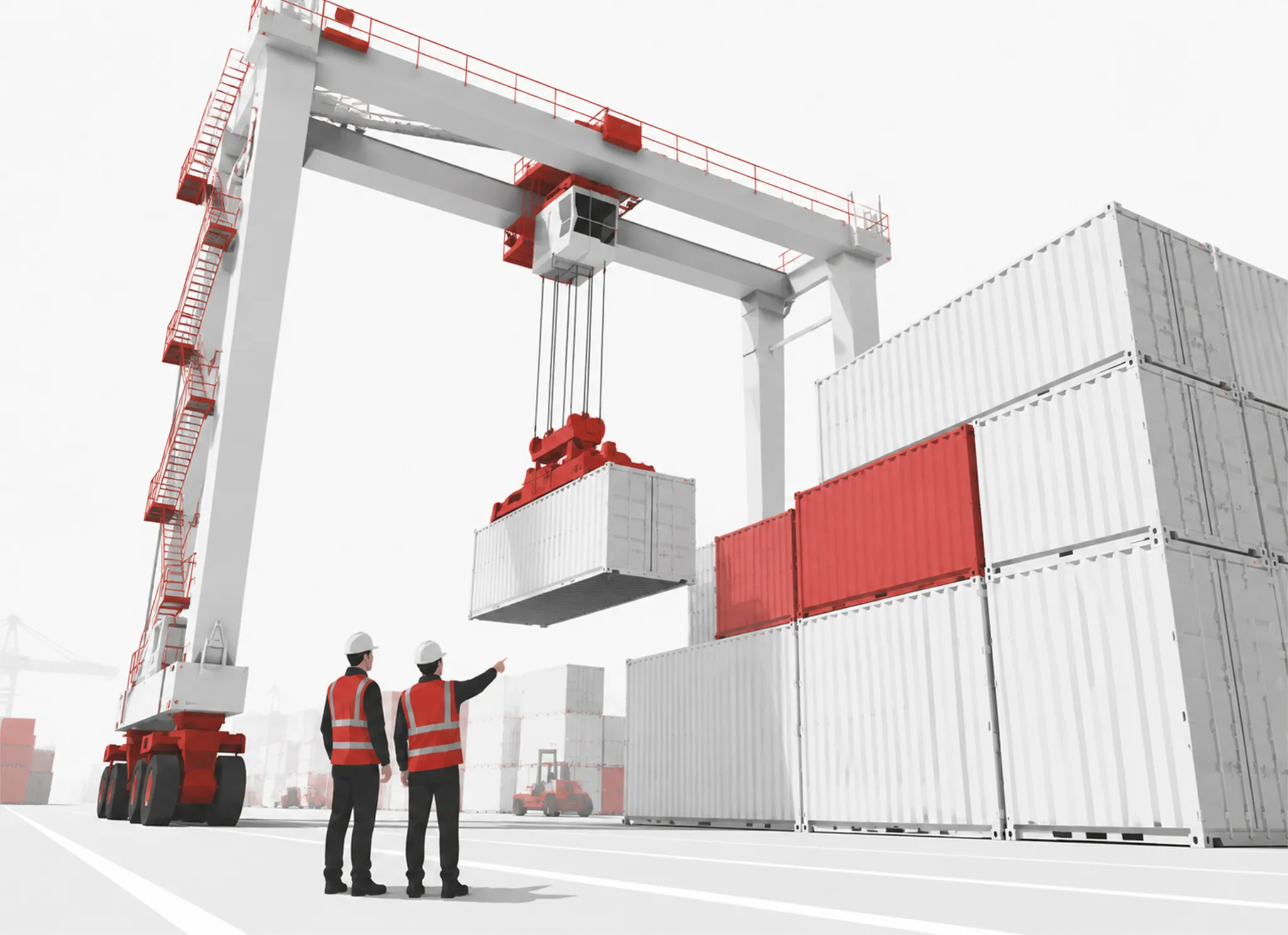
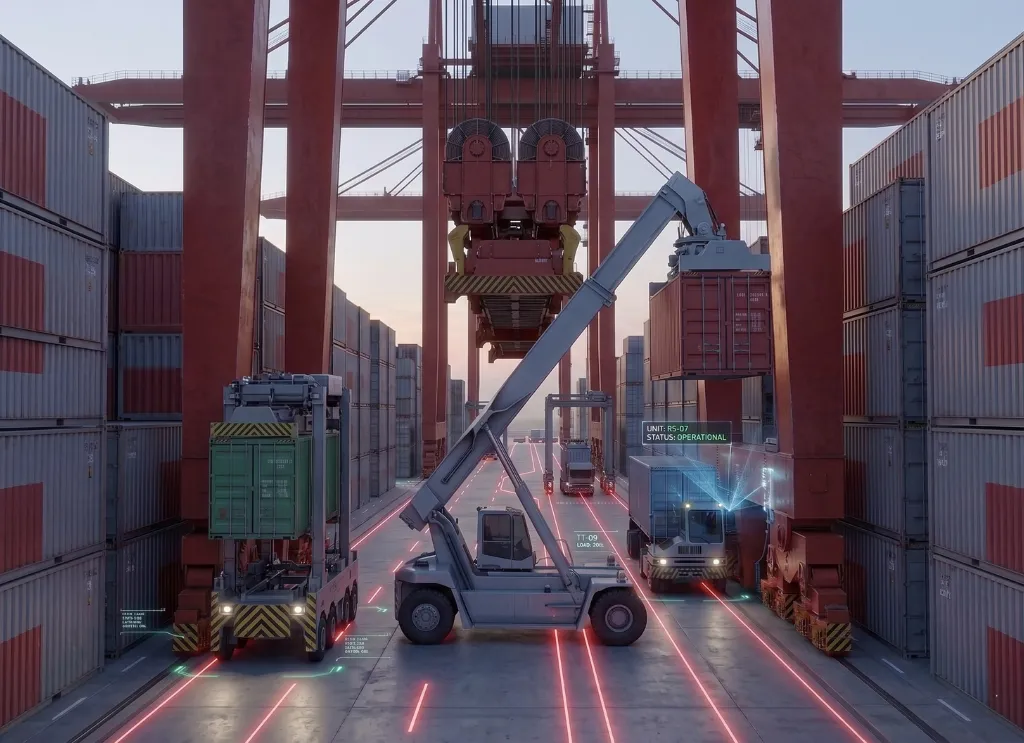
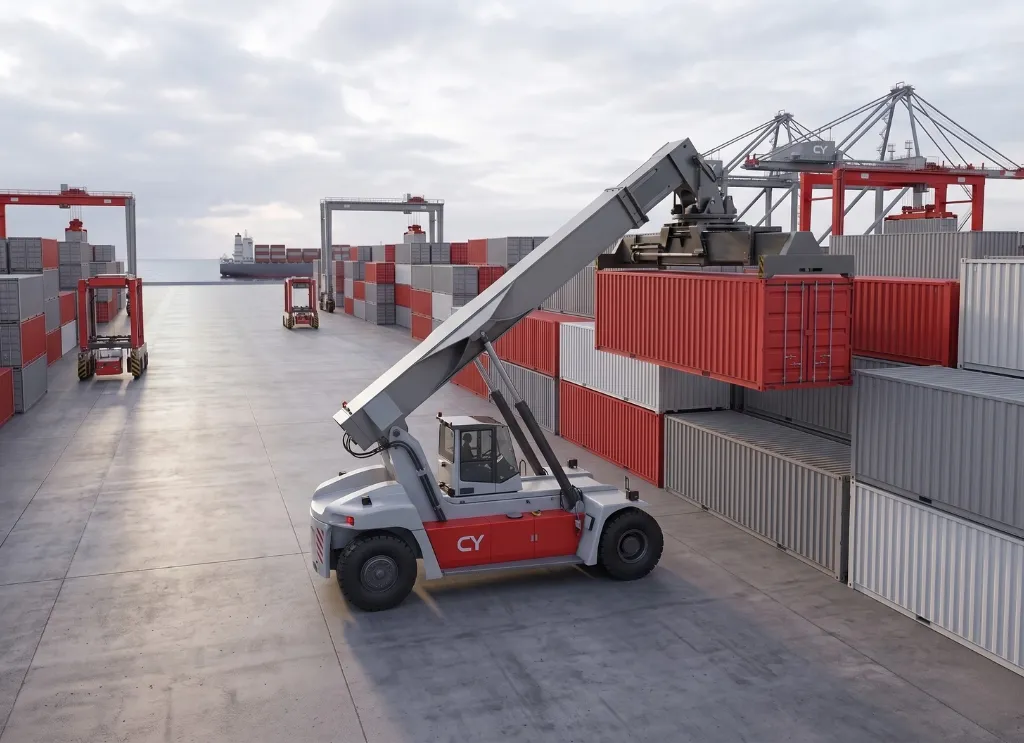
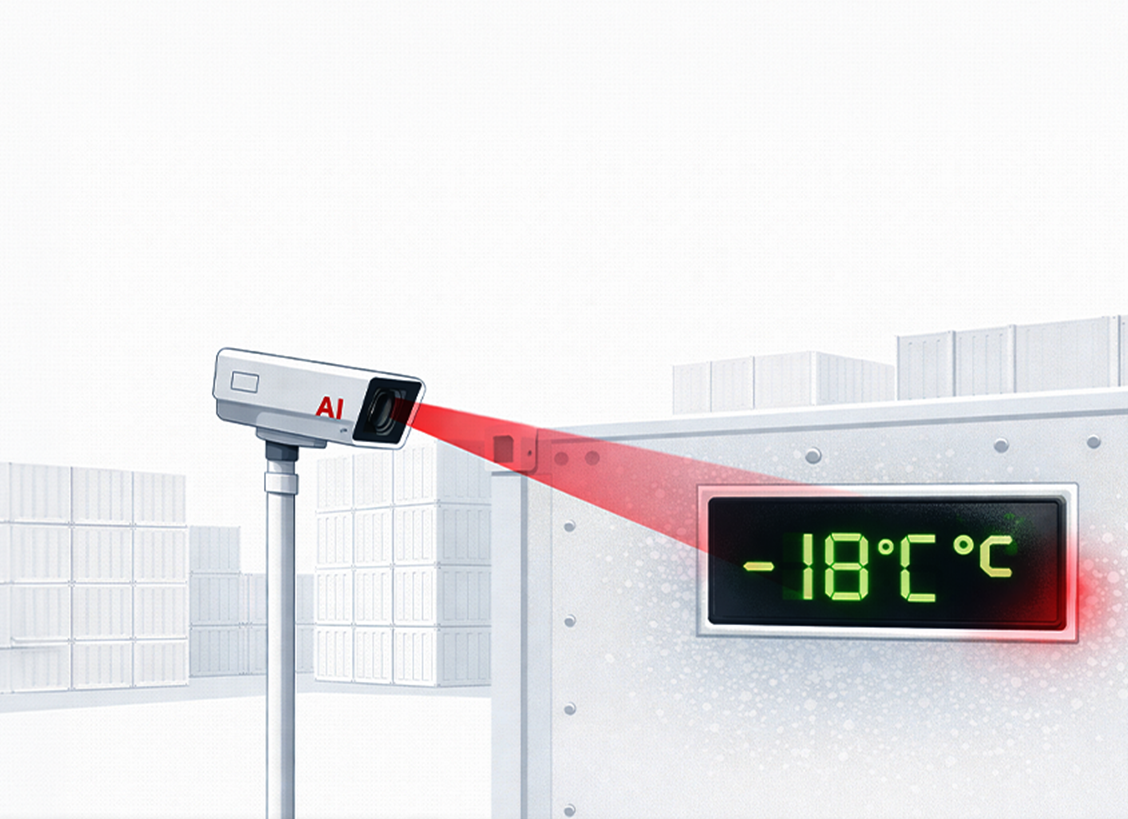
One breakthrough is mounting AI-powered cameras directly on container handling equipment, for example, on the spreaders of reach stackers, RTG cranes, or straddle carriers (including popular brands like Kalmar). These rugged cameras watch each container as it is lifted, moved, and stacked, enabling real-time identification and location tracking.

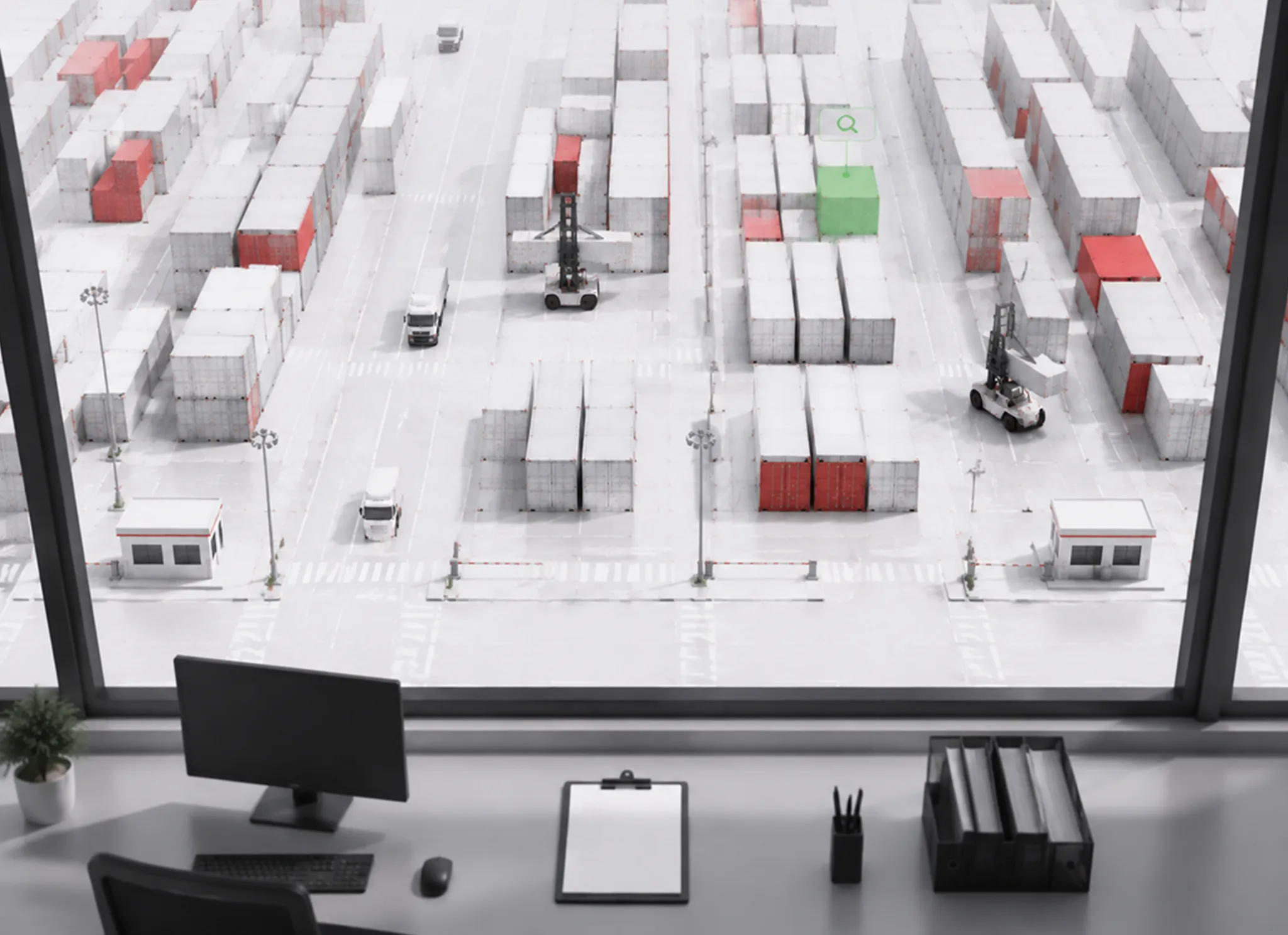
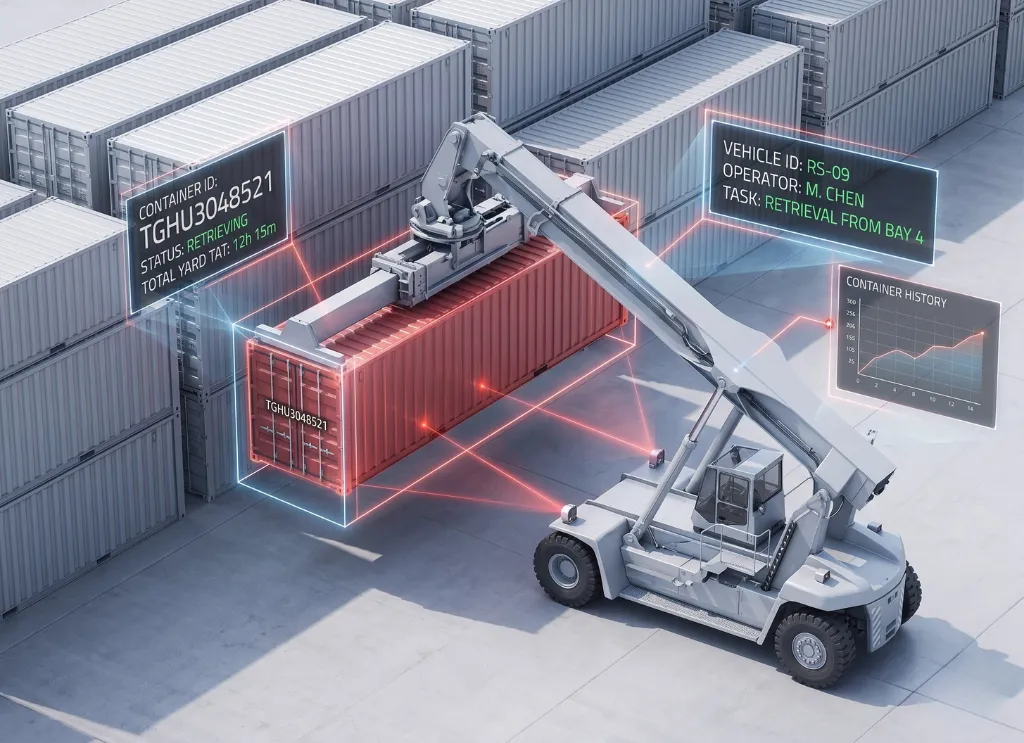
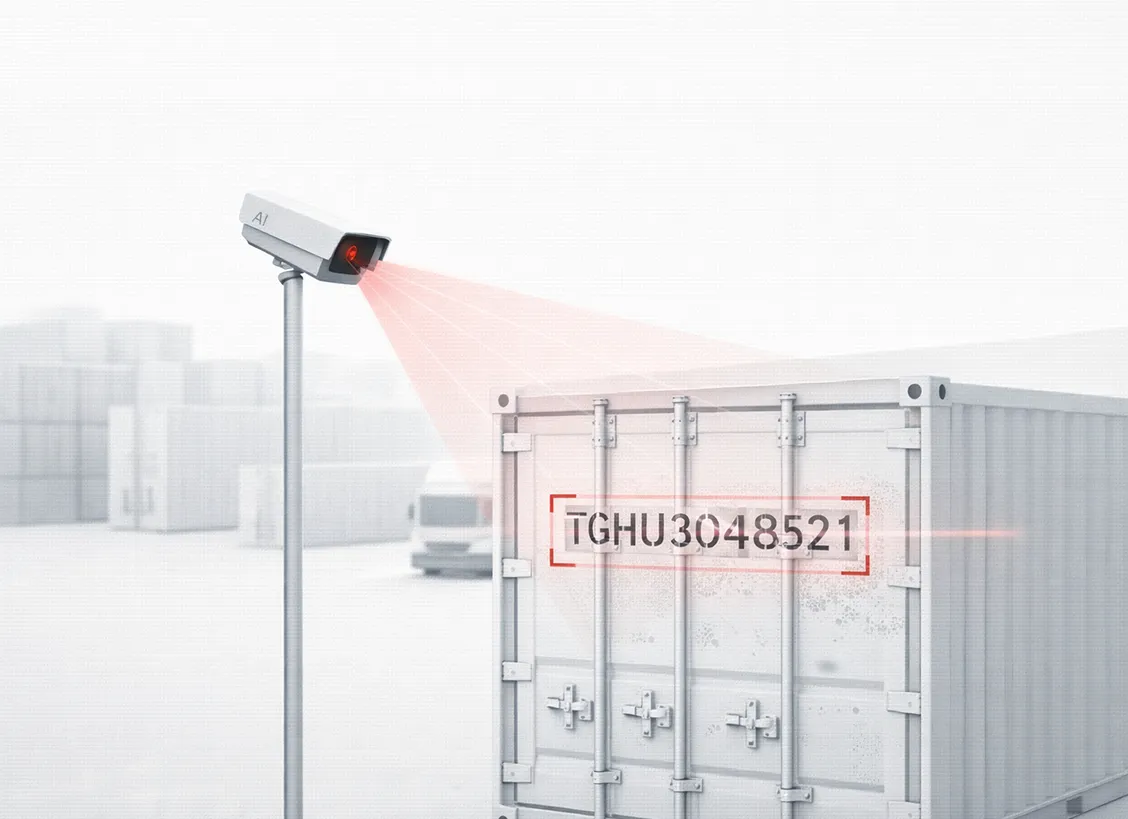
A prime example is Kalmars recently introduced smart system. Cameras on the spreader scan the containers external markings to read its unique ID number, and the system automatically relays this to the Terminal Operating System. The moment a driver picks up a container, the AI vision cameras confirm which container it is and, thanks to integration with yard geo-positioning systems, logs exactly where its being placed. This achieves two things: it eliminates manual data entry and it provides continuous, up-to-date inventory records in the TOS.

ocr-anpr-container-recognition

OCR – Reading Container Codes with Precision

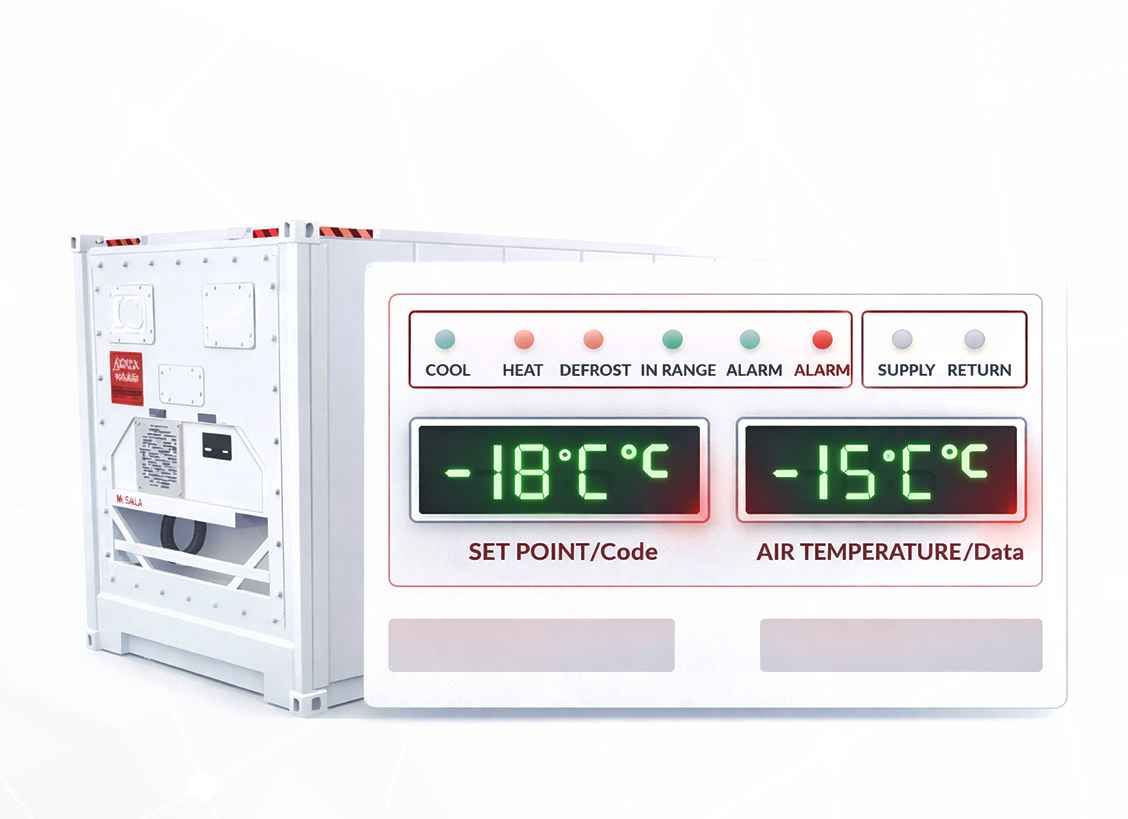
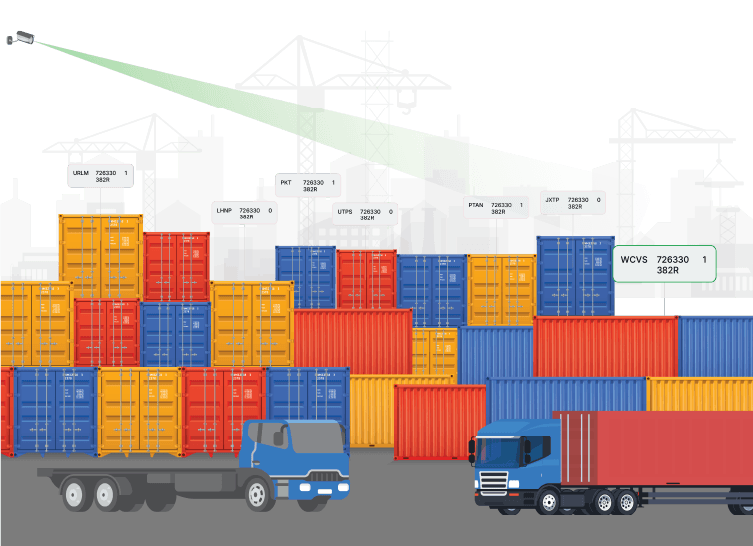
At the heart of these vision systems is Optical Character Recognition (OCR), which enables computers to read the alphanumeric codes on each container. Every shipping container has a unique identification code (four letters followed by seven numbers, e.g. ABCD1234567). Reading these correctly is vital to tracking containers.

Traditionally, a human clerk or driver might jot down or manually key in this code at various checkpoints, a process that tends to make mistakes. OCR technology automates this by using image analysis to instantly recognize the container code, even if its in tricky orientations or conditions.

Modern container OCR is remarkably accurate and fast. For example, solutions provided by firms like WebOccult achieve ISO container code recognition rates exceeding 99%. These systems are trained on thousands of container images, learning to handle different fonts, orientations, varying lighting, and even partially damaged numbers. The result is that, in real operational settings, manual container identification errors that could be as high as 2030% have dropped to less than 1% with automated OCR.

AI-Powered Stacking and Yard Optimization

Beyond just tracking containers, AI is also tackling how and where containers should be stacked in the first place. One reason containers get lost or require extra moves is suboptimal stacking, for example, an import container that a truck will pick up tomorrow ends up buried under five others that wont move for a week. AI can help prevent such situations through intelligent yard planning and predictive stacking.

Imagine a system that knows, or can reliably predict, when each container in the yard will likely be picked up or needed. AI makes this possible by analyzing patterns and data such as trucking schedules, vessel ETAs, customs clearance statuses, and historical trends. Using this information, the AI can forecast which containers will be needed soon and ensure they are placed in more accessible positions.

The benefits of AI-powered stacking are significant:

  • Reduced Re-handling: By minimizing the need to dig out containers, the number of unproductive moves drops. Fewer shuffle moves mean fewer opportunities for misplacement and less wear on equipment.
  • Faster Retrieval: When a truck arrives for a container, that box can be retrieved immediately if its been intelligently placed, rather than spending an hour moving other boxes around to reach it. This improves turnaround time for deliveries.
  • Optimized Space Usage: AI can balance the yard layout by anticipating flows, for instance, clustering containers that are leaving via the same mode or destination, and avoiding dead space. Optimized stacking improves yard density without sacrificing findability.
  • Lower Risk of Misplacement: Every extra manual move is a chance for error. If AI stacking strategy avoids unnecessary moves, it inherently lowers the cumulative risk of a mistake. Containers end up moving in a more deliberate, planned manner rather than ad hoc shuffling, so each move is tracked and intentional.

Case Studies – Smart Ports Leading the Way

Forward-looking ports around the world have started reaping the benefits of AI and computer vision in their yards. Lets look at a few real-world examples that highlight the impact:

Jawaharlal Nehru Port (JNPT), India

As Indias busiest container port (~6.35 million TEU in 2022), JNPT is also upgrading its yard management with modern tech. The port has implemented an RFID-based container tracking system and is now moving toward greater automation.

In 2025, JNPT invited bids to develop an automated empty container yard with an Automated Storage and Retrieval System (ASRS) and real-time container location mapping. This planned smart yard will incorporate OCR-based gate automation and a terminal operating system capable of pinpointing every empty containers position. The goal is to eliminate the prevalent issues of yard inventory mismatch and improve turnaround times for empties. Even before this, JNPTs use of RFID tags on containers has helped reduce dwell times by giving authorities better visibility into container movements. By investing in these solutions, JNPT aims to enhance efficiency and avoid the kind of chaotic yard scenarios that lead to lost containers.

Mundra Port, India

Mundra, Indias largest private port, provides a striking example of the benefits of AI-enabled operations. By integrating AI across its logistics, from berth scheduling to yard planning, Mundra achieved over 25% improvement in cargo handling efficiency and significantly shorter turnaround times.

One contributor to this is the use of AI-powered control towers and predictive analytics to synchronize every movement. While the headline here is overall speed, a big part of that is smoother yard workflow, containers are where they need to be when they need to be. Mundras adoption of AI-driven OCR and automation at gates and yard equipment (including likely collaborations with tech firms for smart camera systems) has reduced human errors and virtually done away with lost container incidents. The ports performance is now a case study in how smart infrastructure can transform operations in South Asia. Adani Ports (which operates Mundra) reported handling 8.6 million TEU across its ports in 202223, with Mundra alone contributing ~6.6 million TEU. Keeping track of such volumes is impossible with manual methods, but Mundras success shows it can be done with AI, securely and efficiently.

Building a Smarter, Safer, and More Efficient Yard

Adopting AI-powered computer vision in the container yard isnt just about technology for technologys sake, it directly addresses the long-standing pain points of yard management. By reducing lost containers and improving accuracy, ports unlock a cascade of positive effects: quicker ship turnarounds, lower operating costs, safer working conditions, and happier customers. In an industry where margins are thin and schedules tight, these gains are transformative.

Ready to Transform Your Container Yard? AI vision technology can dramatically improve yard management by reducing errors and boosting throughput. To learn how you can implement AI-powered camera systems and OCR in your port or terminal, consider reaching out to experts in the field. WebOccult, a provider of advanced AI vision solutions for smart yards, can help design and deploy a tailored system that brings these benefits to your operation.
By adopting the right technology today, ports can ensure that lost containers become a thing of the past, and that their yard stays efficient, secure, and ready for the future.


Transforming Port Operations with Gate Automation Technologies

Modern ports are very busy hubs handling thousands of truck and cargo entries and exits daily. Managing this flow efficiently is critical, especially as Indias ports and global trade volumes continue to grow.

Yet traditionally, port gate operations including verifying vehicle credentials, recording container details, inspecting cargo have been labor-intensive and prone to delays. The queues of trucks waiting at a terminal gate not only waste time but also causing extra costs, contribute to congestion, and create safety and security risks.

In an era of digital ports and smart logistics, gate automation has emerged as a game-changer.

Gate automation refers to the use of advanced technologies (like Optical Character Recognition (OCR), RFID, computer vision, AI, and IoT sensors) to automate identification and inspection processes at port entry and exit points. By reducing manual checks, automating data capture, and integrating with terminal systems, automated gates can drastically cut down turnaround times and errors. In fact, studies show ports can lose up to 15% of productivity due to manual tracking errors, a gap automation can close. Early adopters have seen impressive results, throughput boosts of 30% after deploying OCR at terminals and gate processing times halved.

This blog will explore why gate automation is critical for port authorities and logistics firms, especially in Indias fast-modernizing port sector, and delve into the core technology modules enabling it.

ai-gate-automation-truck-exit

Why Gate Automation is Critical

Efficient gate operations are the anchor of overall terminal performance. A single bottleneck at the gate can ripple through the ports entire logistics chain, causing berth delays, disturbing yard operations, and frustrating truckers and shippers.

Here are key reasons why automating gate processes has become critical:

Boosting Throughput and Reducing Wait Times

Automated gate systems dramatically speed up truck processing, allowing many more vehicles to be cleared per hour than manual methods. By minimizing congestion and idle time, they enable quicker turnaround for each truck.

In India, DP Worlds NSIGT terminal (JNPT) introduced OCR-based smart gates that reduced the average truck gate processing from ~5 minutes down to under 1 minute. Faster gates mean higher terminal throughput and capacity without physical expansion.

Lower Operating Costs

Replacing manual checks with technology lowers labor requirements and errors. Fewer clerks are needed at the gate, and those remaining can focus on exceptions rather than routine data entry. Automation also reduces costly mistakes OCR and RFID ensure the right container numbers and truck details are captured accurately, avoiding downstream correction costs.

Improved Safety and Security

A busy port gate can be hazardous, manual operators walking among trucks or climbing to check container codes risk accidents.

Automation removes personnel from traffic lanes, thus enhancing worker safety. With ANPR (Automatic Number Plate Recognition) controlling entry, only authorized trucks get in, reducing chances of theft or unauthorized cargo removal. Every vehicle entry/exit is logged in real-time, creating a traceable audit trail for security.

Consistency and Compliance

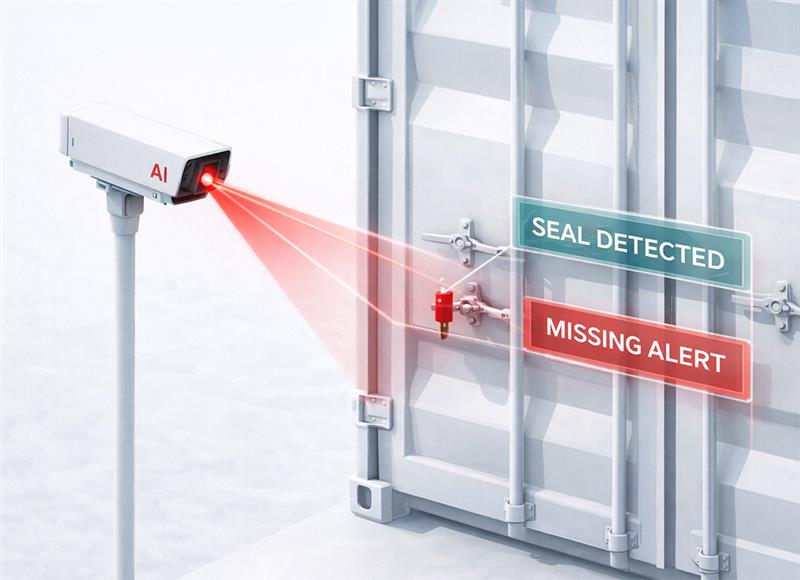
Automated systems enforce standard operating procedures uniformly. They dont get tired or overlook steps during peak rush. This leads to consistent compliance with regulations, e.g. ensuring hazardous material placards are present and captured, seals are checked, and only valid container IDs pass through. Systems can automatically validate container numbers against the ISO 6346 check-digit to catch any mis-typed codes, something human eyes may miss.

Core Modules of an Automated Gate System

To achieve the above benefits, a gate automation solution is composed of multiple integrated modules, each handling a specific aspect of the check-in/check-out workflow.

OCR-Based Vehicle Plate Recognition (ANPR)

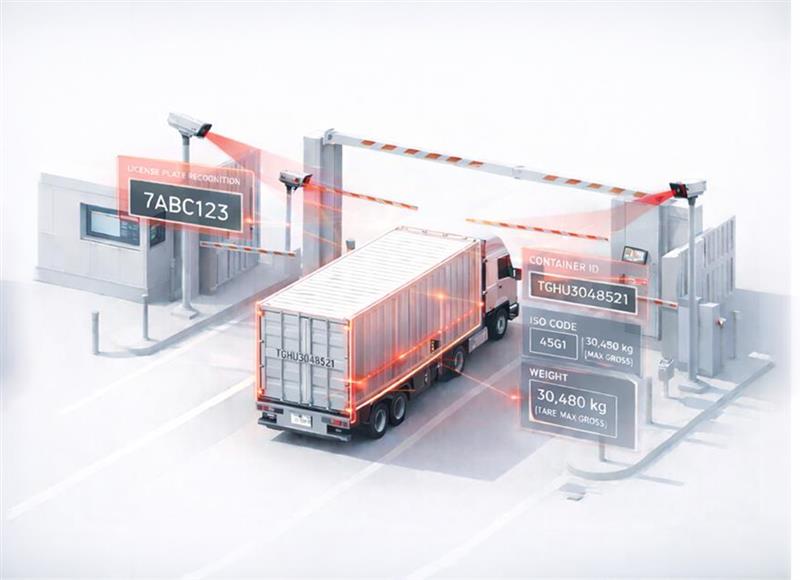
One fundamental piece is Automatic Number Plate Recognition (ANPR), which uses cameras and computer vision to read vehicle license plates automatically. At port gates, ANPR cameras capture the trucks front or rear license plate as it approaches. OCR algorithms then extract the alphanumeric text of the plate within fractions of a second. This allows instant identification of the truck without human input.

In practice, ANPR automates the truck check-in process that was once manual. Many terminals set up a system where truck drivers pre-register their trip details (license number, container to pick up/drop off, etc.) through a port community system or appointment app.

When the truck arrives at the gate, the ANPR camera reads its plate and the system automatically pulls up the trucks appointment and assigned container info. The driver can be directed to the correct lane or yard slot immediately, often via a digital display or message, without stopping for a guard to check paperwork.

This speeds up entry and reduces gate congestion largely.

Container Code & Cargo OCR (ISO 6346 Identification)

Another core module is the Container Number OCR system, which automatically reads the unique identification codes on each shipping container. Every standard container has an alphanumeric ID following the ISO 6346 format (e.g.,ABCD123456-7 with a check digit). Capturing this code correctly is vital for tracking containers through the terminal and beyond.

Traditionally, a clerk would manually note the container number or use a handheld device, a slow process prone to errors if the code is obscured or the clerk is rushed. An automated OCR setup instead uses cameras, often a multi-angle camera portal that trucks drive through, to take images of the container from the side, rear, and sometimes top.Computer vision then identifies and reads the container ID from these images.

This ensures extremely high accuracy in container identification, far beyond what manual checks achieve. One commercial system, for instance, emphasizes recognition per the ISO 6346 standard regardless of container size, meaning it can handle 20 ft, 40 ft, or other container lengths seamlessly.

AI-Powered Container Damage Detection

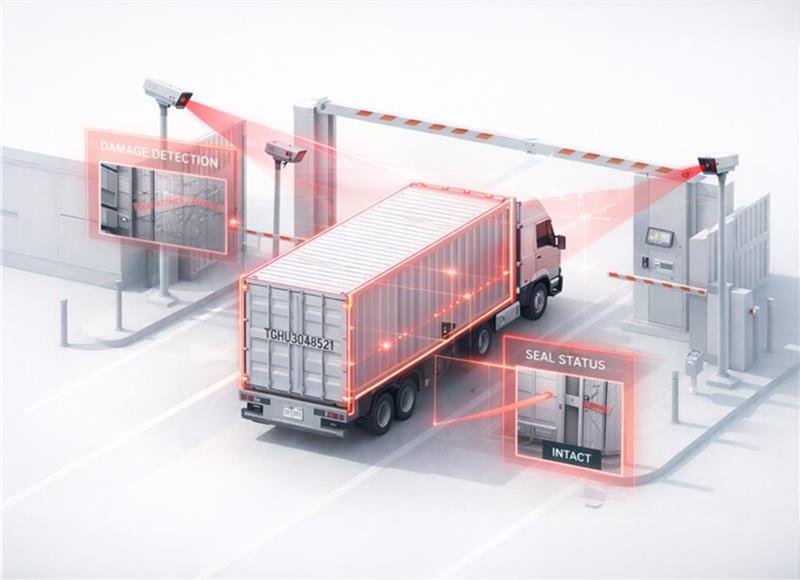
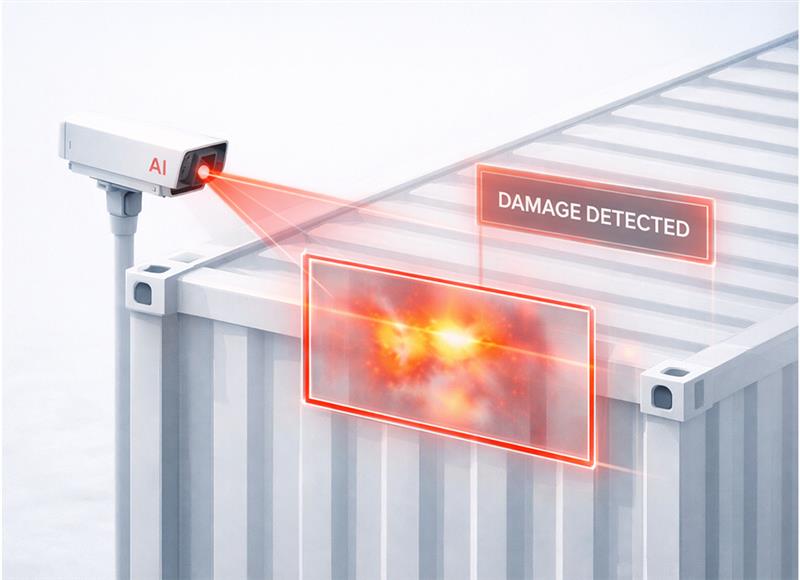
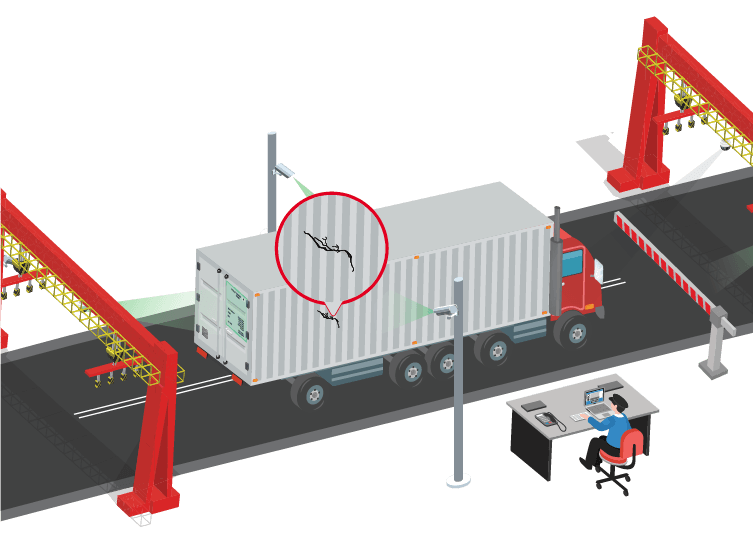
One of the more advanced and transformative modules now being deployed is the AI-driven Container Damage Detection System. This addresses a longstanding challenge: inspecting containers for physical damage (dents, holes, cracks) at the point of entry/exit.

Traditionally, damage inspection was done by human surveyors conducting a visual check, often requiring trucks to stop and potentially causing extra delays if done at the gate. An automated damage detection system uses a set of high-resolution cameras positioned to cover all sides of the container, often as part of the gate OCR portal. As the truck passes through (typically at slow speed, but without stopping), these cameras capture detailed images. Then, AI image analysis algorithms (often leveraging deep learning models) automatically scan the imagery for signs of damage, for example, dents in the container walls, bulges, holes, significant rust patches, or door and structural issues. By comparing to a baseline of what an undamaged container looks like, the AI can pinpoint anomalies and even categorize their severity.

In summary, AI-powered damage detection is like having an expert surveyor at the gate 24/7, but faster and more objective. It keeps operations flowing by removing a manual checkpoint, provides richer data (imagery evidence and analytics on common damage types), and improves safety and customer satisfaction.

Combined with plate and container OCR, this creates a comprehensive picture of each truck/container unit entering or leaving the port, who it is, what its carrying, and in what condition.

Container Geolocation and Yard Tracking

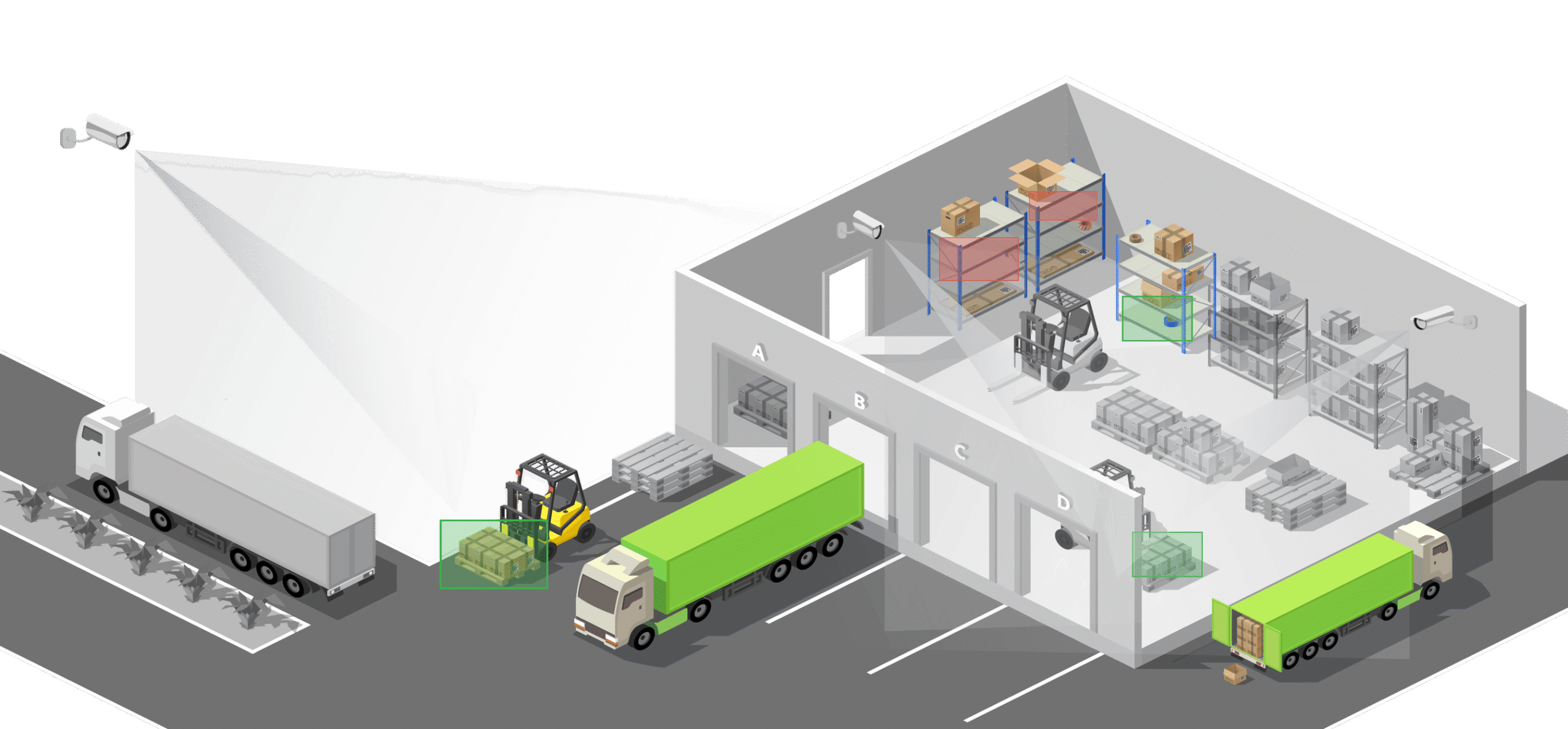
While the above three modules focus on the gate transaction itself, a complete automation ecosystem extends into the yard. Container geolocation solutions ensure that once a container is inside the port, its movements and dwell time are continuously tracked. This is typically achieved via AI vision RFID tags or GPS-based IoT devices attached to containers.

Every time the container moves, the system can update its location. Geofences, virtual boundaries defined in the software, can trigger alerts if a container is somewhere it shouldnt be. For example, if a container strays outside the permitted zone or is mistakenly taken to the wrong terminal area, an alarm is raised to notify operators.

ai-gate-automation-truck-exit


Kalmar Equipment Activity Tracking

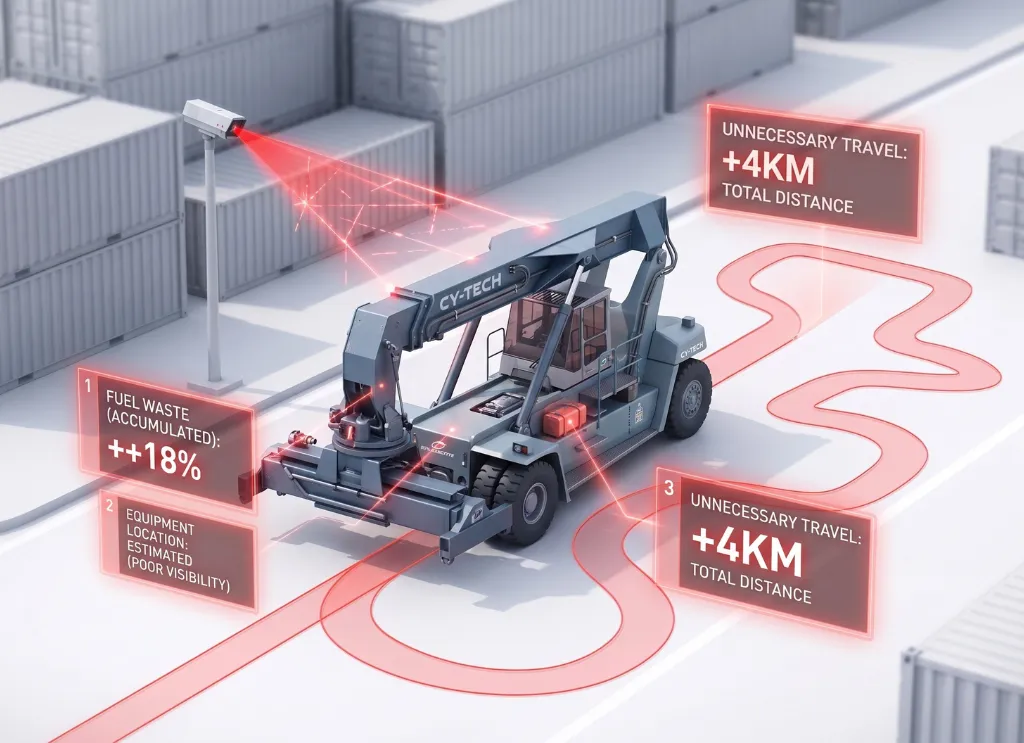
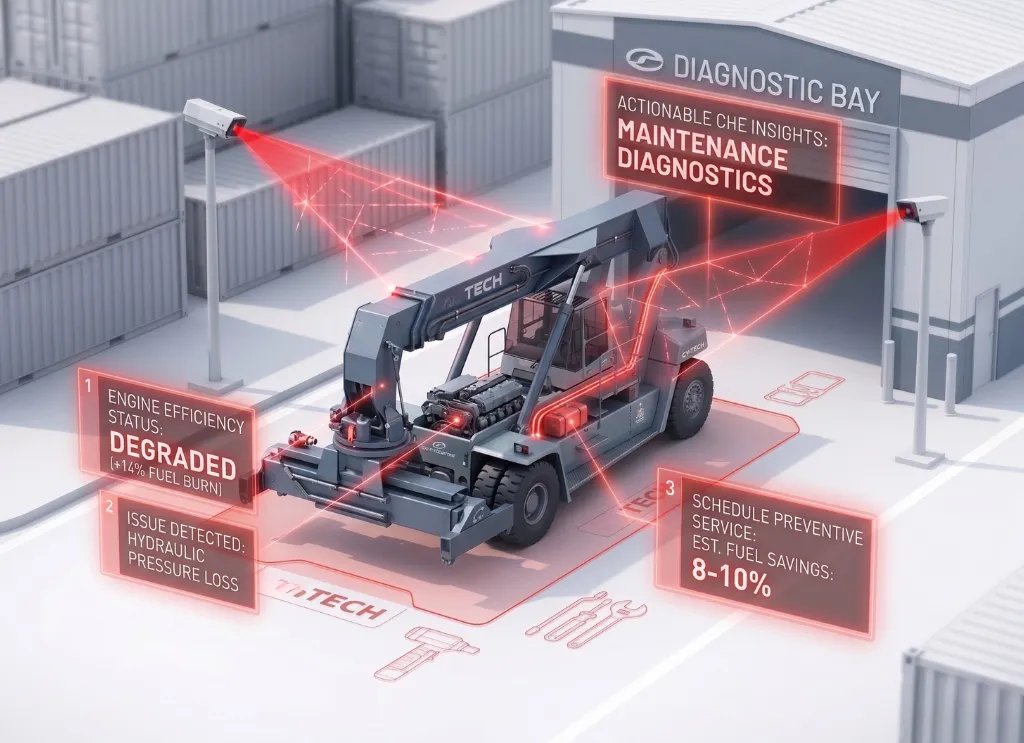
Another complementary module is the tracking of container handling equipment activity, exemplified by systems installed on equipment like reach stackers, rubber-tyred gantry cranes , yard trucks or quayside cranes. In our scenario, lets consider the example of Kalmar (a leading equipment manufacturer) and their telematics solutions. By equipping each machine with IoT sensors or a connected telemetry device, ports can monitor key parameters of equipment usage in real time.

For instance, vision cameras and onboard software can log every start/stop cycle of the equipments engine, measure idle time vs active time, count the number of container lifts or moves performed, and track the GPS path the machine travels during operations. Installing such a device on, say, two Kalmar yard cranes or reach stackers yields a wealth of data. This data flows into an analytics dashboard for performance evaluation, often accessible remotely on any computer or tablet.

In summary, container geolocation tracking and equipment activity monitoring extend automation beyond the gate into yard management. They ensure that the benefits of quick gate processing arent lost downstream, the containers journey through the port stays visible and optimized, and the machinery handling containers operates at peak efficiency.

Together, these modules (gate OCR systems, damage detection, tracking, etc.) create a smart gate ecosystem delivering end-to-end automation from entry to exit.

How the Modules Work Together

Individually, each module brings a piece of the automation puzzle. But the real power of a modern smart gate system lies in how these components integrate to create a seamless, intelligent workflow.

1. Pre-Arrival and Verification

Before a truck even reaches the gate, the system may already have its appointment in the database. As the truck drives up, an ANPR camera captures its license plate. Immediately, the system cross-references this with expected visits. If the truck is pre-registered, the gate system retrieves the associated container pickup/drop-off order. If not, the truck can be processed as an ad-hoc visit if allowed, or stopped if unauthorized.

2. Entry Gate Processing

As the truck enters, it passes through an OCR portal. Multiple high-speed cameras take images of the truck and container from different angles. The container number OCR module reads the container ID on the back or side of the container. Simultaneously, the ANPR might also catch the trailers license plate if separate. Within a few seconds, the system has identified: Truck ABC 1234 carrying Container XYZU1234567. It verifies the container numbers check digit for accuracy.

3. Damage and Compliance Check

While the truck keeps rolling, the images taken are analyzed for container condition. The damage detection AI flags a sizable dent on the containers top right corner, for example. This result is instantly displayed to gate control staff via the dashboard. Depending on port policy, the system could automatically trigger an alert: perhaps a notification is sent to the operations control center that Container XYZU1234567 shows structural dent on entry, severity level 2. The port might still let it in but plan to have it inspected or placed aside for repair if needed.

4. Gate Exit and Data Handover

The boom barrier (if used) lifts and the truck proceeds inside. By now, the integrated system has compiled a digital record: truck and driver ID, container ID, entry time, and condition notes. This data is automatically forwarded to other systems. The system can assign a yard slot; the security system logs the entry; if Customs integration exists, they are informed of the containers arrival status.

5. Yard Handover

Now once inside, suppose the truck carrying that container heads to a yard block. Here the container geolocation module kicks in, perhaps the container was fitted with an RFID tag at the gate or the yard cranes have RFID readers. As soon as the container is placed in the stack, the inventory system knows exactly which slot its in. If the container moves with a yard vehicle, the GPS trackers on that equipment continuously update its journey. Meanwhile, the Kalmar equipment tracker on the yard crane logs that it performed the lift and notes the time and cycle count. In effect, the container is accounted for from gate to ground in the yard, and the equipments contribution is recorded.

6. Exit Process

When the truck exits the port after dropping the import or after loading an export, the process happens in reverse. At the outbound gate, cameras again identify the truck and container on it. The system checks if that container was authorized to leave (matching it against release orders). It logs the exit time and ensures, for security, that no container leaves unaccounted.

Real-World Benefits and Impact

When the gate automation modules are implemented together, ports experience tangible improvements across multiple performance metrics.

Some of the key real-world benefits observed include:

  • Dramatic Throughput Increases: By eliminating manual bottlenecks, ports can handle far more trucks in the same time frame. Weve seen examples like a European terminal achieving a 30% increase in overall container throughput after integrating OCR and automation.
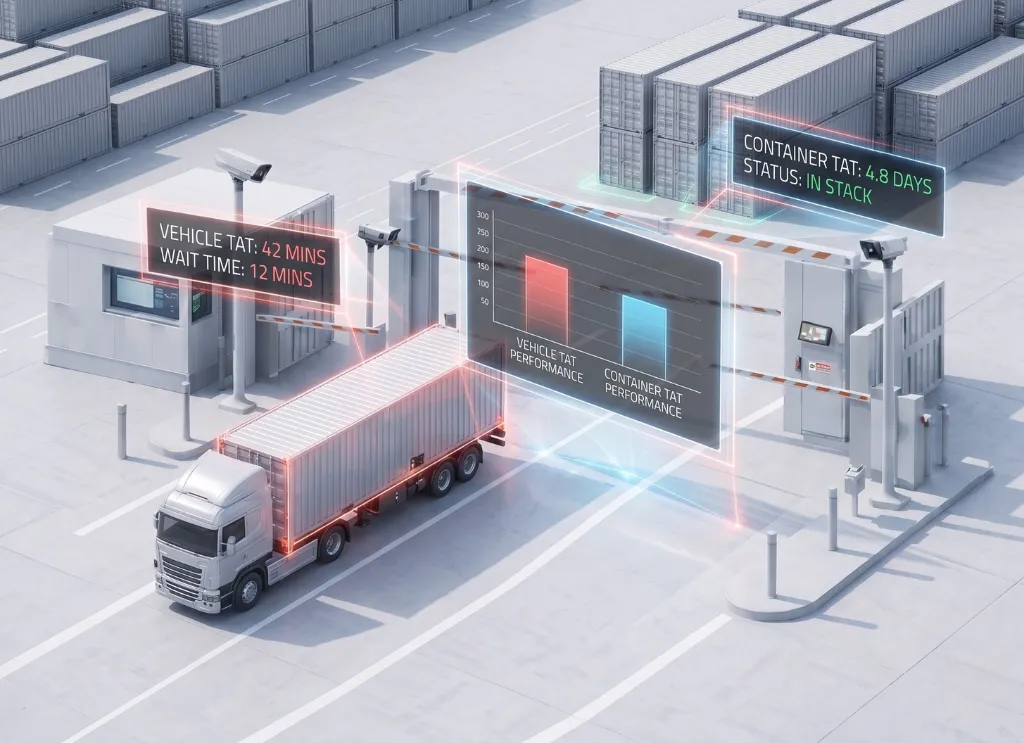
  • Faster Turnaround & Shorter Queues: Truck turnaround time (from gate entry to exit) drops significantly. Automated identification speeds up gate moves by up to 50%, as reported by the Port Equipment Manufacturers Association for terminals using OCR.
  • Improved Data Accuracy and Visibility: Automation ensures the right data gets captured every time, no missing container numbers, no incorrect entries. With check-digit verification and automated cross-checks (matching container ID with truck plate, etc.), data accuracy approaches 99.9%.
  • Lower Operational Costs and Higher Productivity: The reduction in manual labor and better utilization of resources translate to cost savings. Fewer gate clerks are needed on each shift.
  • Enhanced Safety for Personnel: With no clerks standing in lanes to read numbers or check seals, the risk of accidents at the gate drops. Additionally, fewer idling trucks mean less air pollution and noise for workers at the gate, contributing to a healthier work environment.
  • Reduced Fraud, Theft and Errors: Automated gates act as a security net, its nearly impossible for a truck or container to slip in or out unnoticed or unrecorded. The system will flag any mismatch like a container leaving on the wrong truck or a truck trying to enter when not scheduled. This deters and virtually eliminates certain fraud/theft scenarios, like someone trying to smuggle a container out by swapping license plates.
  • Analytics and Continuous Improvement: All the data gathered (throughput, dwell, idle times, damage incidents, etc.) becomes a treasure trove for analytics. Ports can analyze this data to find trends: peak gate hours, common causes of exception, average truck service times, etc.

Conclusion

Port gate automation has moved from a futuristic concept to an operational reality delivering measurable gains. In the quest for faster, safer, and more transparent port operations, automating the gateway is a pivotal first step. As weve discussed, technologies like OCR number plate recognition, container code scanning per ISO standards, and AI-driven damage detection work together to eliminate bottlenecks and human error at the entry/exit points of terminals. The addition of container geolocation tracking and equipment monitoring further extends these benefits throughout the port, creating a truly integrated smart system.

Looking ahead, the trend is clear. The port of the future will likely feature fully automated gates, paperless transactions, and vehicles that move in and out with minimal friction. Elements of that future are already here: AI at the gates, IoT in containers, and data driving decisions. Ports that lead this change will position themselves as efficient, customer-friendly nodes in the supply chain, whereas those slow to adapt may face bottlenecks and lost business.

In conclusion, gate automation is a cornerstone of the broader smart port evolution. It brings immediate benefits and sets the stage for further digital transformation.

At WebOccult, we specialize in designing and deploying integrated gate automation solutions that combine AI, OCR, RFID, and advanced analytics to help ports operate smarter and safer. Whether you’re starting with a pilot lane or aiming for full-scale transformation, our team brings the technology and strategic insight needed to deliver results.

Connect with WebOccult today to explore how your port can become a future-ready smart terminal, efficient, secure, and built for the demands of global trade.

Artificial Intelligence and Computer Vision in Education

Artificial Intelligence in Education (AI) and computer vision are no longer futuristic buzzwords; they have become practical tools reshaping how students learn and how schools operate

In 2025, AI is revolutionizing classrooms by offering great opportunities for personalized learning and efficient administration. Meanwhile, computer vision is bringing new capabilities like automated attendance tracking, behavior analysis, and real-time feedback to school settings.

Education leaders, tech developers, and school administrators are witnessing a digital transformation: from adaptive learning software that tailors itself to each learner, to smart cameras in classrooms that gauge engagement.

This blog explores how AI and computer vision are transforming educational systems, covering technologies such as AI-driven learning tools, smart classroom environments, automated assessment, personalized learning, and AI in remote education.

AI-Powered Learning Tools

AI is empowering a new generation of learning tools that make education more interactive and tailored. Intelligent tutoring systems and educational software can now adapt in real-time to each students needs.

For example, adaptive math platforms like DreamBox analyze a students responses and adjust the difficulty of questions on the fly, allowing learners to master concepts at their own pace. Language learning apps such as Duolingo use algorithms to personalize practice exercises based on a learners past performance. Likewise, writing assistants like Grammarly offer instant feedback on grammar and style, helping students improve their writing through real-time suggestions. These AI-driven learning tools essentially give each student a personal tutor that continuously calibrates to their level and learning style.

AI-powered tools are also making learning more engaging. Educational games and platforms use AI to dynamically adjust content and challenges, keeping students in an optimal zone of engagement.

For instance, systems like Classcraft track student behavior and reward positive actions, helping maintain a motivated classroom environment. The result is more engaged learners, interactive, adaptive experiences have been shown to boost student motivation and participation. Teachers, in turn, gain better insights: an AI system can highlight which students might be struggling or disengaged, so educators can intervene early.

In short, AI is turning learning into a two-way dialogue, where software not only delivers educational content but also listens and responds to student inputs in real time.

ai-computer-vision-classroom


Smart Classroom Technology

The modern classroom is getting smarter thanks to an array of IoT devices and AI integrations. These Smart Classroom Technology solutions create connected, responsive learning environments.

For example, IoT sensors can adjust classroom lighting and temperature automatically based on occupancy or time of day, providing a comfortable setting for students. Interactive smart boards and projectors, paired with educational software, enable multimedia lessons and instant polls or quizzes to gauge understanding. Some schools are even experimenting with IoT-based classroom management, like smart locks or voice-controlled assistants to aid teachers with routine tasks.

A core component of smart classrooms is automated attendance and monitoring. Instead of tedious roll calls, schools can use computer vision cameras to recognize students faces as they enter, instantly logging attendance with high accuracy. This saves teaching time and produces reliable attendance data without human error. Along with attendance, smart security cameras help keep campuses safe by ensuring only authorized individuals are present.

All these connected tools, from environmental sensors to facial recognition systems, feed data into dashboards that administrators and teachers can use to make informed decisions.

In essence, the classroom itself becomes an intelligent space that responds to the needs of students and staff, making the educational experience more efficient and seamless.

Personalized Learning with AI: Tailoring Education to Every Student

One of the most powerful impacts of AI in education is the ability to personalize learning like never before. Traditional one-size-fits-all teaching often leaves some students bored and others lost, but AI changes that by customizing instruction for each learner. 

Personalized Learning with AI is exemplified by Adaptive Learning Platforms that dynamically adjust content. These systems assess a students skill level in real time and then tailor lessons to meet that students individual needs. If a student is struggling with a concept, the AI can provide extra practice or alternative explanations; if a student masters something quickly, the AI will introduce more advanced material to keep them challenged.

The results of this approach are impressive. Adaptive learning technology has been found to improve student mastery and retention, one study noted that adaptive platforms can boost retention rates by around 20% compared to traditional methods. Students often feel more motivated when the learning experience is tailored to them, because they arent held back or left behind. Meanwhile, teachers receive detailed analytics from these platforms, giving them a clear picture of each students progress. They can see, for example, which topics a particular student struggles with or excels in, enabling more targeted support during class or one-on-one time. In short, AI-powered personalization means every student can get a curriculum and support structure optimized for their pace and style of learning, something that was impractical at scale until now.

Automated Student Assessment

AI is streamlining the way students are evaluated, making assessment faster and more objective. Automated Student Assessment tools can grade exams, homework, and even complex assignments with minimal human intervention.

Multiple-choice tests have long been auto-graded, but now AI can also assess short answers and essays. For instance, platforms like Gradescope use AI assistance to grade handwritten or typed responses consistently and quickly. Advanced natural language processing algorithms enable automated essay scoring by evaluating the content and clarity of student writing. Tasks that might take a teacher many hours to grade can be completed by an AI in minutes, with detailed feedback provided to the student.

These tools not only save teachers time, they also ensure consistency and provide quick feedback. An AI grader applies the same rubric to every student, eliminating potential human bias or fatigue in scoring. And because the grading is instant, students receive feedback immediately. This kind of Real-Time Feedback in Education helps students learn from mistakes while the material is still fresh. For example, after an AI-graded quiz, a student might discover right away that all their errors were on a particular topic, allowing them to focus their review on that area.

Its important to note, however, that human oversight remains valuable, educators typically review AI-generated grades, especially for critical assessments, to ensure accuracy and fairness. Some AI scoring systems have shown quirks or errors, so teachers act as a quality check. When thoughtfully implemented, automated assessment tools can significantly reduce educators workload while maintaining, or even improving, the quality of feedback students receive.

AI-Based Proctoring Systems

With the growth of digital learning and remote testing, maintaining academic integrity has become a pressing challenge. AI-Based Proctoring Systems use computer vision and machine learning to monitor exams and prevent cheating, especially in remote settings.

These systems turn a students webcam and microphone into automated proctors that observe the exam environment. They can verify a students identity through facial recognition before the test begins, ensuring the right person is taking the exam. During the test, AI algorithms watch for suspicious behaviors: if a student frequently looks away from the screen, if an unknown person appears in view, or if the audio picks up other voices in the room, the system will flag those incidents.

A hallmark of AI proctoring is real-time alerts and detailed logging. If a student tries to open a website or application that isnt allowed, the AI can immediately take a screenshot and notify an instructor or human proctor. For example, one platform will alert the instructor with evidence if a test-taker attempts to open a new browser tab or access course materials during an exam. All such events are recorded: the system generates a report after the exam with timestamps of incidents and even short video clips of each flagged event. This allows instructors to review what happened and make informed judgments.

ai-student-distraction-detection


Computer Vision in Classrooms

Perhaps the most transformative use of AI in physical classrooms comes from computer vision, the ability of AI systems to interpret live video feeds from cameras. Computer Vision in Classrooms means that cameras and AI algorithms work together to observe and analyze classroom activities in real time.

This ranges from simple tasks like counting how many students are present, to more nuanced ones like gauging students body language and attention. For example, a computer vision system can monitor which students are raising their hands or answering questions, providing objective data on participation. It can also detect if students are slouching, fidgeting, or consistently looking away, which might indicate disengagement. By analyzing visual cues such as facial expressions, eye gaze, and posture, computer vision notices patterns a teacher might miss.

In China, one high school that adopted AI-driven cameras to analyze student attentiveness reported that classroom behavior improved after students knew they were being monitored. While such intensive monitoring raises privacy questions, it demonstrated how data on attention can prompt positive changes in engagement.

Beyond tracking attendance or behavior, Computer Vision for Student Engagement provides actionable insights into student engagement in real time. In one study, researchers used AI to analyze live video of online classes, tracking facial cues and voice tone to measure student engagement. When a student appeared puzzled or disengaged, the system immediately alerted the teacher, prompting them to adjust their teaching strategy on the spot. If the teacher was doing most of the talking, the AI suggested involving the student more to re-capture their interest. This created a feedback loop where instruction could be dynamically tuned to student needs as the lesson unfolded. According to one report, implementing this kind of real-time AI feedback helped boost class participation significantly, in some cases, overall engagement rose by up to 40% after introducing smart monitoring tools.

Computer vision can also assist students directly through its ability to recognize images and objects. This opens up new interactive learning possibilities. For instance, Visual Recognition in Education is used in augmented reality apps that let students use a smartphone or tablet camera to explore the world. A biology student might point their device at a plant and have the app identify the species and show relevant facts. A math student stuck on a problem could snap a photo of the equation, an app like Photomath will use computer vision to read the equation and then provide step-by-step solutions.

AI in Remote Learning

The rise of remote and hybrid learning has made AI an indispensable ally in keeping students engaged and supported outside the traditional classroom.

AI in Remote Learning helps bridge some of the gaps of learning from home by providing support similar to in-person experiences. For example, video conferencing platforms used for classes now incorporate AI features to enhance communication. Platforms like Zoom employ AI to suppress background noise and provide live captioning of a teachers speech in real time, making lessons more accessible and clear. In fact, AI helps recreate some of the social presence of a classroom: some systems can highlight if a participant starts speaking or even detect prolonged silence or inactivity, discreetly alerting the teacher much like noticing a disengaged student in class.

AI is also boosting student support in remote environments through virtual assistants and analytics. Many online courses deploy AI chatbots as round-the-clock aides: if a student has a question after hours, the chatbot can answer common queries or provide hints, alleviating frustration until a teacher is available. These bots are often trained on course FAQs and content, allowing them to handle a surprising range of issues instantly. Additionally, AI-driven analytics track student engagement in virtual learning platforms, such as logging participation in discussion forums, completion of video lessons, or quiz attempts.

This data lets instructors spot early warning signs: for instance, if a student hasnt logged into the course for several days or is consistently missing assignments, the system can alert the instructor to reach out, much like a teacher checking in on an absent student.

Challenges and Ethical Considerations

While the potential of AI and computer vision in education is exciting, it also brings important challenges and ethical considerations. Privacy is a major concern whenever we introduce cameras or data-driven tools in schools. Monitoring students via video or tracking their performance generates sensitive data, so schools must ensure strict data protection. Any AI system that collects student information should comply with student privacy laws and regulations, and students and parents should be informed about what data is being collected and why. For example, if a classroom camera system analyzes student faces for engagement, the school needs clear policies on how long recordings are kept, who can access them, and how the insights are used. Transparency and consent are key to maintaining trust when using these technologies.

Another challenge is bias and fairness in AI algorithms. AI models can inadvertently reflect or even amplify biases present in their training data. In an educational context, this could mean a facial recognition system that works well for some students but not others, for instance, if it has difficulty recognizing the faces or expressions of students of certain ethnicities due to a lack of diverse data. This has been observed in some AI systems and is an active area of concern. Similarly, an automated grading system might struggle with non-standard writing styles or dialects.

Its crucial for schools and developers to test AI tools for fairness across different student groups and to use diverse training data. Keeping a human in the loop can also mitigate risks: teachers and administrators should review AI outputs (be it grades, flags, or recommendations) and apply their professional judgment, especially if something seems off or unfair.

Conclusion

AI and computer vision are poised to redefine the future of education. From smarter classrooms that respond to student needs in real time, to personalized learning paths for every student, these technologies offer powerful tools to enhance learning outcomes and streamline school operations.

As an education leader or innovator, the next step is to explore how these advancements can work for your institution. This is where WebOccult can help.

WebOccult is at the forefront of developing and deploying AI and computer vision solutions tailored for the education sector. We have experience turning traditional schools into smart learning spaces, for example, implementing automated attendance systems, real-time engagement analytics, and AI-driven learning platforms.

And we do so with an emphasis on privacy, customization, and seamless integration with your existing systems. The Future of Weboccult is connected with the future of education: we are committed to empowering educators and students with technology that makes learning more effective and insightful.

If youre ready to bring your institution into this future, we invite you to reach out to WebOccult. Lets talk!

WebOccult Insider | July 25

Vision just got smarter. And way cuter.

Meet the mascots who will break down complex AI Vision into clear, simple stories.

There’s a new pair of minds at work inside WebOccult’s AI Vision ecosystem, and they don’t blink, miss, or guess. Say hello to nAItra & nAIna, the official mascots of WebOccult’s AI Vision division.

But don’t let their sharp design and clean lines fool you, these two are not just for show.

Built on a foundation of real-time analytics, deep learning, and computer vision, nAItra and nAIna represent the intelligence that powers every smart decision our systems make.

From tracking cargo at busy ports to detecting facial patterns in high-traffic areas, if your cameras see it, they understand it, accurately and instantly.

Whether it’s real-time object tracking, facial recognition, container OCR, or behavioural analytics, these two are here to explain how AI Vision is changing the way the world monitors, secures, and operates its environments. Through their voices, we’ll break down complex use cases into clear, simple insights, because vision tech should never feel like a black box.

This is just the beginning. Starting this month, nAItra & nAIna will be a regular presence across our channels, unpacking use cases, sharing behind-the-scenes tech, and helping you see AI through a smarter lens.

Stay tuned. The future of intelligent vision now has a face, actually, two.


From CEO’s Desk

Why We Gave Vision a Face

A few months ago, in one of our internal brainstorms, someone casually said, “Our AI Vision systems are so sharp, they almost feel alive.” That sentence stuck with me. Not because of how smart the tech is but because it made me realize something important: people don’t connect with specs, they connect with stories.

That’s how nAItra & nAIna were born.

They aren’t just mascots. They’re here to represent the intelligence behind our systems, the way we think, and the way our technology helps businesses see, better and faster. Through them, we’re simplifying how we talk about complex things like real-time tracking, facial recognition, and container OCR. Because if the tech is powerful but no one understands how it works or helps, what’s the point?

As we move forward, our focus is sharper than ever.

We’re now doubling down our focus on two industries where every second, every scan, and every decision counts: Ports and the Steel Industry.

Ports deal with overwhelming cargo volumes, tight schedules, and zero room for manual errors. Our AI Vision is already helping streamline container movement, reduce idle time, and prevent unauthorized access, with precision and speed.

In the steel industry, the challenges are different but just as critical. Heat, heavy movement, safety risks, there’s no space for delay. Our AI Vision is now being trained to detect micro-defects, track ladle movement, and monitor safety conditions without disrupting operations.

This is what excites me, not just building tools, but building clarity. Giving industries a smarter way to operate.


The Tech in Transit

A few weeks ago, I found myself at a railway station, waiting for my train to my native home. Between sips of coffee and glances at arrival boards, I watched a small team of platform staff manually checking tickets, scanning IDs, and jotting notes on paper.

It struck me- in an era where people move faster than paperwork, something as simple as boarding a train still follows old routines.

That afternoon, I sketched a vision. What if AI Vision could modernize this scene? Install cameras to automatically scan QR tickets, detect mismatches, and alert guards to safety or scheduling issues, all in real time. No more lines. No more errors. Just a powerful flow.

Can we apply touchless OCR technology to passengers? Can we train a model to understand crowd movement like we track cargo lanes? Turns out, yes.

By adapting our multi-angle OCR and behavioral-tracking pipelines, we can build a prototype that reads digital tickets at speed and flags irregularities, bright stations, quiet waiting rooms, and everything in between.

That evening, as the train rolled in, I realized the metaphor: just like a train departs precisely when it’s ready, so does progress.

Sometimes innovation comes not in labs but in transit, in fields, in everyday gaps waiting for smarter vision.


Offbeat Essence – When AI’s Blind Spots Tell the Bigger Story

Team WebOccult

“People worry that computers will get too smart and take over the world, but the real problem is that they’re too stupid and they’ve already taken over the world.”

Melanie Mitchell, Artificial Intelligence: A Guide for Thinking Humans

This month’s reflection isn’t about the usual fear of AI becoming too powerful, it’s the quiet irony of how often it’s already steering our world with astonishing missteps. From algorithmic biases deciding who gets a loan to flawed image recognition tagging the wrong person, AI is everywhere, but not always wise.

At WebOccult, we see this clarity as a guiding principle. AI Vision isn’t about flashy tech, it’s about trust. Our models learn nuances like lighting, context, edge cases, so they make fewer mistakes, not just more decisions. We’re less interested in teaching machines to think like us, and more in making sure they don’t misunderstand us.

So when you next hear about the AI revolution, remember: the real breakthrough isn’t about intelligence that matches ours, it’s about intelligence that complements ours.

And in that space, there’s elegance in being deliberately less stupid.

Real Steel, Real Gains with AI Vision

Smit Khant, Sales Director, USA

When I stepped into the hot, humming heart of a Midwest steel plant last spring, I expected loud machines and focused workers. What surprised me was the atmosphere of quiet precision, cameras strategically positioned, and AI models running silently in the background, inspecting each slab of steel with uncanny accuracy.

Our recent blog outlines a powerful shift in 2025’s steelmaking strategies. But seeing it in action drives the point home: traditional inspections, manual, inconsistent, prone to fatigue, are being replaced by AI Vision systems that never blink.

At that plant, high-resolution cameras trained by deep-learning models like Vision Transformers analyzed every slab for micro-cracks, rust patches, and surface anomalies. These cracks, nearly invisible to the human eye, were flagged instantly, reducing defect rates by over 20%. When issues arise, alerts go out immediately, ensuring no faulty steel leaves the mill.

But AI Vision isn’t just policing quality, it’s optimizing operations and boosting sustainability. Our systems monitor furnace heat distribution and chemical balances in real time, automatically adjusting parameters to improve output consistency while reducing energy use by 5–7%.

Across plants, this translates to significant fuel savings and lower emissions, a win for both the balance sheet and the environment.

AI Vision has also become a cornerstone of predictive maintenance at these facilities. Cameras paired with thermal sensors and vibration analysis spot potential equipment failures well before breakdowns occur. One recent deployment flagged an overheating turbine bearing that, if overlooked, would have cost over $500,000 in repairs. Instead, maintenance was scheduled proactively, and downtime was minimized.

In the USA, steel manufacturers are more than ever embracing this visual intelligence as a strategic asset. AI Vision isn’t simply a tool; it’s becoming the eyes of plants, detecting quality issues, ensuring smooth operations, preventing costly breakdowns, and helping reduce environmental footprint.

If you lead steel operations and haven’t yet considered integrating AI Vision into your quality, energy, or maintenance pipelines, now is the time. I’d be glad to walk you through pilot options and share outcomes we’ve already delivered in American plants.

How Computer Vision AI is Impacting the Steel Manufacturing Industry in 2025

Overview of Computer Vision AI in Modern Industries

Artificial intelligence (AI), especially computer vision-based AI, has become a cornerstone of modern industrial innovation. Computer vision AI refers to algorithms, cameras, and computing hardware that allow machines to interpret visual information and make intelligent decisions. In manufacturing, these industrial AI applications augment or replace manual observation and inspection, enabling faster and more consistent analysis of products and processes. From assembly lines to warehouses, AI applications are delivering new efficiencies by automating visual tasks like quality inspection, inventory tracking, and safety monitoring. This trend is a key part of Artificial Intelligence in Industry 4.0, the broader digital transformation toward data-driven, connected, and autonomous operations.

While many sectors have enthusiastically embraced AI and automation, AI in steel manufacturing is only recently gaining momentum. Heavy industries like steel production have traditionally relied on manual processes and century-old legacy equipment. However, the potential gains from computer vision AI in steel are massive. AI can monitor high-temperature processes that humans cannot safely observe, detect product defects invisible to the naked eye, and optimize complex production parameters in real time.

Why Steel Manufacturing is Ripe for Transformation

As a cornerstone of global infrastructure, the steel industry faces intense pressure to modernize. The sector is grappling with fluctuating demand, rising production costs, and the need for more sustainable practices. These challenges make steel an ideal candidate for digital disruption. Steel Industry Digital Transformation is now a strategic priority for many producers seeking to stay competitive. By integrating AI technologies, companies are not only addressing chronic issues but also unlocking new efficiencies and capabilities.

Yet until recently, steel manufacturing has been slower to adopt advanced automation than other industries. Many mills have been operating for decades with deeply entrenched processes and cultures. Forward-looking steelmakers now recognize that embracing AI and automation is critical to remain efficient and profitable. The industry is “ripe for transformation” because the gap between current practices and what’s technologically possible is so wide. Automation in steel manufacturing is poised to accelerate rapidly in 2025 and beyond, driven by clear ROI demonstrated in pilot projects.

ai-computer-vision-steel-surface-damage

Current Challenges in Steel Manufacturing

Energy Consumption

Steel production is extremely energy-intensive, with the industry responsible for roughly 7% of global carbon emissions. Running blast furnaces, smelters, and rolling mills around the clock consumes vast amounts of electricity and fuel. High energy usage drives up production costs and raises sustainability concerns amid stricter environmental regulations. Many steel plants operate at suboptimal energy efficiency, using fixed recipes that don’t adapt to real-time conditions. Reducing energy use without sacrificing output is a core challenge where AI-driven analysis can make a significant difference.

Equipment Wear and Failure

Steel mills rely on massive industrial equipment operating under harsh conditions. High temperatures, mechanical stress, and continuous operation take a toll on machinery. Unplanned equipment failures are especially costly, as a single breakdown can halt 24/7 production lines. Traditionally, mills have depended on periodic inspections and scheduled maintenance, but unexpected failures can still occur with catastrophic consequences.

Quality Control Issues

Consistently producing high-quality steel is non-negotiable, as the material often ends up in critical structures, automobiles, and appliances. Yet maintaining strict quality control can be difficult in a fast-paced mill environment. Minute defects such as micro-cracks, surface blemishes, or dimensional deviations can arise at various stages of production. Human inspectors stationed at checkpoints have limitations – small flaws can escape detection, and checking every inch of steel is impractical. Quality escapes lead to rework and scrap, wasting energy and materials while undermining efficiency.

Supply Chain Inefficiencies

Steel producers operate within complex, global supply chains, managing raw materials, in-process inventory, and finished steel delivery. Demand can be highly volatile, influenced by economic cycles and downstream sectors. Traditional planning tools often struggle with this variability, resulting in overproduction (excess inventory) or underproduction (missed sales). Coordinating production schedules with demand forecasts and optimizing inventory levels is challenging with legacy systems, often leading to mismatches between production and market needs.


Applications of Computer Vision AI in Steel Production

Predictive Maintenance in Steel Plants

One of the most promising AI applications for steelmakers is predictive maintenance, which uses AI-driven analytics to predict when equipment is likely to fail. AI systems ingest data from sensors (vibration, temperature, pressure) and visual feeds to assess machine health. By recognizing patterns that precede failures, AI can alert engineers days or weeks in advance, allowing maintenance to be scheduled optimally and avoiding catastrophic breakdowns.

For example, machine learning can continuously monitor critical assets like blast furnace refractory linings or continuous caster rollers. Thermal imaging cameras monitor steel ladles for hotspots indicating thinning refractory or impending leaks. Early warning enables crews to take ladles out of service for repair before spills occur, improving safety and avoiding costly interruptions. Tata Steel implemented AI monitoring on rolling mills and reduced unplanned downtime by 15%, translating to significant cost savings and higher output.

Quality Inspection and Defect Detection

Quality control is being revolutionized by computer vision AI. Instead of relying solely on human inspectors, steel manufacturers are installing high-resolution cameras and machine vision systems at critical production points to automatically inspect products for defects. These AI-driven systems analyze images of steel surfaces to catch imperfections such as cracks, scratches, dents, or coating issues. They operate at high speed with consistent accuracy, scanning every piece rather than just samples.

Austrian steelmaker Voestalpine uses AI vision systems and reportedly reduced defect rates in final products by over 20%. Another example involves optical character recognition (OCR) for verifying identification markings stamped on steel plates, achieving 100% accuracy in reading codes compared to manual checks. Computer vision enables automation in quality assurance by finding tiny defects, ensuring product traceability, and greatly speeding up inspection processes.

Process Optimization and Automation

AI is being harnessed for process optimization – automatically controlling and refining the steelmaking process itself. Steel production involves numerous stages with complex parameters that need precise control. AI systems can analyze real-time data from modern steel plants to find optimal settings that humans might not easily discern. Machine learning models correlate furnace sensor readings with steel quality outcomes and autonomously adjust parameters like airflow or fuel rates.

ArcelorMittal uses AI to monitor blast furnaces and adjust parameters such as temperature and raw material mix on the fly, resulting in more consistent steel quality and notable energy consumption reduction. Process automation driven by AI also helps reduce human error and variability, creating Smart steel factories where systems self-correct to keep outputs within specifications.

Energy Efficiency and Sustainability

AI application to improve energy efficiency is high-impact for steel producers seeking cost reduction and sustainability gains. Machine learning models analyze production data to pinpoint where energy is being used inefficiently and recommend optimal temperature profiles or timings. Swedish steelmaker SSAB employs AI to optimize electric arc furnaces, adjusting energy input in real time based on melting progress, resulting in 7% energy consumption reduction and significantly lower carbon emissions.

Smart energy management within plants uses IoT sensors and AI to coordinate energy use, scheduling energy-intensive tasks for times when electricity is cheaper or renewable energy supply is high. Computer vision assists sustainability by monitoring environmental parameters, detecting smoke opacity or slag foam levels to help control emissions in real time.

Demand Forecasting and Supply Chain Optimization

AI applications extend beyond the factory floor to planning and supply chain management. Traditional forecasting methods often yield imprecise results in volatile steel markets. AI analyzes large, diverse datasets – historical sales, economic indicators, customer patterns, market sentiment – to predict future demand more accurately. AI-powered demand forecasting continuously adjusts predictions as new data comes in, allowing steel producers to better match production to market needs.

Nippon Steel implemented an AI-based system analyzing market trends and past order data to forecast demand, optimizing inventory and logistics while reducing excess stock and delivery times. AI also streamlines supply chain operations through route optimization, computer vision for inventory tracking, and automated ordering systems based on predicted needs.

Case Studies and Real-World Examples

Leading steel manufacturers worldwide have implemented AI and computer vision projects with impressive results:

Tata Steel implemented AI-driven predictive maintenance on rolling mills, analyzing sensor data to identify potential failures before they occurred, leading to 15% reduction in unplanned downtime and substantial maintenance cost savings.

ArcelorMittal uses AI for process optimization in smelting operations, with real-time analysis of blast furnace data. AI autonomously adjusts temperature and chemical mix parameters, reducing energy consumption by about 5% while improving production output.

Voestalpine deployed AI-driven computer vision for quality control, with high-resolution cameras inspecting steel surfaces for micro-cracks and anomalies. This reduced defect rates in final products by over 20%.

POSCO integrated AI into workplace safety and maintenance, using cameras and computer vision to monitor for safety hazards and equipment malfunctions, reducing workplace accidents by approximately 12%.

SSAB leverages AI to improve sustainability, with machine learning analyzing electric arc furnace operations and dynamically adjusting energy input, resulting in 7% energy usage reduction and significantly lower CO emissions.

These cases demonstrate measurable improvements: cost reductions through reduced downtime and energy savings, improved quality with lower defect rates, and enhanced safety with fewer workplace incidents.

Benefits of Computer Vision AI in the Steel Industry

Cost Savings

AI-driven optimizations directly translate into cost reductions. Predictive maintenance prevents expensive equipment failures, while process control reduces raw material and energy costs. BCG found that steel companies can reduce raw material costs by more than 5% through smarter process control and yield improvement. Inventory optimization via AI forecasting can cut carrying costs, with some pilots reporting 15% reduction in inventory costs.

Improved Product Quality

Automated vision inspection systems act as tireless quality control inspectors, catching defects humans might overlook. This ensures substandard products are detected before shipping, increasing customer satisfaction and trust. AI doesn’t just catch defects; it helps prevent them by enabling better process control. Real-time feedback loops mean processes yield higher quality output continuously, with consistent standards applied to every piece.

Reduced Downtime

Through predictive maintenance, AI significantly cuts unplanned equipment downtime by forewarning issues. Smart scheduling algorithms minimize needless line stoppages by sequencing production orders to reduce machine setting changes. AI-based quality control prevents scenarios where quality problems force line shutdowns by keeping quality in check continuously.

Safer Work Environments

Computer vision actively monitors for unsafe situations, detecting workers entering restricted zones or not wearing proper safety gear, with instant alerts issued. Robotics and automation remove humans from dangerous tasks, while predictive maintenance reduces catastrophic equipment failures that could injure staff. Steel companies embracing AI safety programs have seen concrete results in fewer injuries and stronger safety cultures.

Challenges and Limitations

Data Integration and Quality

Many steel companies face data integration as the primary hurdle. Older mills often have legacy equipment never designed to collect or share data digitally. Much process information resides in isolated control systems or paper logs. Without comprehensive, clean datasets covering whole production lines, training effective AI models is difficult. Companies must invest in modernizing equipment with IoT sensors and adopting data standards before AI can be deployed effectively.

High Implementation Costs

Deploying AI involves significant capital and operational expenditures, including new hardware like cameras and industrial computers, software licenses, network infrastructure upgrades, and specialist hiring. These costs can be barriers, especially for smaller companies. However, phased implementation starting with smaller-scale projects that demonstrate value can help justify broader rollouts.

Workforce Upskilling

Steel companies need to bridge skills gaps between traditional mechanical expertise and modern AI/data science capabilities. Major investments in training programs are required to equip existing staff with working knowledge of AI tools. Companies like POSCO have launched internal “Smart Factory” training academies to instill digital skills and change organizational mindsets toward data-driven approaches.

The Future of Computer Vision AI in Steel Manufacturing

AI and Industry 4.0

The future envisions fully smart, autonomous factories where every production stage is instrumented with sensors and vision systems, with AI algorithms coordinating entire operations. Linked production assets and AI software could autonomously adjust process variables to maintain optimal output with minimal human intervention. Future AI-enabled steel manufacturing could integrate with supplier and customer systems, creating seamless demand-triggered production adjustments.

Collaborative Robotics (Cobots)

A new generation of collaborative robots designed to work safely alongside humans will play bigger roles in steel production. Cobots excel at tasks like machine tending, material handling, inspection, and packing. They bring precision and endurance while humans provide judgment and flexibility. Early adopters in metals have reported significant productivity gains, with some seeing 60% efficiency increases and ROI under two years.

Digital Twins and Smart Factories

Digital twins – virtual replicas of physical assets fed by real-time data – enable truly smart, data-driven factories. Examples include Purdue University’s Integrated Virtual Blast Furnace, which mirrors physical furnaces in real time, allowing engineers to understand internal states and test scenarios virtually before applying them. Digital twins provide live dashboards of operations and testbeds for AI-driven optimization in risk-free environments.

Conclusion

The steel industry, often seen as a symbol of heavy industrys past, is rapidly embracing an AI-driven future. As weve explored, computer vision AI is impacting steel manufacturing in 2025 in profound ways: boosting efficiency through predictive maintenance and process automation, ensuring top-notch quality with automated visual inspection, optimizing energy use for sustainability, and streamlining supply chains with intelligent forecasting. Early adopters have demonstrated substantial gains, from lower costs and higher quality to safer workplaces proving that AI is not just a buzzword but a practical tool for Steel Industry Digital Transformation.

Technologies once confined to research labs are now deployed on the mill floor, with companies like WebOccult providing tailored computer vision solutions to tackle steelmakers toughest challenges.

WebOccult Insider | June 25

Vision That Doesn’t Sleep

A Month of Momentum, Milestones, and Machines That Think

From Detroit to Santa Clara, and all the way to Taipei, our teams turned blueprints into breakthroughs, and ideas into live, working intelligence. As the world’s leading tech summits unfolded, WebOccult was right in the middle of the conversation, not just attending, but actively shaping the future of AI vision.

AUTOMATE 2025, DETROIT, MICHIGAN

At Automate 2025, we weren’t spectators. We set up at Stall #8126 with purpose, presence, and powerful demos. With our trusted partner MemryX in the engine room, we showcased how AI-powered video analytics can turn any environment into a smart, responsive system. Cameras didn’t just record, they interpreted. Machines didn’t just move, they understood.

Whether it was detecting unsafe movement on a factory floor, tracking supply chain inefficiencies, or predicting theft in a retail space, our solutions spoke for themselves. Visitors saw what happens when powerful hardware meets intelligent software. We didn’t just say it, we showed it: If it moves, we track it. If it matters, we analyze it.

EMBEDDED VISION SUMMIT, SANTA CLARA, CALIFORNIA

Less than a week later, we unpacked our intelligence and reset at EVS, Booth 907. If Automate was about what AI can do in industry, EVS was about showing how it works.

This time, our booth wasn’t just about screens, it was about synergy. Hardware from our partners, MemryX, Sony, ArchiTek, Lanner, ran WebOccult’s AI like clockwork. Real-time analytics. Edge-ready solutions. Use cases from manufacturing to retail, logistics to mobility.

We met curious minds, engaged in next-gen conversations, and showcased not just demos, but solutions solving real problems.

COMPUTEX 2025, TAIPEI, TAIWAN

While the EVS team tuned machines in California, another WebOccult team explored the future in Taiwan.

At COMPUTEX 2025, we got a front-row seat to what next-level hardware looks like, high-speed, high-performance platforms redefining edge compute. And we were proud to see our work being showcased live at Lanner’s booth, a true partnership in motion. While they showed WebOccult’s AI vision in Taipei, we showcased Lanner’s powerful platforms in Santa Clara.

This wasn’t just a trade show tour, it was a proof-of-concept in global synergy.

May 2025 was a month of scale, speed, and substance. We didn’t just talk AI, we ran it live. We didn’t just demo features, we solved problems. And most importantly, we didn’t just attend events, we built momentum.

Because at WebOccult, the vision never sleeps.


From CEO’s Desk

Between the Meetings

This Month, I was reminded of a lesson that doesn’t come from boardrooms or briefing decks: the most powerful leadership moments often happen in the pauses.

May 7th, Delhi Airport. My flight to New York was all set. And then — Operation Sindoor. Airspace closed. Flight cancelled. Grounded.

At first, I thought of our Automate showcase. Deadlines. Teams waiting. But as I sat in that hotel room, another thought took over , pride. Not in my itinerary, but in my identity. That night, I wasn’t just a CEO with a plan. I was an Indian standing still for something greater. Salute to our Armed forces for carrying out Operation Sindoor!

Rerouted via Tokyo, I found myself with a 12-hour layover. Most would scroll time away.

I chose to make it count. Met Kota Harada and Yusuke Hirota — not to close deals, but to open conversations.

That window turned into alignment emails couldn’t have achieved.

Meanwhile, the team? Flawless.

  • At Automate 2025, we delivered demos with MemryX that turned heads.
  • At EVS, our systems ran sharp on Lanner, Sony, and ArchiTek hardware.
  • And at COMPUTEX, our mutual showcase with Lanner was proof that real partnerships go both ways.

This wasn’t just a month of events. It was a reminder that what we build matters — but how we show up matters more.

To the team that made it all happen — across time zones, tech stacks, and trade shows — thank you. You didn’t just execute. You elevated.


Under the Table, Above the Standard

Most people only see the booth, the lights, the polish, the perfect angles. What they don’t see is the story that unfolds under the table. Sometimes, quite literally.

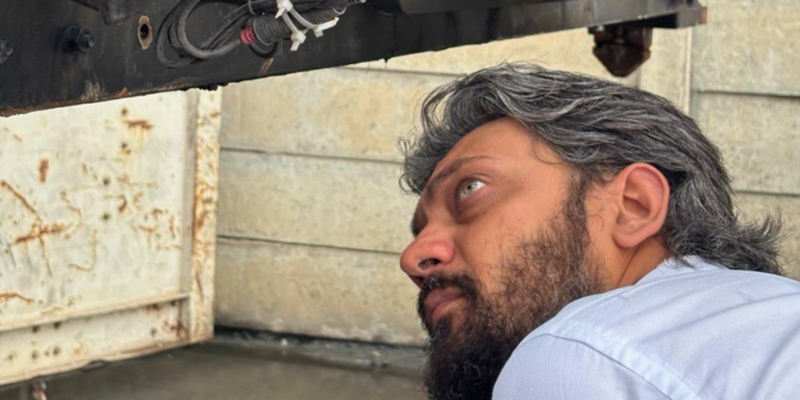
This week, at Automate Show 2025, I found myself lying flat under our demo setup, rewiring a misplaced connector, checking every module, tightening what was loose. It wasn’t glamorous. It wasn’t on the agenda. But it was necessary.

Because in our world, if the small things aren’t right, the big picture never looks right.

When we say we deliver AI Vision with no blind spots, we mean it. Not just in software. But in everything we do. Even the booth setup.

This is not about a role or designation. It’s about ownership. The belief that every inch matters, every wire counts, every eye that visits our stall deserves to see the work in its best, most accurate form.

With our partners at MemryX Inc., we aren’t here to just show what we’ve built. We’re here to make sure you see it the way it was meant to be seen, clear, functional, and impactful.

So yes, I was under the table today. But I was also standing for something bigger: precision that shows, and dedication that doesn’t need a spotlight.

Because what you don’t see is exactly what makes what you do see worth it.


Offbeat Essence – When The Office Got Nostalgic

Nothing hits harder than the sweet punch of nostalgia, especially when shared. On the last friday of month, our office decided to press pause on deadlines and hit play on memories.

The theme? Childhood. The mission? To laugh, reminisce, and maybe shed a happy tear or two.

From tales of scraped knees on playgrounds to dramatic retellings of school punishments, and from Shaktimaan obsessions to those shiny pencil boxes we guarded with our lives, every story took us back to a simpler time. One of our teammates even confessed to crying when their favorite cartoon was cancelled (don’t worry, no names will be named!).

And because memories taste better with snacks, we had a spread straight out of a 90s tiffin box, Parle-G, Fatafat, Boomer, Rasna, and those classic cream rolls we once traded for best-friend status.

What began as a casual session turned into a celebration of the weird, wonderful, and wildly innocent versions of ourselves. It reminded us that behind every code, campaign, or call, there’s a child who once believed Maggi was a food group and recess was a right.

So here’s to the memories that shaped us, and to making new ones, one #FlashbackFriday at a time.
Your turn: What’s one memory that instantly transports you back to your childhood?

Taipei’s Quiet Code

Just back from Taipei, and my suitcase wasn’t the only thing full — my mind, heart, and notebook are brimming with insights from COMPUTEX 2025.

As someone rooted in software and vision systems, this trip felt like stepping into the other half of the equation, the hardware that holds the soul of every AI breakthrough. From high-speed inference chips to compact embedded boards, the halls of COMPUTEX pulsed with the rhythm of the future. But beyond the tech specs and sleek booths, what struck me most was something softer: a spirit of sincerity, discipline, and quiet pride.

Taipei isn’t loud in its brilliance, it flows. From the way metro trains slide into stations with silent precision, to how strangers nod with warmth, and even how vendors serve you with care, it reminded me of Japan, and yet felt uniquely its own. Every step in the city echoed balance: of speed and silence, ambition and humility, motion and meaning.

One unforgettable moment: catching a glimpse of NVIDIA’s Jensen Huang amidst the crowd. A leader whose presence didn’t need an announcement, it was simply felt. In that instant, I understood something deeper about leadership. It’s not just about being at the top, it’s about showing up for the roots.

COMPUTEX wasn’t just a tech show; it was a reminder that innovation doesn’t live in isolation. It grows when people meet, when curiosity is shared, and when competition gives way to contribution.

Key lesson: When your purpose is clear and your vision includes others, the world stops being a race and starts becoming a rhythm.

From under-the-radar conversations to eye-opening product demos, the biggest takeaway for me was this: When your work is meant to serve something greater than yourself, collaboration becomes the natural path.


Until the Next Time…

This month was excellent. None of this would be possible without the team behind the scenes, the midnight coders, the pixel-perfect executers, the relentless QA eyes, the ops wizards, the global coordinators. Every build, every bug-fix, every brainstorm counted.

We don’t just deliver tech. We show up. We listen before we do. Walk the floor before we pitch. And build not just AI solutions, but trust, foresight, and lasting partnerships.

2025 ANPR Guide – How License Plate Recognition Is Revolutionizing Modern Operations

Automatic Number Plate Recognition (ANPR) has rapidly evolved from a regular law enforcement tool into a global smart city technology.

From managing parking lots in busy downtowns to securing national borders, ANPR systems play an important role in modern infrastructure. Municipal planners, parking tech providers, logistics companies, port managers, and law enforcement professionals all rely on ANPR to automate vehicle identification and gain real-time insights.

WebOccult, as a leader in AI-driven image and video analytics, has been at the forefront of this transformation, offering smart parking systems & solutions that leverage advanced ANPR technology.

In this comprehensive guide to ANPR cameras and systems, well explore what ANPR is and how it works, the latest advancements in 2025, key benefits for operations, the industries that benefit most, tips on choosing the right system, and the challenges to consider.

By the end, youll understand why AI-powered ANPR is a cornerstone of intelligent transportation and how WebOccults expertise can help you harness it effectively.

What Is Automatic Number Plate Recognition (ANPR)?

Automatic Number Plate Recognition (ANPR), also known as Automatic License Plate Recognition (ALPR), is a technology that uses cameras and computer vision software to automatically read vehicle license plate numbers.

An ANPR system typically consists of an automatic number plate recognition camera, specialized software (often OCR), and integration with databases or control systems. The goal is simple- capture an image of a vehicles number plate, extract the alphanumeric text, and use that information for some actionable purpose, all in a fraction of a second and without human intervention.

 Number plate scanning process flow

How ANPR Works

Core Components and Process

At its core, ANPR technology follows a multi-step process that blends advanced hardware and software-

  • Image Capture- High-resolution cameras are deployed at strategic points, such as entry gates, toll booths, or roadside poles, to capture clear images of passing vehicle plates. Modern ANPR cameras are purpose-built to handle variable speeds (even up to highway speeds) and work day or night, in various lighting and weather conditions.
  • Plate Detection & OCR- Once an image is captured, the systems software locates the license plate region in the image and extracts the characters using optical character recognition. Advanced ANPR technology today often employs deep learning models to improve accuracy in recognizing characters, even for non-standard fonts or plate designs.
  • Data Matching and Analysis- The recognized plate number is then cross-referenced against relevant databases or lists. For example, an access control system will check if the plate is on an authorized list; a law enforcement system will check for any alerts or if the vehicle is stolen; a parking system might start a parking session timer. This database integration is a core strength of ANPR, connecting physical vehicle detection to digital records.
  • Automated Action & Integration- Based on the database lookup, the ANPR system can trigger automated responses. This could be opening a gate or parking barrier if a vehicle is authorized, alerting security if a blacklisted vehicle is detected, or logging entry/exit times for parking fee calculation. Modern ANPR solutions dont operate in isolation, they integrate with broader management systems to enable real-time decision making across the operation.

In essence, ANPR systems act as tireless sentinels on our roadways, capturing thousands of plates reliably and turning that visual data into actionable intelligence. What began decades ago as a basic system for highway toll enforcement is now a cornerstone of automation in traffic management, security, and parking.

Truck Security Checkpoint

Whats New in ANPR for 2025

ANPR technology in 2025 is smarter, faster, and more powerfully connected than ever. Recent advancements in artificial intelligence and edge computing have supercharged ANPR systems, addressing many past limitations.

Here are the key developments defining ANPR in 2025-

  • Advanced AI and Deep Learning Integration- Modern ANPR systems leverage deep learning models for plate detection and character recognition, dramatically improving accuracy. This is especially impactful in challenging conditions, such as low-light nights, fog or rain, and skewed or partially obscured plates. AI-based image enhancement and custom neural networks mean the system can correctly read plates even under glare or headlights. The result is far fewer false reads and higher accuracy in poor lighting and adverse weather than earlier generation systems. These AI-powered ANPR improvements also enable reading of non-standard plates (different fonts, colors, or formats) that used to confuse older systems.
    In short, if a human eye can eventually decipher the plate, chances are the AI can too, and probably faster.
  • Edge Computing for Real-Time Processing- The rise of powerful, compact processors has led to ANPR moving to the networks edge. Instead of sending every image to a distant server, many ANPR cameras now process images on-device in real time. This edge computing approach greatly reduces latency, critical for scenarios like fast-moving traffic or instant gate control. By processing at the source, ANPR systems can make split-second decisions.
  • Integration with Smart City Infrastructure and IoT- ANPR is now a key component of the smart city and IoT ecosystem. Todays systems are designed with interoperability in mind. Smart parking solution deployments, for instance, use ANPR to not only identify vehicles but also to update cloud-based parking databases, parking guidance apps, and digital signage in real time. In traffic management, cities are integrating ANPR cameras with traffic lights and variable message signs to manage congestion, for example, detecting a sudden influx of vehicles and adjusting signal timing.
  • Privacy and Security Enhancements- With the growing use of ANPR, 2025 has also seen a push toward privacy-centric ANPR solutions. New regulations in various regions are prompting ANPR providers to build in features like automatic data anonymization and strict data retention policies. Some advanced systems even allow selective masking of plates that are not on any watchlist, to alleviate privacy concerns. WebOccult stays ahead of these trends by ensuring our ANPR and video analytics deployments comply with data protection laws and use encryption for transmitting sensitive information. The focus on privacy goes hand-in-hand with cybersecurity, protecting ANPR databases from breaches is paramount, especially as these systems become part of critical city infrastructure.

Overall, ANPR technology in 2025 is characterized by greater intelligence, resilience, and connectivity. Its no longer just about reading plates, its about doing it instantly, under any conditions, and making that data immediately useful to other systems.

Benefits of ANPR for Modern Operations

Why are organizations investing in ANPR? The ANPR system benefits extend across efficiency, security, and data-driven decision making. Here are some of the top benefits of deploying ANPR in modern operations-

  • Increased Efficiency & Automation- ANPR automates tasks that once required human effort, such as manually logging vehicle entries or checking permits. This improves operational efficiency dramatically. Vehicles dont need to stop for inspection at gates or toll booths, since their plates are detected and verified on the move. In parking lots, smart parking systems & solutions using ANPR let drivers enter and exit without fumbling for tickets, reducing queues. By eliminating manual steps, organizations can handle higher vehicle throughput with the same or fewer staff.
  • Enhanced Security and Safety- Every vehicle that passes an ANPR camera is instantly identified and checked. This is a boon for security and law enforcement. ANPR acts as a force multiplier for public safety by flagging vehicles of interest in real time. Police can automatically get alerts for stolen cars, wanted criminal suspects, or vehicles associated with an AMBER alert for missing persons.
    This enables swift action to deter and disrupt criminal activity, as seen in how police in cities like London use ANPR to catch traveling criminals and even terrorists In secure facilities (airports, ports, corporate campuses), ANPR restricts access to authorized vehicles only, preventing unauthorized intrusions.
  • Real-Time Insights and Monitoring- An oft-overlooked benefit of ANPR is the rich data it generates. Every scan is a piece of data that can be analyzed for insights. Real-time monitoring of vehicle movement helps authorities or operators understand traffic patterns and respond promptly. A city traffic center, for example, can observe via ANPR how many out-of-town vehicles are entering during a holiday weekend and adjust policing or traffic signal timings accordingly. Logistics managers at a large warehouse can get a live feed of all incoming/outgoing trucks, helping with load planning.
  • Accountability and Audit Trails- ANPR systems create an automatic log of vehicle movements, who entered when, which vehicle accessed what area, etc. This audit trail is invaluable for accountability. In law enforcement investigations, ANPR logs can provide leads or evidence. For commercial operations, if theres an incident of theft or damage, the vehicle logs can help identify which vehicles were present. Cities use ANPR data for things like enforcing congestion charges or low-emission zones by recording plate entries into certain areas. This automated record-keeping ensures that there is always data to fall back on, improving transparency and governance.
    For instance, a leading parking management company that manages hundreds of lots could utilize ANPR logs to analyze compliance, peak usage times, or to resolve disputes (like if someone claims they were incorrectly fined, the system can show when they entered/exited).

In summary, ANPR brings efficiency, safety, and intelligence to operations involving vehicles. Whether its guiding strategic decisions with data or handling routine tasks hands-free, the technology pays dividends across various dimensions. Little wonder that sectors from law enforcement to retail are embracing ANPR as a critical tool.

Industries That Benefit Most from ANPR

ANPRs versatility means its useful almost anywhere vehicles move. However, several industries and sectors have particularly high returns from ANPR deployments. WebOccults broad experience in image analytics and smart infrastructure has involved many of these domains. Here are some of the leaders-

Law Enforcement & Public Safety

Law enforcement agencies were early adopters of ANPR, and the technology has become indispensable in policing and public safety. Police cruisers are often equipped with ANPR cameras, continuously scanning license plates as they patrol streets or highway

Traffic enforcement is another huge area- speed cameras and red-light cameras often have ANPR to identify violators and issue automated tickets. This encourages safer driving behavior. ANPR is also used for enforcing insurance and registration, cameras can quickly cross-check a plate against insurance databases and notify police of uninsured vehicles on the road.

Transportation & Logistics

The transportation and logistics sector thrives on timing and efficiency, and ANPR has become a key enabler in this space. Logistics hubs, distribution centers, and warehouses use ANPR to streamline their operations. Instead of manual gate logs and radio calls, trucks are identified automatically as they arrive. The system can instantly pull up relevant information and notify dock managers. This reduces wait times at gates and keeps goods flowing smoothly. In fact, many warehouse management systems now integrate with ANPR for synchronized loading/unloading, when a trucks plate is read, the system knows its on site and can update schedules.

In general transportation infrastructure, one of the most visible uses of ANPR is in toll collection systems on highways. Many countries have adopted electronic tolling where drivers no longer stop to pay tolls. ANPR cameras positioned at toll points capture license plates at full speed, and the system automatically bills the vehicle owner or debits their account.

Importantly, WebOccult has worked on advanced solutions in this sector, such as integrating ANPR with logistics management platforms to provide real-time alerts if a truck is headed to the wrong gate or if delays start building up. The transport sectors adoption of ANPR is all about moving things faster and more securely, and in 2025 its hard to imagine a modern logistics hub or highway system without it.

Municipal and Port Operations

City governments and port authorities are among the biggest beneficiaries of ANPR technology. Municipal operations cover a broad range of use cases- from urban parking management to traffic analytics. City parking departments deploy ANPR for enforcing parking regulations (e.g., scanning plates to catch overstaying vehicles or those without permits). Many cities have rolled out smart parking solutions where cameras at lot entrances log vehicles, and drivers can later be billed automatically or have their parking validated via apps.

Another key municipal use is toll and congestion zone management. As mentioned earlier, cities like London, Stockholm, and others implement congestion charges or low-emission zone fees based on ANPR reads of vehicles entering certain areas. This has been effective in regulating traffic volumes and encouraging greener vehicle use. For law enforcement on a municipal level, ANPR helps with things like tracking vehicles with outstanding violations or tax evasion.

Port operations, including seaports and airports, also see tremendous value from ANPR. Consider a busy container seaport- thousands of trucks enter and exit daily carrying shipping containers. ANPR at the port gates automates the check-in process. Truck drivers often pre-register their license plate and container pickup information. When they arrive, an ANPR camera verifies their plate and the system pulls up what container theyre assigned to, directing them to the correct loading area. This accelerates entry and reduces congestion at port gates.

Security is improved too- only trucks that are scheduled (and whose plates are recognized) are allowed in, which helps prevent cargo theft and unauthorized access. The system also logs every vehicle entry/exit, creating a traceable record for security audits or investigations if needed.

Airports use ANPR similarly, for instance, to manage taxi queues (only authorized taxis can enter pickup zones), or to control employee parking and car rental returns. Port security teams integrate ANPR with their surveillance- if a certain vehicle is flagged by law enforcement, the port can be alerted the moment that plate is scanned at an entry point.

How to Choose the Right ANPR System

With numerous ANPR products and solutions on the market, choosing the right system for your needs can be challenging. Whether youre a city official looking to deploy traffic cameras or a leading parking management company upgrading your lot technology, its crucial to evaluate ANPR options against key criteria. Here are some important factors to consider when selecting an ANPR system-

  • Accuracy and OCR Performance- Accuracy is king in ANPR. Look for systems with a proven high recognition rate, ideally 95%+ under typical conditions, and the ability to handle the specific plates and fonts in your region. Ask vendors how their system performs in low light, bad weather, or with dirty/damaged plates. Modern AI-based systems have improved accuracy in challenging conditions, so compare the tech- is it using the latest deep learning OCR or older template-matching? Also, consider if the system can accurately read non-standard or customized plates if thats relevant (for example, special event or temporary plates).
  • Speed and Scalability- In busy operations, speed matters. Check the systems processing time per vehicle and its throughput. Can it handle multiple lanes or many cameras simultaneously? Scalability is key, you might start with one parking lot or a few intersections, but you want the option to expand city-wide or enterprise-wide. Ensure the software supports adding more cameras easily and that license costs for expansion are reasonable.
  • Integration Capabilities- ANPR system integration with your existing and future systems is a major consideration. The ANPR software should offer APIs or standard protocols to share data with other applications, be it a parking management system, a law enforcement database, or a toll billing platform. Verify compatibility with your current hardware or software stack. The right choice will fit into your workflow with minimal friction, so you get the most value from the data.

Taking the time to assess these factors will ensure you select an ANPR system that not only meets your immediate needs but also serves you well as your operations grow. The right choice will be reliable, efficient, and backed by professionals who help you maximize its value.

Challenges and Considerations in 2025

While ANPR offers numerous advantages, its important to approach deployments with eyes open to potential challenges. The technology, especially in 2025s connected world, comes with considerations around privacy, reliability, and ethics. Here are some of the key challenges and how to address them-

  • Privacy Concerns and Evolving Regulations- ANPR systems inherently collect license plate data, which can be considered personal information. This raises data privacy concerns among the public and regulators. Around the world, laws like GDPR in Europe or various state laws in the US are shaping how ANPR data can be used and stored. Organizations must ensure compliance, for instance, only using ANPR data for legitimate purposes (e.g., law enforcement, toll collection) and not for unwarranted surveillance. Data retention policies should be in place- only keep plate data for as long as necessary and secure it against breaches.
  • Accuracy Issues and False Positives- No system is 100% perfect. ANPR cameras can sometimes misread a plate or fail to read one altogether. Poor weather, obscure fonts, dirt on plates, or even simple algorithm errors can lead to mistakes, like misidentifying a “8” as a. False positives in critical systems (like law enforcement) could lead to wrongful stops, and missed reads in parking might let violators go by. To mitigate this, continuous calibration and testing are necessary. Use high-quality cameras and regularly update the OCR software since AI models improve over time.
  • Plate Spoofing and Evasion Tactics- On the flip side of false positives are intentional attempts to beat ANPR systems. Plate spoofing can include tactics like using covers, sprays, or altered fonts to foil camera reads. Some drivers have been known to use devices that flip or hide their plate as they approach cameras (particularly to evade tolls or tickets). While these are illegal in most jurisdictions, they do pose a challenge. ANPR technology is improving to counter such tactics, for example, some cameras use multiple angles or ultraviolet imaging to see through certain obscuring films.
  • Long-Term Maintenance and Total Cost- Deploying ANPR is not a one-and-done expense; it requires long-term maintenance and updates. Camera hardware may need periodic recalibration, cleaning, or part replacements. Software should be kept up to date to improve algorithms and security. There is also the cost of data storage as months and years of plate reads accumulate. When budgeting for ANPR, factor in these ongoing costs. Its wise to have a maintenance contract or plan, whether with the vendor or an in-house team, to ensure the system remains reliable.
  • Ethical Use and Public Acceptance- With great power comes great responsibility. The ethical deployment of ANPR is a consideration in 2025 that organizations must heed. Surveillance technologies can make communities uneasy if not implemented with care. There needs to be a balance between security and privacy, for example, using ANPR to catch criminals is broadly supported, but using it to track citizens movements with no cause can breach public trust.Its crucial to define and communicate the scope of ANPR use. If youre a city, explain to residents that cameras are for traffic management and law enforcement purposes, not to monitor peoples daily routines. Establish clear policies on who can access ANPR data and for what purpose. Some entities even involve community oversight or audits for transparency.

Each of these considerations can be managed with foresight and responsible practices. In fact, WebOccult often starts client engagements with a thorough discussion on these factors, from compliance to contingency planning, to ensure a smooth and ethical implementation.

Conclusion

As weve seen, Automatic Number Plate Recognition in 2025 is a mature, powerful technology that is transforming the way we manage vehicles, security, and transportation infrastructure.

From the moment a vehicle drives into a city or facility, ANPR systems are enabling rapid identification and automated decisions, whether its granting access to a parking garage, charging a toll fee, or alerting police to a wanted car. The latest advances in AI and edge computing have made these systems more accurate and faster than ever, while integration with IoT and smart city platforms means ANPR data is driving broader innovations in urban mobility.

However, succeeding with ANPR requires not just the right technology, but also the right approach. This includes selecting a robust system tailored to your needs, understanding the importance of maintenance, and addressing privacy and ethical considerations. Thats where partnering with experts makes a difference.

WebOccult, with its expertise in AI-powered ANPR, smart parking systems, and real-time video analytics, stands ready to guide you through this journey. We pride ourselves on being more than just a technology provider, were a leading parking management company partner and smart city enabler who understands the bigger picture of your operations.

If youre looking to implement or upgrade an ANPR system, WebOccults team is here to help. Ready to take the next step? Contact WebOccult today to discover how our ANPR and smart parking solutions can elevate your operations to new heights. Lets drive into the future of intelligent transportation together.


How AI and Computer Vision Are Revolutionizing Quality Control in Manufacturing

Artificial Intelligence (AI) and Computer Vision consist of algorithms, cameras, and computing hardware that allow machines to interpret visual information. In manufacturing, these technologies replace or augment human inspection by capturing images or video of products, then analyzing them with deep learning models to detect defects, measure dimensions, or verify assembly. Unlike simple image filters, AI-driven systems learn from data, adapting to new product lines and lighting conditions, enabling consistent, high-speed visual inspection across vast production volumes.

Importance in Modern Manufacturing

Today’s factories demand zero-defect outcomes, rapid throughput, and strict compliance. Manual inspections are slow, inconsistent, and error-prone; traditional rule-based vision systems lack the flexibility to handle variations in product appearance. AI and Computer Vision transform quality control into a proactive, data-driven process. By continuously monitoring every item, manufacturers minimize scrap, reduce rework costs, and accelerate production cycles. Ultimately, integrating these smart manufacturing technologies is critical for maintaining competitiveness and meeting increasingly stringent customer and regulatory demands.

What Is Computer Vision in Manufacturing?

Definition and Key Technologies

Computer Vision in manufacturing refers to using cameras, imaging sensors, and AI algorithms to automatically inspect products, components, and processes. The foundation of this technology relies on high-resolution industrial cameras that provide detailed images under variable lighting conditions, ensuring consistent visual data capture regardless of environmental changes. Scanners and 3D sensors work alongside these cameras to enable depth perception for precise dimensional checks, allowing manufacturers to verify measurements with submillimeter accuracy.

Edge computing devices, including GPUs, Jetson, and Ambiq chips, run AI inference directly onsite with minimal latency, eliminating the need for cloud processing and enabling real-time decision making. Deep learning models form the intelligence layer, utilizing Convolutional Neural Networks (CNNs) for classification tasks, object detection algorithms like YOLOv5 and Faster R-CNN for locating defects, and segmentation networks such as U-Net and Mask R-CNN for pixel-level analysis. Optical Character Recognition (OCR) technology complements these systems by reading and verifying text on labels, codes, or serial numbers in real time, ensuring complete product traceability.

How It Differs from Traditional Machine Vision

Rule-Based vs. Data-Driven- Traditional machine vision relies on static rules (thresholds, edge filters) that must be manually tuned for each product and lighting condition. In contrast, AI-driven computer vision learns from large datasets, adapting to product variations without manual reprogramming.

Scalability and Adaptability- Traditional systems often require significant downtime to retune when products or environments change. AI-based systems can retrain on new images quickly, scaling across multiple lines or locations.

Contextual Understanding- AI models can distinguish between benign variations (e.g., small color shifts) and true defects, reducing false positives and unnecessary rejects.

The Role of AI in Enhancing Computer Vision

Deep Learning and Image Recognition

Deep Learning, specifically CNNs, enables machines to automatically learn hierarchical features from images. Early layers capture edges and textures, while deeper layers identify complex shapes. In quality control applications, classification models serve as the primary decision-making tool, determining if a product meets standards or contains defects that require attention. Object detection models, particularly YOLOv5 and Faster R-CNN architectures, excel at locating and labeling multiple defects or components within a single image, providing comprehensive analysis without missing critical issues. Segmentation models like U-Net and Mask R-CNN take this analysis further by providing pixel-level maps of defects, which proves crucial for measuring crack sizes, defect areas, and understanding the severity of quality issues.

WebOccult leverages these architectures to develop AI-powered manufacturing solutions that identify scratches, misalignments, or missing parts with over 9599% accuracy.

Real-time Decision Making

AI models deployed on edge computing devices (like NVIDIA Jetson AGX Orin or Ambiq microcontrollers) process images in milliseconds. The instant pass/fail capability represents a fundamental shift in quality control, where defective parts trigger immediate rejection signals that prevent flawed items from proceeding down the production line, eliminating the possibility of contaminating entire batches. Automated sorting and rework systems work seamlessly with these decisions, ensuring good units continue through the production process while flawed ones are automatically steered to designated rework bins for correction or disposal. Perhaps most importantly, these systems enable process adjustments in real-time, where emerging defect patterns such as welding anomalies trigger alerts to operators or automatically adjust machine parameters to prevent future defects.

By embedding AI inference at the edge, WebOccult ensures every production anomaly is detected and addressed instantly, fulfilling the promise of AI-driven quality control.

Applications of Computer Vision in Quality Control

Crack detected in bottle on conveyor

Defect Detection and Classification

AI-powered vision systems identify a broad spectrum of defects with remarkable precision and consistency. Surface scratches and dents that might be invisible to the human eye are detected with microscopic accuracy on metals, plastics, or composite materials, ensuring that even the smallest imperfections don’t compromise product quality. The systems excel at identifying cracks and fractures through pixel-level segmentation that can locate micro-cracks in ceramics, glass, or welds before they propagate into catastrophic failures. Textural inconsistencies present another area where AI vision systems demonstrate superior capability, identifying weave irregularities in textiles or grain errors in veneers that could affect both aesthetics and functionality. Perhaps most critically, these systems confirm that every component is present and correctly positioned, whether it’s resistors and capacitors on PCBs or mechanical parts in complex assemblies, preventing costly functional failures downstream.

WebOccult’s defect classification solutions categorize each anomaly, e.g., “scratch,” “dent,” “crack,” “missing component”, facilitating targeted root-cause analysis and continuous improvement.

Surface Inspection

Maintaining surface quality is essential for brand reputation, and AI vision systems provide comprehensive inspection capabilities across various surface types and conditions. Paint and coating uniformity analysis identifies subtle variations in sheen, color, or thickness on automotive panels, consumer electronics, or coated pipelines that could indicate process problems or material defects. Reflective material analysis presents unique challenges that these systems overcome through multi-angle imaging and polarization filters that mitigate glare, enabling accurate inspection of glossy surfaces that traditional systems struggle with. Texture continuity verification ensures consistent weave patterns in fabrics or grain structures in wood products, catching tears, misalignments, or inconsistencies early in the production process before they reach customers.

Measurement and Dimensional Accuracy

Precision is vital when parts must fit with micron-level tolerances, and AI vision systems achieve this through sophisticated measurement techniques. 3D profiling with stereo and structured light cameras captures comprehensive depth data to measure height, width, and alignment with submillimeter accuracy, ensuring that even the most demanding aerospace and medical device applications meet their stringent requirements. 2D dimensional verification complements this capability by using high-resolution imaging to confirm hole spacing, edge alignment, and angular tolerances instantaneously, eliminating the time-consuming manual measurement processes that can bottleneck production. Real-time tolerance checking represents the pinnacle of this technology, enabling inspection of up to 500 units per minute while validating every critical dimension as parts move through inspection stations without slowing the production line.

Robotic arms monitoring assembly line

Assembly Verification

As product complexity grows, verifying correct assembly becomes increasingly crucial, and WebOccult’s assembly verification tools provide comprehensive confirmation of each build step. Wire harness and connector checks ensure proper routing and fully seated connections in automotive or industrial equipment, preventing electrical failures that could compromise safety or functionality. Screw presence and torque validation represents a sophisticated application where AI analyzes visual cues such as screw head depth to ensure each fastener is not only present but also properly tightened without being over-torqued, which could damage threads or components. Component orientation checks provide the final layer of verification, confirming that integrated circuits, sensors, or mechanical parts are oriented according to CAD specifications, preventing functional failures that might not be discovered until final testing or field deployment.

Factory automation benefits overview

Benefits of AI-Powered Quality Control Systems

Improved Accuracy and Consistency

Detection rates consistently exceed 95.99% accuracy levels, with WebOccult’s deep learning models identifying microscopic defects or subtle color variances that human inspectors routinely miss due to fatigue, distraction, or the limitations of human vision. The elimination of human variability represents a fundamental advantage, as AI systems apply identical criteria consistently across every shift, every day, removing errors caused by subjective judgment, fatigue, or inconsistent training between different operators, ensuring a uniform quality standard throughout production.

Reduced Inspection Time and Labor Costs

High throughput capabilities enable AI vision cameras to inspect 200 & 500 items per minute, compared to the 2030 items that human inspectors can reasonably handle, dramatically reducing inspection bottlenecks that often constrain production capacity. This automation optimizes labor allocation by freeing skilled quality control personnel from repetitive inspection tasks, allowing them to focus on higher-value activities like root cause analysis and continuous improvement initiatives that drive long-term operational excellence. The uninterrupted production capability ensures that manufacturing lines maintain peak speed without pausing for manual batch inspections, as AI systems make instant pass/fail decisions that keep products flowing seamlessly through the production process.

Data-Driven Process Improvements

Rich defect analytics capabilities ensure that every defect is automatically logged with precise timestamp, location, and severity data, creating a comprehensive database that transforms quality issues from isolated incidents into valuable insights for process improvement. Trend monitoring analyzes defect patterns by shift, machine, or material lot to uncover systematic process flaws, enabling proactive maintenance and process adjustments rather than reactive responses to quality problems. Continuous model retraining represents the self-improving nature of these systems, where AI pipelines automatically incorporate new defect imagery into retraining cycles, continuously refining accuracy and reducing false positives as operations evolve and new challenges emerge.

Scalability and Flexibility

Rapid deployment across multiple production lines becomes possible once AI models are trained on a specific product, as these systems can be rolled out to additional lines or global facilities with minimal additional data collection or configuration time. Adaptation to product changes demonstrates remarkable flexibility, where new product variants or design updates require only minor retraining rather than the lengthy reprogramming cycles that traditional rule-based systems demand, significantly reducing downtime during product transitions. Modular expansion capabilities allow factories to start with a single AI inspection station and gradually scale to dozens of cameras and edge devices as needs grow, with WebOccult’s scalable vision solutions ensuring seamless integration and expansion without disrupting existing operations.


Factory management with worker tracking

WebOccult’s Intelligent Solutions for Manufacturing

The Manufacturing Landscape

Modern manufacturing needs more than manpower, it needs machine vision. Our AI vision systems bring speed, precision, and consistency to your shop floor. They cut down human error, ensure product quality, and streamline decision-making, so every process runs smarter, faster, and more reliably.

Common Manufacturing Challenges:

Manual errors in traditional processes lead to significant inaccuracies that cost both time and resources, creating cascading effects throughout the production line that can impact delivery schedules and customer satisfaction. Operational inefficiencies often go undetected in complex manufacturing environments, but identifying and addressing these inefficiencies can significantly impact productivity and output, making the difference between profitable and unprofitable operations. Safety risks present an ongoing concern in manufacturing environments, where ensuring the protection of workers and compliance with increasingly stringent safety regulations requires constant vigilance and sophisticated monitoring systems. Poor quality control remains a persistent challenge, as maintaining high product quality while minimizing defects is essential for customer satisfaction and brand reputation in competitive markets.

Innovative Use Cases & Applications

Quality/Quantity/Time Control

AI-powered Machine Vision quality control systems are very helpful in maintaining high product quality. Catch defects that escape human eyes, reduce them by up to 50%, and deliver flawless products.

Applications:

  • Quality inspection in production lines
  • Real-time data analytics for quality assurance

Additional Solutions:

  • Production Line Monitoring
  • Staff Entry Validation
  • Real-Time Occupancy
  • Productive Shift Hours
  • Worker Safety Monitoring
  • Hazard Detection
  • Restricted Area Control

Who We Help

  • Manufacturing Managers Optimize operations and enhance accuracy with real-time insights and automation.
  • Quality Control Teams Streamline processes and ensure high product quality with advanced monitoring solutions.
  • Safety Officers Implement robust safety measures and ensure compliance with industry regulations.

WebOccult’s Edge in AI-Powered Manufacturing

End-to-End Expertise

WebOccult differentiates itself as a strategic partner for manufacturers embedding AI in manufacturing. Our comprehensive approach includes:

  • Needs Assessment & Proof of Concept- We begin by mapping each client’s unique requirements, product types, defect hotspots, and throughput goals
  • Custom Model Development- Our experts build AI models tailored to specific quality needs using state-of-the-art architectures
  • Edge Hardware Integration- We specify and integrate edge computing devices for low-latency inference directly on the factory floor
  • Easy Software & API Connectivity- Our platform provides robust API-based integration with MES and ERP systems
  • Ongoing Support & Continuous Learning- Post-deployment, WebOccult delivers 24/7 monitoring, maintenance, and model retraining

Proven Results Across Sectors

  • Automotive- Achieved an 85% reduction in weld seam and panel alignment defects and a 45% decrease in downstream rework time in critical body assembly lines.
  • Electronics- Realized 97% inspection accuracy on PCB lines with AI-driven defect detection, boosting yields from 92% to 99.5% and slashing scrap rates.
  • Pharmaceuticals- Eliminated labeling errors in vaccine production, attaining 100% compliance with FDA and EU regulations and preventing costly recalls.

Conclusion

Quality control has evolved into a front-line competitive advantage for smart factories. By integrating AI and computer vision in manufacturing, companies unlock:

  • Near-zero defect rates through automated, 24/7, high-speed inspection
  • Faster production cycles by eliminating manual bottlenecks
  • Data-driven improvement loops that optimize processes and reduce waste
  • Scalability to new products without extensive reprogramming or downtime

As quality expectations rise and product architectures become more complex, manufacturers adopting these smart manufacturing technologies will outperform those relying on legacy methods. Implementing AI for quality control is not just an enhancement, it’s a strategic imperative.

With WebOccult’s expertise in custom deep learning models, edge-based deployments, and seamless system integration, your production lines can transform into self-healing, self-optimizing engines of excellence.

Ready to revolutionize your quality control?

Schedule a consultation or demo. Let us show you how our AI-powered manufacturing solutions can elevate your QC to unprecedented levels, ensuring every part, every product, and every batch meets the highest standards of precision and reliability.

AI-Powered Construction Site Safety Monitoring and Compliance

Construction site safety and security features

Construction sites are hazardous environments by default, with heavy machinery, heights, and constant motion creating daily risks for workers.

In fact, falls alone account for roughly 35% of all construction fatalities, and overall construction workers face significantly higher injury odds than other industries. Ensuring job site safety and compliance is not just a moral imperative, its critical for protecting lives, avoiding costly delays, and meeting strict regulations.

Traditional safety measures (manual supervision, periodic checks) often fall short in these dynamic conditions. This is where AI steps in. AI-driven construction site safety monitoring provides 24—7 vigilance that humans alone cannot match, delivering real-time alerts and actionable insights. WebOccult, a leader in AI-powered image and video analytics, offers a suite of solutions tailored to enhance safety compliance on construction sites.

From monitoring personal protective equipment to detecting falls and intrusions, WebOccults tools help construction firms, industrial safety officers, and regulators maintain construction safety compliance while improving efficiency. In this comprehensive guide, we explore how real-time AI video analytics, as offered by WebOccult, is revolutionizing safety in industrial development projects.

By the end, it will be clear how these technologies raise the bar for safety and security on the jobsite, turning worksites into smarter, safer environments.

Job Site Safety and Compliance

Modern construction projects must adhere to a number of safety regulations and standards. Job site safety and compliance isnt just about avoiding fines; its about creating a culture and environment where accidents are minimized.

AI-powered construction safety monitoring systems act as tireless sentinels, continuously scanning for unsafe conditions or behavior. Unlike sporadic human inspections, AI can monitor every camera feed in real time and catch violations that might otherwise be missed. This proactive approach ensures compliance with safety protocols is maintained throughout the day, not just during scheduled audits.

WebOccults real-time monitoring solutions exemplify this, they enforce rules consistently, flagging issues instantaneously so that supervisors can intervene before an accident occurs. For example, if a worker enters a restricted area without authorization or a machine operator exceeds a speed limit, the system will trigger an alert immediately. Such real-time responsiveness helps companies correct hazards on the fly, boosting construction safety compliance and keeping projects on track.

PPE safety alert on construction site

Personal Protection Detection (PPE Compliance)

Wearing personal protective equipment (PPE), hard helmets, high-visibility vests, safety glasses, and more, is often the last line of defense against injury. Yet, ensuring 100% PPE compliance on a busy construction site is challenging with human oversight alone.

AI-powered personal protection detection technology changes the game. High-resolution cameras combined with computer vision can automatically check if each worker is wearing the required PPE and instantly flag any violations.

For instance, WebOccults PPE detection model recognizes whether workers have helmets, gloves, vests, and other gear, alerting supervisors if anyone is missing critical equipment. This kind of automated compliance monitoring has a direct impact on safety. Research shows that construction workers not using PPE are about 3 times more likely to be injured than those who do, and consistent PPE usage can reduce fall-related accidents by roughly 30%.

AI-driven PPE compliance monitoring acts as a powerful safety inspector, ensuring that the basic precautions, which are proven to save lives, are never overlooked. The result is a safer work environment and a strong foundation for overall construction site safety monitoring.

Fall & Incident Detection

Falls, trips, and other sudden incidents are among the most urgent threats on a construction site. When a worker slips from scaffolding or a ladder, it can cause serious injury or worse in no time.

AI-powered fall detection systems use video analytics to recognize when a person has fallen or a dangerous incident has occurred, and they trigger an immediate alert for assistance. Unlike relying on a coworker to notice and call for help, which might be delayed, these systems automatically detect the fall itself. WebOccults real-time video analytics can interpret abrupt movements or unusual postures (such as a person lying on the ground) as potential fall events and notify safety personnel right away. This rapid response is critical: a prompt medical intervention can significantly reduce the severity of injuries after a fall.

Proximity Monitoring & Zone Violation Alerts

Construction sites often have designated no-go zones and dangerous areas, for example, the swing radius of a crane, excavation pits, or zones where heavy equipment operates. Workers entering these zones inadvertently can lead to accidents or other serious incidents.

AI-powered proximity monitoring uses cameras and sensors to create virtual geofences and detect when a person or object breaches those safety boundaries. When an unauthorized entry or close call is detected, the system issues zone violation alerts in real time, warning the worker and site managers. This technology is crucial considering that nearly 17% of construction fatalities are due to workers being struck by objects or vehicles, often a result of someone being in the wrong place at the wrong time.

WebOccults video analytics solutions excel in this domain by continuously tracking the locations of personnel and moving equipment. For example, if a worker on foot gets too close to an operating forklift or crosses a safety line near an active crane, the AI will recognize the dangerous proximity. An alert can be sent as a loudspeaker announcement on site or as a vibration/sound on the workers wearable device. Supervisors can also receive a notification on their dashboard highlighting the zone breach.

By catching these incidents early, injuries can be averted before they occur. With AI guarding the zones, the moment someone steps into harms way, the system responds, keeping workers aware of risks and dramatically reducing the chance of preventable accidents.

Physical Security and Perimeter Control

Construction sites are not only filled with safety hazards, theyre also often open areas that can attract trespassers, thieves, or vandals after hours. Securing the perimeter of a jobsite is therefore a key concern for project managers and industrial security officers.

Traditional approaches like hiring security guards or installing basic motion sensors have limitations. However, an AI-enhanced perimeter intrusion detection system brings smart, reliable monitoring to the sites boundaries. High-definition night-vision cameras monitored by AI can distinguish between actual intruders and harmless events, drastically reducing false alarms. When an unauthorized person tries to enter the site, the system will detect their presence and trigger an alert, this could activate floodlights, sirens, or send an immediate notification to security personnel.

WebOccults real-time video analytics can be configured for physical security and perimeter control in exactly this way. They continuously watch fence lines, entry gates, and site peripheries for any breach or suspicious movement. If someone attempts to climb a fence or cut a lock, the AI virtual guard notices instantly and signals an alarm. This rapid detection not only helps catch intruders but can also deter them.

Construction firms can sleep easier knowing that after the workers head home, an intelligent security system is wide awake, keeping their valuable equipment and materials safe.

Intrusion Detection and Keep-Out Zones

While perimeter security covers the outer fences, intrusion detection inside the construction site focuses on sensitive or dangerous areas within the project. These keep-out zones might include areas like electrical rooms, high-voltage installations, trenches, or floors under construction where only certain personnel should enter.

WebOccults video analytics solutions allow site managers to designate such zones in the cameras field of view and then continuously monitor them for any unauthorized presence. If a worker or vehicle enters a restricted zone without clearance, the system will send out an instant alert, much like an invisible tripwire connected to an intelligent alarm. This has twofold benefits: it prevents accidents and also protects critical infrastructure from interference.

For example, consider a storage area for hazardous chemicals that only trained individuals should access. With AI intrusion detection, if someone without proper protective gear or authorization steps into that area, supervisors are notified immediately and can respond before any mishap occurs. By guarding internal keep-out zones, AI technology adds a critical layer of protection for both people and assets. It acts as a vigilant supervisor for those no entry areas that have the highest risks, thereby maintaining strict control over site safety and operations.

License plate recognition


License Plate Recognition (LPR)

Managing vehicle traffic in and out of a construction site can be as important as managing people. Trucks deliver materials, heavy equipment moves in and out, and unfortunately, theres also the risk of unauthorized vehicles attempting entry for theft or other malicious reasons.

License plate recognition (LPR) technology offers a smart solution to secure and streamline site access for vehicles. WebOccult provides an AI-powered license plate reader system that automatically captures and identifies vehicle license plates at entry gates. This automatic number plate recognition (ANPR) system can instantly check each plate against authorized entries and flag any vehicle that isnt pre-approved. The benefits are immediate in terms of both security and efficiency.

Firstly, an AI-based LPR system enforces that only known, authorized vehicles (e.g., delivery trucks, contractors, employee vehicles) gain access. If a plate isnt on the approved list, the system can deny gate entry or summon a security guards attention, reducing the chance of thieves driving onto the site. Secondly, construction site safety monitoring extends to the traffic flow: the system logs each vehicles entry and exit time automatically, creating a reliable attendance record for equipment and deliveries. WebOccults number plate scanner, for example, eliminates manual log errors and speeds up the vehicle check-in process dramatically. Trucks no longer sit idling at the gate while someone copies down plate numbers or fills out forms, the camera scans the plate and opens the gate in seconds if its a match.

The result is a safer, more efficient worksite where logistics flow smoothly and every vehicle is accounted for.

Loitering Detection

Not all threats to a construction site come in the form of an obvious intrusion or safety violation. Sometimes, its a person lingering where they shouldnt, or subtle behaviors that precede theft, vandalism, or even workplace incidents.

Loitering detection analytics use AI to identify when a person or vehicle remains in one area for too long without authorization. If someone is wandering around the site after hours or hanging around a sensitive area (like near expensive equipment) without a clear purpose, the system will treat that as suspicious activity and send an alert. This helps security personnel intervene early, before a loiterer can turn into a thief, for example.

AI-driven video surveillance from providers like WebOccult is trained to recognize normal movement patterns on a site, and conversely, to spot out-of-place behaviors. For instance, during working hours, its normal to see workers moving purposefully, but if the AI sees an individual pacing back and forth in a restricted zone or remaining idle in a corner for an unusually long time, it raises a red flag. One of the advantages of AI here is consistency: humans might overlook someone standing around, whereas the AI doesnt get complacent. The moment the predefined loitering time is exceeded, an alert is issued. These alerts can be in the form of a notification to a security officers phone or a pop-up on the monitoring dashboard.

In short, suspicious activity monitoring powered by AI functions like a dedicated guard with an eidetic memory, it knows what shouldnt be happening and doesnt ignore gut feelings. It alerts on the unusual, the out-of-schedule, and the out-of-bounds, thereby thwarting incidents ranging from petty theft to potential sabotage. This keeps the construction site not only safe, but also secure, around the clock.

Site Access & Worker Management

Controlling who is on your construction site, and tracking their time and attendance, is crucial for both security and productivity.

Methods like sign-in sheets or manual headcounts are prone to errors and even time theft. AI-based site access and worker management systems solve these problems by using technologies like facial recognition and automated ID verification.

WebOccult offers solutions that automatically log workers in and out through face recognition-based attendance systems. When a worker arrives at the gate or the muster point, a camera scans their face and matches it against the authorized personnel database, granting entry in seconds, no need to fumble with ID cards or punch cards. This ensures that the person is who they claim to be, eliminating fraudulent entries. It also creates a precise attendance record: managers know exactly who is on site, for how long, and in what zones. The impact on timekeeping accuracy and labor cost control is significant.

A study by the American Payroll Association found that nearly 75% of companies experience buddy punching or other time theft, which can add almost 5% to payroll costs on average.

Overall, AI-driven site access & worker management brings order and transparency to what used to be a manual and error-prone process. It secures entry points through facial recognition, and it streamlines attendance tracking, saving administrative time and preventing costly time theft.

Multi-Camera Tracking and Construction Trade Behavior Analysis

Large construction projects often involve multiple workers, carpenters, electricians, plumbers, steelworkers, all working in coordination. Keeping an eye on everything and understanding how different trade activities overlap can be daunting.

Multi-camera tracking systems, enhanced by AI, allow site managers to get a unified view of various activities across the site. By stitching together feeds from several cameras and applying object detection, these systems can recognize specific tasks (like welding, bricklaying, concrete pouring) and monitor their progress. AI-based analysis of construction trade worker behavior goes beyond just tracking location; it can actually interpret what workers are doing.

For example, computer vision can be trained to detect if a worker is operating a jackhammer versus tying rebar, or if a crew is installing drywall panels in a room. With this capability, managers gain quantitative data on how much of each activity is completed in a day. WebOccults real-time video analytics can assist in performing construction activity analysis using AI, which helps in project management and quality control. Imagine being able to automatically calculate how many bricks were laid today or identify that a particular teams workflow is slower than others.

Such insights can be gleaned when AI observes and classifies actions from multiple camera angles continuously. From a safety perspective, analyzing trade-specific behavior is vital. Each construction trade has its own set of risks, roofers face fall hazards, electricians risk electrocution, etc. AI can watch for safety rule compliance within each trades tasks.

For construction firms and project owners, this means projects that run more smoothly, with fewer injuries, and with rich data to prove compliance and improvement. Its a powerful advantage in an industry where knowledge is power and timing is everything.

Conclusion

From the moment a worker steps on site to the final day of the project, AI and computer vision are redefining how construction safety is managed. Weve seen how real-time alerts for PPE non-compliance, fall detection, and zone intrusions can dramatically reduce incidents. Weve explored the benefits of smart surveillance, from perimeter intrusion detection systems guarding against theft, to license plate readers expediting vehicle entry, to loitering detection and access control keeping threats at bay.

These technologies not only prevent accidents and losses, but also foster a culture of accountability and continuous improvement.

Construction firms and industrial site managers embracing AI-powered solutions are finding that safer sites are also more efficient sites. Workers feel safer and stay alert when they know hazards are being actively monitored and mitigated.

Ready to upgrade your sites safety?

WebOccults real-time video analytics solutions are helping construction and industrial companies worldwide create safer, more efficient workplaces. If youre looking to reduce accidents, ensure compliance, and gain actionable insights into your operations, now is the time to act.

Reach out to WebOccult for a consultation or demo for your needs!

Enhancing Pilgrim Management and Safety with AI-Powered Vision Solutions

The annual Hajj and Umrah pilgrimages draw millions of worshippers to the holy sites of Mecca and Medina. It makes them among the largest human gatherings in the world.

Managing these large crowds is a monumental challenge, with safety and security as top priorities. Overcrowding, lost persons, and potential security threats are constant concerns for organizers and authorities.

In recent years, technology advances in real-time image & video analytics and AI-driven vision solutions have opened new roads to tackle these challenges. Governments and event planners are using religious tourism analytics, including AI-enabled monitoring, object detection & tracking, and event detection, to optimize pilgrim management and ensure a safer, smoother experience for all pilgrims. For example, Saudi Arabia has begun deploying advanced AI systems to improve operational efficiency and safety for millions of pilgrims.

This blog explores how various AI and computer vision technologies, implemented with edge AI for low latency and with careful privacy and security compliance, can enhance crowd control, safety, and overall management of Hajj, Umrah, and other large religious events, like Mahakumbh, recently held in India.

We will also look into key solution areas such as crowd flow optimization, AI-powered people counting, biometric identification, missing person tracking, zone-based density tracking, threat detection, and even smart parking for pilgrims. By understanding these innovations, stakeholders, from tech-savvy planners to government authorities and religious tourism organizers, can better appreciate the value of movement guidance solutions and intelligent surveillance in creating a safer pilgrimage journey.

Crowd Management and Flow Optimization

Crowd Management and Flow Optimization

Effective crowd management during Hajj and Umrah is similar to pilgrim traffic control on a massive scale. AI-driven systems analyze live video feeds from thousands of CCTV cameras in and around holy sites to monitor crowd density, movement patterns, and congestion in real time.

As one recent analysis notes, AI algorithms can now track pilgrim movements, monitor crowd density, and identify potential bottlenecks in real time, providing valuable insights to human operators. This data-driven approach to crowd management means decisions, like opening additional gates or re-routing groups, can be made based on real-time evidence rather than intuition.

The result is a more balanced distribution of pilgrims across the site, reducing the risk of chokepoints and improving overall comfort.

Unique People Counting & Density Estimation

A main point of managing large gatherings is knowing exactly how many people are in each area at any particular time. Traditional manual counting is not sufficient for events on the scale of Hajj.

This is where AI-powered people counting comes in. Using object detection & tracking, smart camera systems can count individual pilgrims even in densely packed scenes, and importantly, differentiate unique individuals to avoid double-counting as people move between zones.

The combination of unique people counting and density estimation forms the basis of many religious tourism analytics dashboards, giving planners a live crowd census throughout the event. By deploying these AI-powered counting solutions at the edge (e.g., on AI-based cameras or local gateway devices), organizations ensure low-latency updates without relying on cloud connectivity, a crucial factor when millions of mobile devices and cameras compete for bandwidth.

In practice, AI-powered people counting allows Hajj management teams to allocate resources efficiently (like water, shade, or volunteer staff to crowded spots) and to enforce capacity limits before comfort turns into risk.

Flow Direction Guidance

Managing not just the volume of people but their direction of travel is another key to smooth pilgrim flow.

During rituals like Tawaf (circling the Kaaba), maintaining a flow in only one direction is critical, and any counter-flow or sudden stop can cause dangerous situations. AI-based movement guidance solutions tackle this by detecting the direction of crowd movement and identifying anomalies. If a group of pilgrims starts moving against the expected direction or an individual is accidentally going the wrong way, the system can immediately alert operators. By analyzing patterns over time, AI systems help optimize one-way routes and walking paths, for instance, staggering group departures to reduce intersections of flows.

Ultimately, by keeping everyone moving in the right direction, the pilgrimage rituals can be performed safely and on schedule, without chaotic interruptions.

Emergency Evacuation & Support

In massive gatherings, emergencies can take many forms, a sudden medical incident, a small fire, or a structural problem. They also demand rapid response to avoid escalation.

Real-time video analytics play a crucial role in emergency evacuation and support during pilgrimages. AI systems continuously scan for signs of distress or danger: for example, detecting a crowd crush forming, spotting a person who has collapsed, or recognizing smoke and fire. When a critical event is detected, the system can instantly alert emergency responders and suggest optimized actions.

AI-driven analysis helps identify crowd flow and density to pinpoint trapped areas, ensuring no section with people in danger is overlooked.

By combining computer vision with predictive modeling, authorities can not only respond to incidents but even anticipate them, for instance, detecting that a certain area is nearing a critical density and proactively initiating crowd thinning or evacuation before an accident occurs. Ultimately, these technologies save lives by giving emergency support teams the timely information and guidance they need to act decisively amid chaos.

Facial Recognition and Biometric Identification

Facial Recognition and Biometric Identification

Managing millions of pilgrims is not just about crowds, but also about individuals, verifying identities, ensuring only authorized persons enter certain areas, and quickly identifying people when needed.

Facial recognition and biometric identification technologies have started playing a major role in pilgrim management. Using AI-driven facial recognition cameras at checkpoints, entrances, and key sites, authorities can rapidly match a pilgrims face against a database of authorized Hajj registrants or visa holders. This enables automated identity verification for entry into venues, access to services, or accommodation check-ins without the need for manual ID checks.

Biometric wearables and IDs (such as fingerprint scans or the Digital Nusuk Card and smart Hajj bracelets also introduced by Saudi authorities.) complement vision-based recognition, creating a comprehensive access control system. Its worth noting that all these implementations come with a responsibility to protect personal data, strict privacy and security compliance measures are essential.

Missing Persons Recovery and Lost Person Tracking

Amid the sea of people during Hajj or Umrah, its common for individuals, especially the elderly or children, to get separated from their groups. Swiftly reuniting lost pilgrims with their companions or tour groups is a critical safety and service issue.

AI-based video analytics can dramatically improve missing persons recovery and lost person tracking. When a person is reported missing, authorities can input identifying characteristics (appearance, clothing color, or better yet a photo) into a computer vision consulting system that searches across live camera feeds and recorded footage. Modern systems use a combination of facial recognition and person re-identification (ReID) algorithms to scan for matches.

Additionally, AI analysis of crowd movement can detect if someone is moving in an unusual pattern that might indicate disorientation (such as a lone individual constantly changing direction in a searching manner). That could trigger a proactive check by nearby security personnel.

Lost person tracking solutions were successfully piloted in recent years, leveraging the massive network of surveillance cameras around the holy sites.

AI-driven lost person tracking provides peace of mind that even in such enormous gatherings, anyone who goes missing can be found and helped as quickly as possible.

Access Control

Not every area in a pilgrimage site is open to all pilgrims at all times. There are secure zones, such as control rooms, VIP sections, medical facilities, or gender-specific areas, that require strict access control.

Traditionally, guarding these zones relies on human guards checking badges or permits. Now, video analytics and IoT-based solutions are augmenting security at these checkpoints. Restricted area monitoring cameras can automatically verify if a person attempting to enter a zone has authorization. This may be achieved by facial recognition or by detecting an authorized badge or QR code on the person.

If someone without authorization crosses a virtual boundary, the system raises a real-time alert (secure zone entry violation) so security personnel can respond immediately.

This level of automated secure entry management was practically unthinkable a decade ago, but today its increasingly standard in large-scale events and is being tailored for the unique needs of pilgrimages.

Item Recovery Systems

Beyond people, another challenge in massive pilgrimages is handling lost belongings.

Every year, thousands of items, phones, bags, identification documents, wheelchairs, etc., are misplaced or left behind by pilgrims. Video analytics can assist in lost and found item recovery by detecting unattended objects and tracing their owners. Abandoned object recognition algorithms can scan camera feeds for items that have been left in one place for too long without an owner. For instance, if a bag is left unattended in a courtyard, the system flags it. This serves a dual purpose: it could be a security threat (suspicious package) or simply a lost item.

In either case, authorities can respond quickly, security teams can safely remove and inspect it. AI can then help match lost item reports with found objects. Suppose a pilgrim reports a lost red backpack; the system can review video footage to see if a red backpack was picked up by someone else or turned in to officials. In the event someone mistakenly walks away with another pilgrims bag, object tracking can follow the items movement across cameras and help locate the person who has it.

In sum, smart item recovery systems keep pilgrim belongings safer and reduce the burden on lost-and-found offices during events.

Pilgrim Behavior and Ritual Monitoring

Pilgrim Behavior & Ritual Monitoring

The spiritual rituals of Hajj and Umrah are deeply significant and must be performed in specific ways. Technology is now helping authorities and scholars ensure these rites are carried out smoothly and respectfully by monitoring pilgrim behavior and ritual performance.

Computer vision can observe patterns in how pilgrims move and behave during rituals, which can be useful for both management and research. For example, during the Stoning of the Devil (Rami al-Jamarat), cameras with AI might watch the crowd for any dangerous behaviors, such as pilgrims throwing objects improperly or climbing on railings, and alert security to intervene for safety. Similarly, during Tawaf, AI ritual observation systems can monitor if the crowd flow around the Kaaba remains uniform and if anyone appears to be in distress (perhaps someone slowing down suddenly due to exhaustion or heat).

With edge AI deployments at the site, these insights come in real-time. Moreover, respectful monitoring of rituals (without invading privacy) can also help religious authorities understand if pilgrims are completing the rites correctly.

Its a fine example of technology assisting tradition, ensuring every pilgrim can fulfill their duties in the proper manner.

Ritual Compliance Guidance

In line with behavior monitoring, ritual compliance guidance takes a more active role – using AI to guide pilgrims in real time so that they perform religious rites correctly and efficiently.

This is an emerging area where AI overlaps with educational outreach and on-site assistance. AI ritual observation systems essentially act like a virtual guide or guardian, observing the key steps of rituals and providing feedback or instruction when needed. Consider the Umrah pilgrimage, which involves a sequence of rituals.

On the ground, computer vision consulting teams have been working on systems that use cameras to observe collective rituals and identify any deviations. For example, if a group of pilgrims were to inadvertently start the stoning ritual at the wrong pillar or outside the allotted time window, the system could catch this and notify officials to provide corrective guidance.

Such guided experiences would help maintain compliance with religious requirements.

Overcrowding Warnings

One of the gravest dangers during Hajj has historically been overcrowding leading to stampedes or crushes. Preventing such tragedies is a paramount goal of any modern pilgrim management system.

AI-powered overcrowding warning systems keep constant watch on crowd densities in every zone and issue timely alerts before a situation becomes critical. As mentioned earlier, video analytics can automatically detect unusually high crowd density in specific areas and notify authorities for intervention.

This is typically implemented by setting threshold levels for each zone based on capacity and historical data, for example, if the area around the Jamarat pillars exceeds a certain number of people per square meter, an alarm is triggered in the command center. In response, officials might temporarily halt additional pilgrims from entering that area, redirect new arrivals to alternative routes, or announce a pause in the ritual until density reduces.

This is arguably one of the most lifesaving applications of AI in religious tourism today.

Security and Threat Detection

Large religious events unfortunately can attract security risks, from petty theft and lost items to more serious threats like terrorism. AI-driven surveillance enhances security by providing automatic threat detection across the venue. Here are some key security-focused capabilities:

  • Loitering Detection & Suspicious Activity Monitoring – AI systems analyze movement patterns and can flag when an individual is loitering in a sensitive area or exhibiting unusual behavior.
    For example, if someone remains in one spot for an excessive time near a restricted zone or appears to be surveilling an area, the AI vision system notes this for security staff to check.
  • Abandoned Object Recognition – Unattended bags or objects are a major security concern, as they could represent lost items or potential hazards. AI-powered cameras continuously look for objects that have been left behind. When an item is detected sitting stationary without any person attending to it for a defined period, an alert is triggered.
  • Secure Zone Violation Tracking – Also known as restricted area monitoring, this involves ensuring that people do not enter off-limits zones (or leave designated zones) without permission. AI can establish virtual perimeters using camera feeds. If someone crosses a virtual line, say, stepping into the base of a minaret or climbing a fence into a closed section, the system will automatically log the intrusion and alert security.
  • Suspicious Objects and Hazard Detection – Beyond bags, AI is improving at recognizing weapons or dangerous materials in real time video (though this is challenging in dense crowds). Some systems are trained to detect the shapes of firearms or knives if visible, or to notice if someone abandons a bag in a rush. Thermal cameras with AI can also detect heat signatures that might indicate something like a hidden fire or an overheated device about to explode.

All these capabilities work in sync to create an AI-driven safety net. The moment something is abnormal, be it a person acting oddly or an object where it shouldnt be, alerts go to the Integrated Command Center and to officers mobile devices.

In the words of experts, AI vision adds an extra layer of vigilance to large events, helping prevent fights, stampedes, or other incidents through early detection.

Conclusion

The convergence of real-time video analytics, AI, and smart vision is revolutionizing pilgrim management and safety for events like Hajj and Umrah.

From guiding millions of people through sacred rituals to tracking objects, these technologies provide a level of insight and control that was impossible in the past. Religious tourism analytics solutions now encompass everything from crowd density monitoring and zone-based density tracking, to biometric identification of pilgrims, to advanced loitering detection and abandoned object recognition for security.

The result is a safer, more organized, and more fulfilling experience for pilgrims.

Ready to enhance safety and efficiency in these pilgrim events?

At WebOccult, we specialize in tailoring these advanced solutions to your needs, from smart crowd management systems to secure access control and beyond.

Our experts can consult on deploying privacy-aware, low-latency edge AI systems that transform how you handle large crowds and complex events. If your involved in organizing religious tourism or any mass gathering, reach out to us to discover how AI and computer vision can empower your pilgrim traffic control and safety initiatives.


WebOccult & MemryX : They say opposites attract. In tech, they disrupt

A powerful partnership is making its debut at Automate 2025, the biggest robotics and automation event in North America.

MemryX, a top provider of AI hardware, and WebOccult, a specialist in AI Computer Vision software, have teamed up to showcase a joint edge-native solution. This collaboration, set to be revealed May 12-15 at Detroit Huntington Place, is set to change how we use AI in manufacturing factories, retail stores, traffic control, shipyards and more.

When two ends of a line connect, the result is often greater than expected.

MemryX and WebOccult partnership is like a natural male-female bond, a tech couple where each partner brings strengths that balance the other. MemryX delivers solid power and speed, while WebOccult offers smart insights and understanding.

MemryX – The Fast, Efficient AI Hardware

MemryX is known for its high-speed, low-power AI accelerators. Its main product the MX3 AI Accelerator comes as a chip or a four-chip M.2 module and gives strong performance with little energy use. This makes it great for running powerful AI on small devices without the need for fans or heavy cooling.

What makes MemryX strong –

  • Fast but Low Power – Each M.2 module with four MX3 chips gives up to 24 TOPS of computing speed while using just 6-8 watts. This means it can handle tough AI tasks while staying cool and quiet.
  • Ready for Any AI Model – Over 1,000 AI models have been tested and work well on MemryX. Developers dont need to make big changes or retrain their models. MemryX adjusts to fit your AI, not the other way around.
  • Handles Many Streams at Once – A single MemryX card can run many AI models on dozens of video feeds at the same time. Need more power? Just add more modules. They work together smoothly, growing from a smart camera to a large system easily.

MemryX gives a solid base for edge AI, the dependable body that carries out big tasks reliably.

WebOccult – Smart Software for Vision and Insights

WebOccult is known for turning cameras into smart tools. Its software understands video and gives useful insights in real time. From shops and factories to roads and cities, WebOccult tools help people see more and act faster.

What makes WebOccult sharp –

  • Full Set of Vision Tools – WebOccult offers object tracking, face recognition, motion alerts, image sorting, OCR, and more. It turns video into clear, useful information 24×7.
  • Custom for Each Industry – WebOccult adapts its tools for each industry. It helps shops spot theft, factories check product quality, and cities keep streets safe. Even ports and borders use it for tracking and safety.
  • Real-Time at the Edge – WebOccult designs its tools to work right where the video is made. This cuts delays, protects privacy, and saves on internet use. Whether it a traffic light or a drone, decisions happen instantly on-site.

WebOccult is the mind of the team. It doesnt just look, it understands what happening and points out what matters.

One Team, One Powerful System

MemryX and WebOccult together offer a complete vision AI system that both strong and smart. All AI runs on-site, using MemryX chips and WebOccult models. That means fast results, fewer delays, and high accuracy – without needing cloud servers.

Why this matters –

  • Instant Results – The system can watch and analyze many video feeds at once, reacting quickly to what it sees. In a factory, it checks products. On a road, it spots traffic jams. All in real time.
  • Easy to Grow – MemryX hardware is light and strong, so it can run AI tasks all day without heating up. As more cameras or jobs are added, more modules can be plugged in, building a bigger system smoothly.
  • Works Together Easily – WebOccult models work right away on MemryX hardware. No need to retrain or adjust things. The two systems talk to each other clearly. It like a smooth dance where both partners know the steps.
  • Better Privacy and Safety – Since the video stays local and doesnt go to the cloud, privacy is safer. It also means the system keeps working even if the internet is down. This is key for places like hazardous areas, assembly lines, or stores where security and uptime matter.

Visit Us at Automate 2025

MemryX and WebOccult invite you to see their system in action at Automate 2025 (Booth #8126). Youll watch real-time video feeds being processed live on small edge devices. Youll see the system spot events across many cameras at once – all without cloud delays.

If you work in smart manufacturing, traffic systems, safety, or any field needing real-time vision, stop by the booth. Meet the teams from May 12-15 in Detroit. See how hardware and software, when balanced right, can change what possible in edge AI.

Most demos need explanation. Theirs needs witnesses.

Come see how MemryX and WebOccult are better together!

Understanding Optical Character Recognition (OCR) in Logistics

Introduction

The logistics industry is one of those sectors that have seen few technological advancements lately. Its a paper-intensive industry that relies on manual entry of data by humans. But with manual entries comes errors. Thus, the industry seeks technological solutions that can help improve accuracy and efficiency in operations.

Optical Character Recognition (OCR) is a technology that converts different types of documents into text formats that can be read and interpreted by software. OCR is primarily used to automate data entry and minimize the human-made errors in doing so. It typically achieves an accuracy level of 99% or higher.

The logistics industry has traditionally been paper-intensive for storing data. With the use of OCR, the logistics sector can automate data capturing and extraction from various objects and vehicles. This data is directly stored in the inventory management system. The entire process improves accuracy and expedites processing times.

In this blog, well get to know what OCR exactly is and how companies are unlocking new levels of efficiency with it.

How OCR Works in Logistics

The OCR process consists of several key components. Lets go through each one of them to understand how it can transform industries like logistics.

1. Text capture

Firstly, the physical documents are scanned using cameras. With the advancements in hardware, today even smartphones can capture images for the OCR software. Meaning, logistics personnel can easily digitize important records using their smartphones.

2. Text recognition

The scanned images are analyzed by algorithms to identify characters and symbols. Advanced OCRs are very versatile, they can recognize multiple languages and fonts.

3. Data extraction

Data extraction uses customized rules to guide the system around pulling relevant information only from the text.

4. Data integration

Lastly, the extracted information is fed into logistics management systems like WMS and ERP. Modern OCRs are equipped with APIs for easy integration to facilitate the integration. The automation here reduces manual work and in turn, eliminates the errors that come along.

Applications of OCR in Logistics

OCR applications logistics
OCR technology is transforming numerous aspects of logistics by improving accuracy, efficiency, and enabling real-time data management.

Container OCR

Container OCR systems are used to identify and track shipping containers by reading their unique identification numbers. It requires cameras at the port entry or mounted on cranes for scanning the containers as they move. It reduces manual errors and boosts port operations.

Number Plate Scanning

OCR is used for scanning the vehicle license plates at the entries of warehouses and ports. It is used to automate entry and exit logs, track delivery trucks and improve security.

Real-Time Inventory Tracking

Logistics companies can combine OCR with barcode scanners (or RFID tags) to track their inventory in real-time. As a shipment arrives or departs, OCR scans the label and updates its information in the inventory management system. It eradicates the possibility of human-led manual errors.

Warehouse Digital Twin

A warehouse digital twin gives the virtual representation of the warehouse, showing real-time data of stock, equipment and space usage. OCR can be used to feed data to the digital twin by scanning data from documents and objects. It helps the logistics managers optimize their space utilization and predict future demands.

Unauthorized Vehicle Access

OCR can be used to monitor and control the access of unauthorized vehicles at the logistics hub. By scanning the license plates and comparing them with the records, the system can restrict the entry of non-registered vehicles.

Parking Twin

Just like the warehouse twin, parking twin is also a digital model which can track the movement of vehicles and check availability of parking space. The model uses OCR and IoT to ease parking management at large logistics hubs.

Streamlining Customs and Compliance Documentation

OCR can also be used at custom departments to automate the processing of legal and customs forms. It will ensure compliance and faster clearance at the borders.

Benefits of OCR in Logistics

Talking specifically about the logistics sector, integration of OCR technology gives some noteworthy benefits.

Improved efficiency

When the time-consuming manual entries processes are replaced by automation, efficiency dramatically increases. With the fast process, lead time goes down and workflow gets accelerated.

Cost savings

Automating data extraction and storage directly reduces the cost of labor. It also prevents costs associated with errors in manual entries and delays in shipment processing.

Enhanced accuracy

By eliminating the transcription errors as a result of manual processes, OCR enhances data capture accuracy. It benefits inventory management, processing, delivery schedules and makes the operations smoother.

Integration with AI and Other Technologies

OCR as a standalone technology has numerous benefits in logistics operations. Combining it with other technologies like AI unlocks a new world of possibilities.

AI and Machine Learning

The use of AI and machine learning along with OCR improves its accuracy and gives it predictive capabilities too. Learning from the previous entries, the system can analyze the extracted data to minimize errors and improve overall performance.

Cloud-Based and Mobile-Friendly Solutions

Cloud-based OCR means users can add and access data from anywhere. It allows logistic professionals to scan documents from anywhere and update the system in real-time. It makes the operations more agile and responsive.

Future Trends in OCR for Logistics

The usage of OCR is fast expanding to other industries. Businesses are exploring endless possibilities of using OCR along with other advanced technologies to create distinct use cases for them. That said, the future of OCR is poised for exciting advancements. Lets see what the logistics sector can expect from this.

Mobile OCR

The growth of mobile technology has also helped the development of mobile-based OCR applications. Capturing images from smartphones and using it for OCR has become so easy.

Autonomous Vehicles

Equipping the self-driving trucks with OCR would mean their data collection will get automated, and their route can be optimized automatically. This would enhance freight transport by reducing human errors.

Globalization and Language Processing

With enhanced processing of multi-language documents, OCRs will facilitate smoother international transactions and compliance as per diverse regulatory requirements.

Conclusion

OCR is transforming the way logistics companies manage their documents and optimize their supply chains. It enhances efficiency, accuracy and expedites operations by automating their data entry and processing.

With the logistics industry becoming more digital by the day, the rate of OCR adoption by the companies is also on the rise. Logistics companies are incorporating OCR in their operations to stay competitive, respond swiftly to demands of the market and customers and streamline their operations.

Are you in for it too? Contact us to know how our OCR solutions can help your logistics operations.

Whatsapp Img