














WebOccult WebOccult Gotilo Gotilo
The Gotilo platform
Platform overviewOne deployment, every camera on site Gate automationANPR, container OCR, damage evidence Yard and vehicle trackingLive slot, movement history, search
How it runs
Edge deploymentRuns on site, no cloud dependency IntegrationsTOS, ERP, VMS and gate systems What it changesThe numbers from live sites
WebOccult Services
Custom CV developmentModels trained on your site conditions POC to productionA measured pilot before you scale
175+

Active Deployments at ports, plants and enterprise campuses across the Globe

Book a demo
Logistics and ports
Container OCRISO 6346 code reading at gate speed ANPR and gate automationPlate capture, ticketing, barrier control Yard automationSlot occupancy, planning, movement audit Reefer monitoringSet point reads and exception alerts
Quality and manufacturing
Surface defect detectionScratch, dent, weld and finish faults Print and label verificationBatch codes, artwork, placement Production line monitoringCounts, stoppages, line health Railway track monitoringFastener, ballast and clearance checks
Safety and people
PPE complianceHelmet, hi vis, shoes, goggles, gloves Hazard and zone alertsRestricted area and proximity warnings Vehicle speed monitoringIn plant speed limits, repeat offenders People counting and attendanceHeadcount, staff entry validation
25+

Production ready use cases running on one Gotilo platform.

View all use cases
Logistics
Ports and terminalsGate to yard visibility CFS and ICDStuffing, destuffing, custody records Empty depotsCondition grading on arrival
Industrial
ManufacturingInline quality and line health Steel and heavy equipmentHot, dusty, high risk environments SemiconductorPrecision defect detection
Enterprise
Government and infrastructureSurveillance and compliance Banking and financeBranch security and attendance Retail and educationFootfall, safety, access
230+

Gate lanes live on Gotilo across Ports, Terminals, Plants and Yards.

See deployments
Learn
BlogField notes from live sites Case studiesBefore, after and the numbers
Download
Company profileThe full WebOccult portfolio, PDF Brand kitLogos, fonts, colours
Subscribe
WebOccult InsiderMonthly newsletter for operations teams ExhibitionsWhere to meet us next
Insider

One email a month, only what changed on the ground.

Subscribe
  • Industrial PC partners
  • Camera & Lights Partners
  • Edge Ai Partners
  • VMS Partners
  • System Integrators
  • Global Partners
27

Global partners building and deploying Gotilo with us.

Become a partner
Company
About usSee beyond vision Our storyFrom services to a product platform
People
CareersCurrent openings Life at WebOccultHow the team works
Reach us
ContactAhmedabad, North Carolina, Tokyo, Milan SupportExisting deployments
100+

Engineers, annotators and field teams across four countries.

Talk with us
WebOccultGotilo

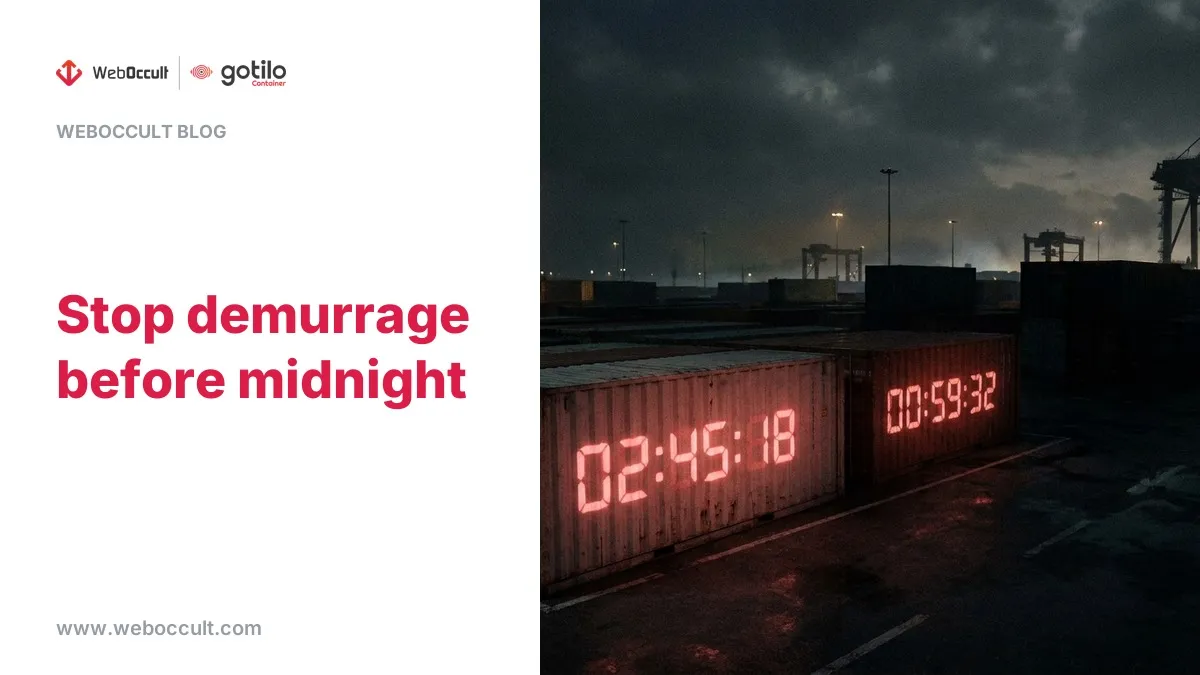
The Clock You Cannot See: How to Stop Demurrage Before Midnight

Ruchir Kakkad

CEO & Co-founder

The Clock You Cannot See: How to Stop Demurrage Before Midnight

Share

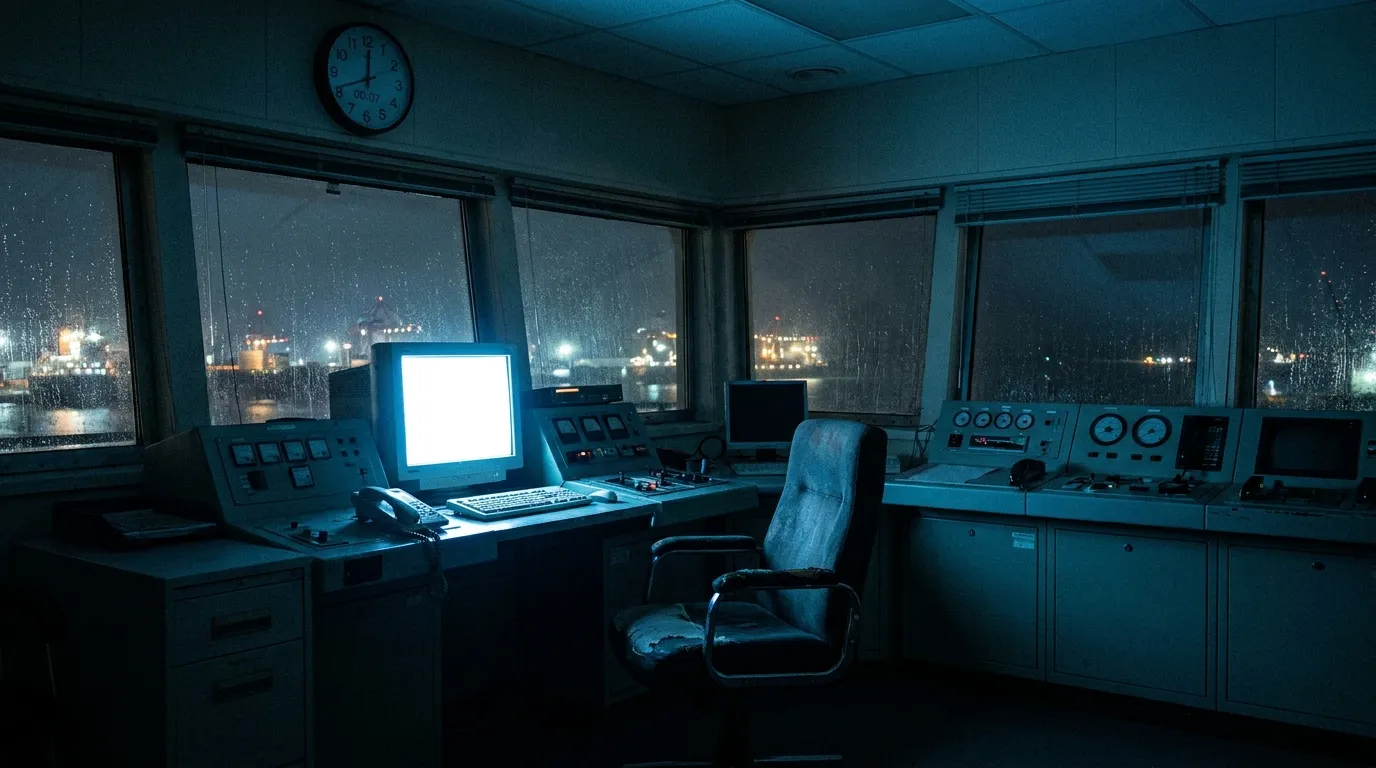
It is 11:40 on a Thursday night. The yard is dark, the gate is shut, and Suresh, the duty manager, has gone home. On a screen in an empty control room, three container records tick past midnight. At 12:00, their free time ends. The clock starts. A few rupees an hour, then a few more, compounding while everyone sleeps.

By Friday morning, finance has a question about an unexpected line item. By the afternoon, the customer has an invoice. By next week, Suresh is writing an apology for a charge that was visible on a screen at midnight, in a room nobody entered for eight hours.

The short answer: demurrage is the most preventable loss in a yard. You reduce it by watching dwell time, an accurate gate-in clock plus continuous container visibility, so the system can alert the crew before each box crosses its free-time threshold, not after the charge lands.
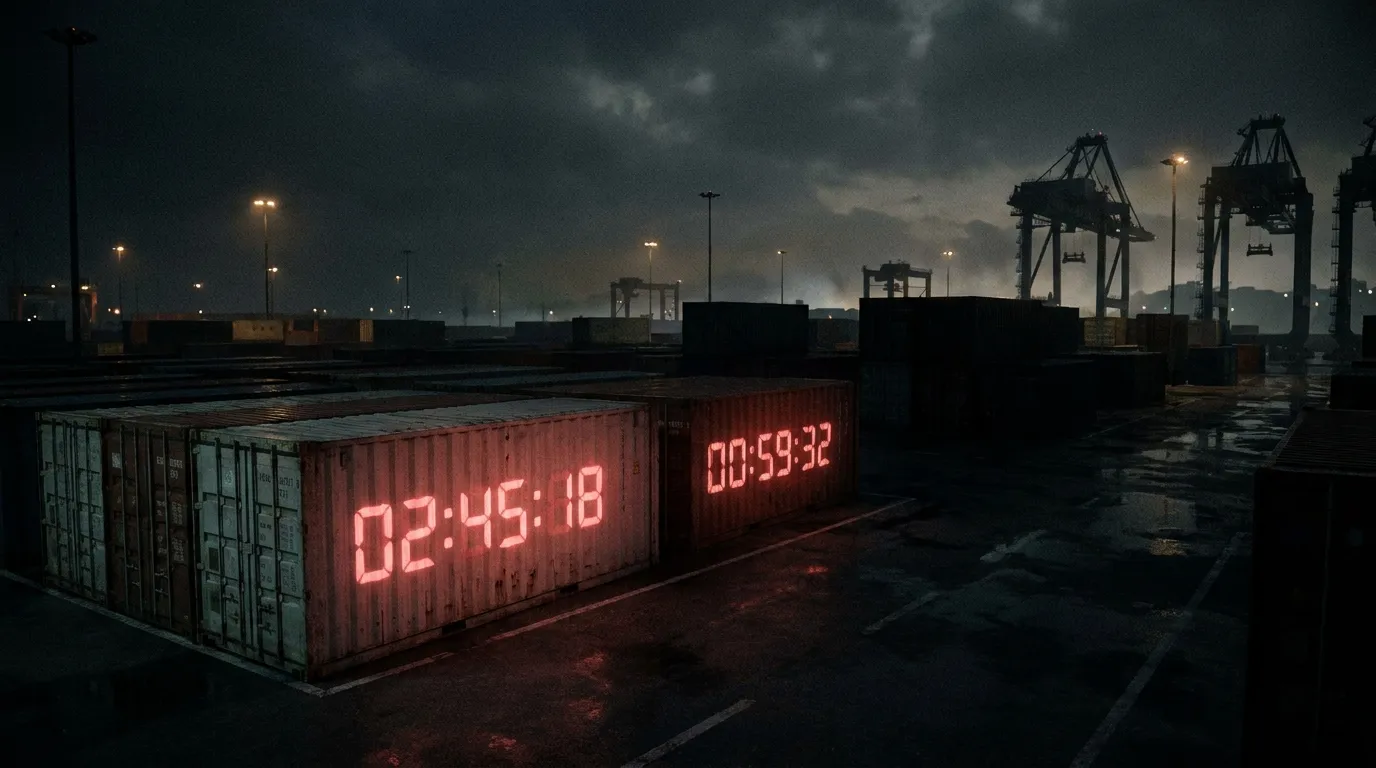
Why demurrage slips through

Most yard losses announce themselves. Demurrage is the quiet one. The container simply had to move, the crew simply had to know it needed to move, and the information simply had to reach them in time. Three ordinary gaps break that chain:

1. Visibility is backward-looking. Most systems can tell you a box entered four days ago. Far fewer push an alert that says this box crosses its free time in six hours.

2. The watch is manual. Someone has to remember to check, on top of everything else a duty manager carries.

3. The forgotten box. Once a container drops off the daily radar it can sit for weeks. In one audit we found a box parked for 247 days, billed for twelve. The other 235 were a donation.

The hard part is not catching the one box at 247 days. It is catching the fifty quietly on day 60.

What a demurrage-stopping system actually does

  • Knows how long every box has been present, from a trustworthy gate-in time.
  • Knows each box’s free-time threshold, and counts down toward it.
  • Pushes the alert to people who can act, before the clock starts.

AI vision supplies the first piece by getting the gate-in identity and timestamp right and keeping the box located, so its dwell is never lost. The platform supplies the countdown and the alert that reaches the duty manager and crew while the box can still be moved for free.

The shift this creates

Demurrage stops being a monthly surprise and becomes a managed number. Suresh starts the day with a short list, these boxes cross a threshold today, in this order, and works it down. Finance stops finding line items after the fact. The customer relationship stops absorbing avoidable apologies. None of this is a dramatic find. It is the steady daily catch of inventory about to slip out of mind.
Key takeaways

  • Demurrage is preventable: the data exists before the charge does.
  • The three gaps are backward-looking visibility, a manual watch, and forgotten boxes.
  • Watch dwell time against each box’s free-time threshold and alert before midnight.
  • The win is a managed daily number, not a monthly surprise.

Frequently asked questions

1. What is demurrage in container yards?

It is the charge that accrues when a container stays beyond its allowed free time. It compounds quietly and is usually preventable if the box moves before the threshold.

2. What is the difference between dwell time and demurrage?

Dwell time is how long a box sits. Demurrage is the money that starts once dwell crosses the free period. Watching dwell is how you prevent demurrage.

3. How much demurrage can a yard actually avoid?

Most teams cannot say, because boxes that drift past free time were never flagged. The first win is making that donated-storage number visible. The second is watching it fall.

How much free storage did your yard donate last month? If you cannot answer, that absence is the opportunity. The most expensive asset in any port is a clock nobody is watching. gotilo.

Ruchir Kakkad
CEO, WebOccult

Tech enthusiast | Co-founder @WebOccult | First coder, strategist, and dreamer of the team | Driven by AI, focused on change | Loving every bit of this journey