






















Certified information security and AI. Your Data secured and Private to you.
Talk with us

CEO & Co-founder
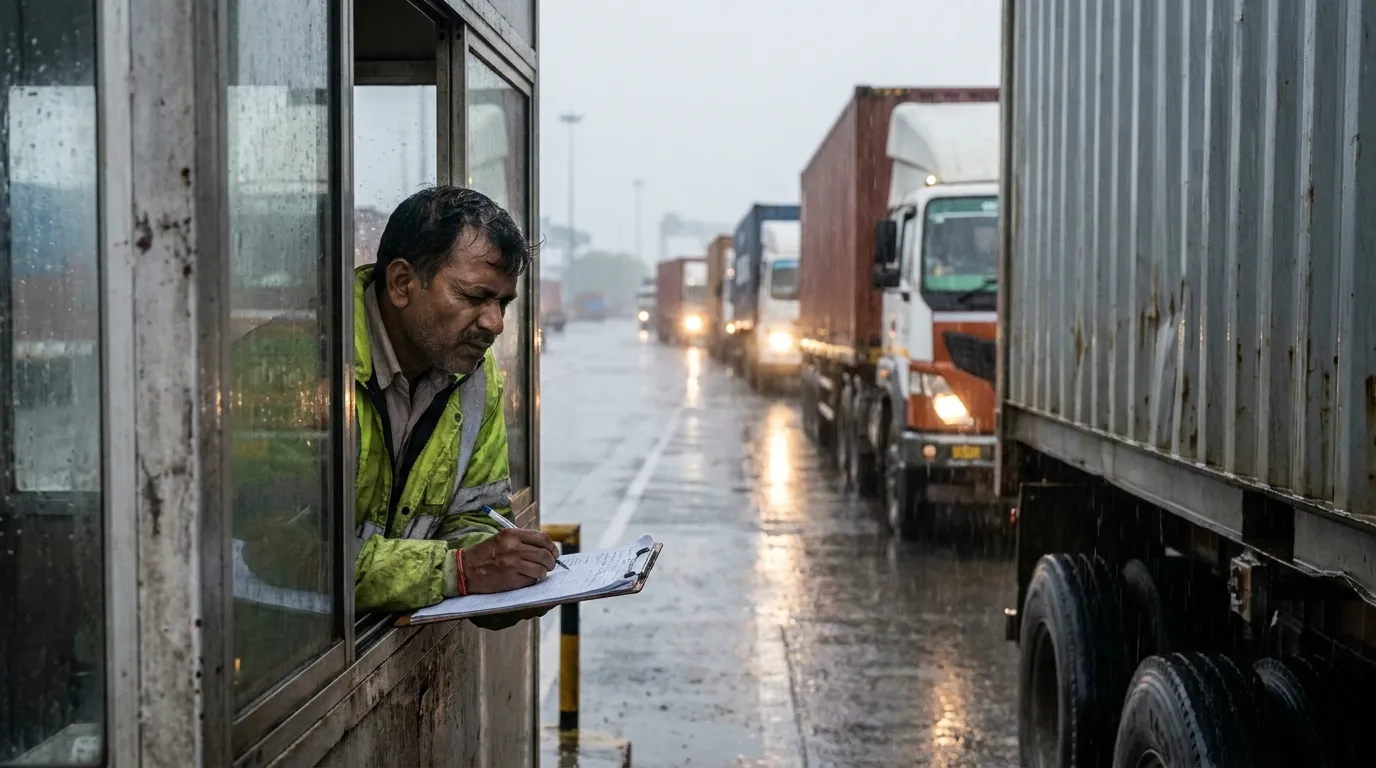
It is 9:14 on a wet Tuesday and Ramesh has been in the gate booth since six. The rain is sideways now. A line of trucks idles back toward the road, engines warm, drivers impatient. Ramesh leans out, squints at the side of a container, and copies eleven characters onto a damp sheet. He has done this maybe four hundred times since dawn. Somewhere around the three-hundredth, the 0s and the Os started to look the same.
He is not careless. He is human, doing a machine’s job, perfectly, in the rain, all day. And this small booth, on this ordinary morning, is where most yards quietly lose control of their own data.
The short answer: container gate automation puts an AI vision camera at the gate that reads the container number (ISO 6346), the ISO type code, the seal, visible damage and the truck plate in a few seconds, then sends it straight to your TOS or YMS. The value is not speed. It is that every entry becomes a clean, time-stamped, photographic record you can trust months later.
Everything downstream leans on this one moment. Billing. Dwell time. Damage liability. Security. The 3 p.m. hunt for a box a customer is waiting on. If the container number is wrong by one character, the box effectively vanishes into the yard. If damage was not noted on entry, the argument three weeks later has no winner. If the seal was never checked, nobody can say when it was broken.
A person at the gate is good for about two hours. Then fatigue, weather and a growing queue start to win. That is not a discipline problem. It is the predictable result of asking someone to be flawless thousands of times a day.
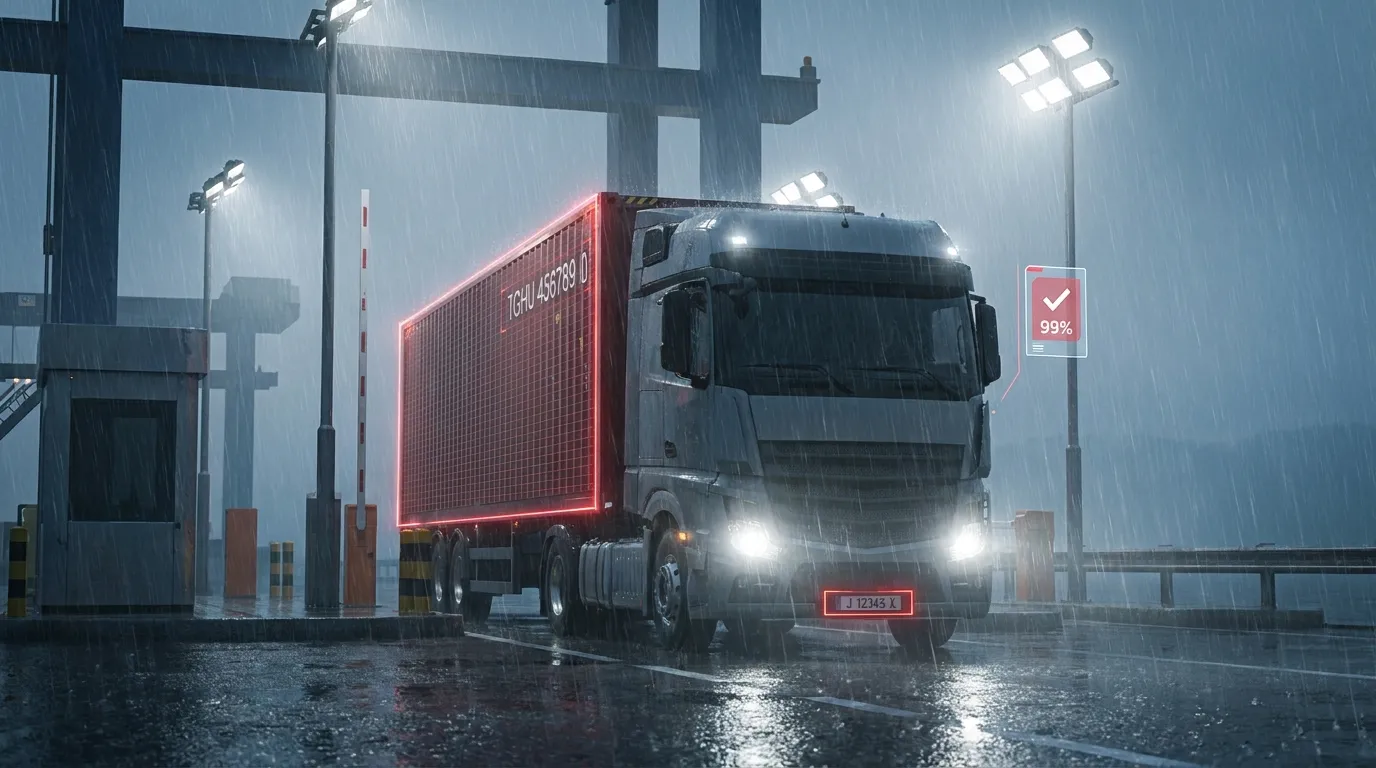
In the few seconds before the barrier lifts, the gate captures and records:
No clipboard. No torch. No transcription error. The same read at 4 a.m. as at noon.
Yes, the queue gets shorter, and Ramesh stops standing in the rain. That benefit is real, and it is not the one that matters most.
What matters is that every entry and exit becomes a clean, time-stamped, photographic record, captured the same way every time, in every weather. That record is what you reach for when finance queries a charge, when a line disputes damage, when an auditor asks what entered the yard on a given morning. The gate stops being a checkpoint and becomes a sensor.
A read is only useful if it flows. The number, condition and plate sync in real time to your TOS or YMS through secure APIs, so the box is known the instant it crosses the line, and that identity then follows it across the yard, which is what makes a container findable later instead of merely remembered.
It is also where fraud gets caught. A plate is only a name, and names can be copied. A gate that remembers, not just reads, is the one that notices when the same identity shows up twice in one morning, the duplicate-plate trick that walks a box out on valid-looking paperwork.
1. What is container gate automation?
It uses AI vision cameras at a port, ICD or CFS gate to automatically read the container number, ISO code, seal, damage and truck plate, and push that data to the TOS or YMS without manual entry.
2. How accurate is container OCR in bad weather?
A production-grade system reads reliably in rain, fog, dust and floodlit night conditions and uses the ISO 6346 check digit to catch misreads. Ask any vendor for accuracy at 4 a.m. in the rain, not in the demo.
3. Will it work with our existing cameras and software?
In most cases it builds on the cameras you already have and integrates with your current TOS or YMS through secure APIs, so you are adding intelligence, not ripping out infrastructure.
Walk to your own gate tomorrow and watch one truck clear it. If someone disputes that entry in three months, what proof will you actually have? If the answer is a tired operator and a paper register, the gate is the first place worth fixing. gotilo