






















Certified information security and AI. Your Data secured and Private to you.
Talk with us

CEO & Co-founder
Deepak runs operations at a mid-size terminal, and one number has bothered him for a month. Two ship-to-shore cranes, side by side. Same model, same year, same maintenance schedule. Crews rotate between them every shift. One averages 22 moves an hour. The other averages 30.
He sends a maintenance team over the slow one. They find nothing. The cranes are identical. The operators are qualified. The routines are standard. And yet, over a year, that eight-move gap is a small terminal’s worth of throughput, quietly evaporating.
The short answer: the gap between two identical cranes is almost never mechanical. It is a thousand tiny operational differences nobody was measuring. AI vision improves terminal productivity by turning motion into measurement, cycle time, idle time, re-handles and truck turn-time, so those invisible losses become a list you can work down.
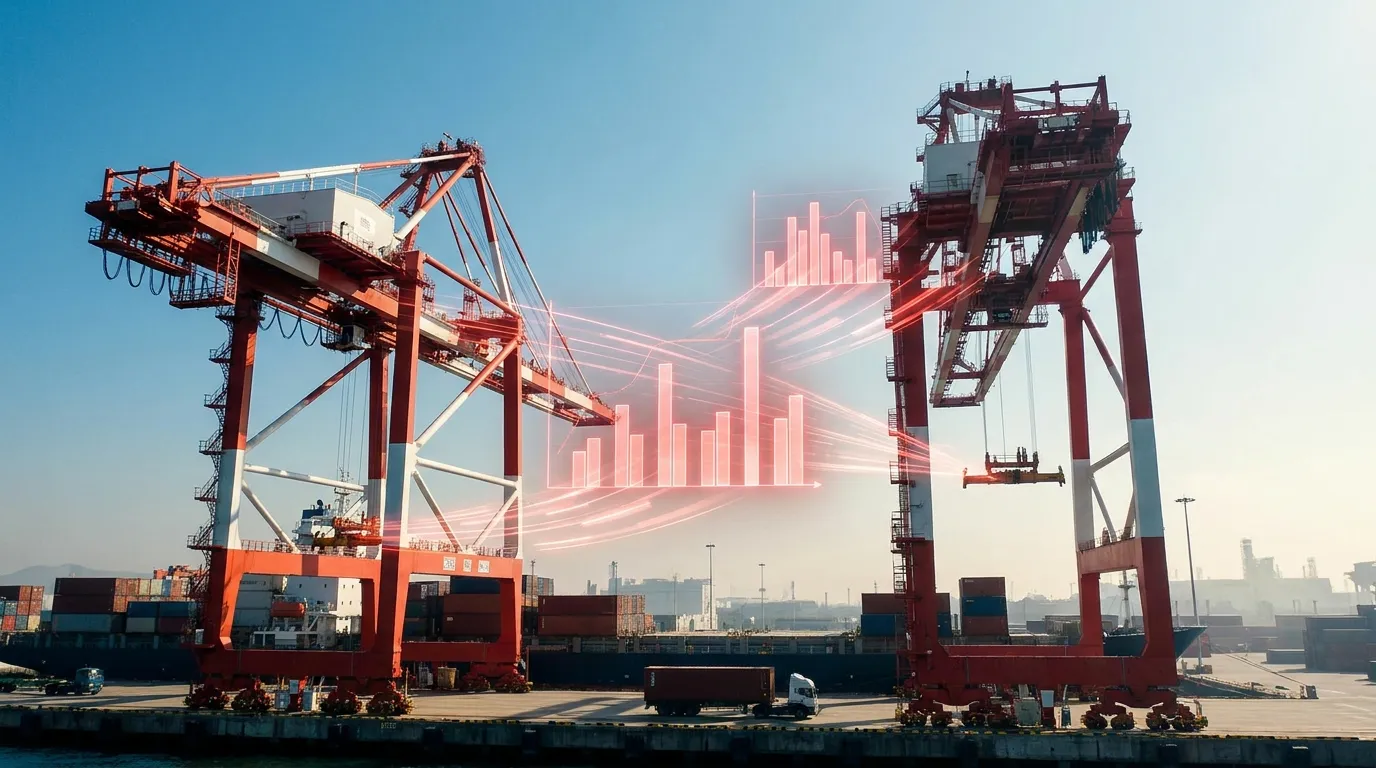
When Deepak’s team finally looked closely, they found not one cause but many. Slightly faster spotting on one crane. Slightly tighter coordination with the truck below. Slightly less time waiting for the next instruction. None big enough to notice in a single shift. All big enough, added up, to be worth eight moves an hour.
This is the uncomfortable truth about terminal productivity. The difference between an adequate terminal and a great one is rarely dramatic. It is many things, each worth less than a percent, that nobody had been measuring.
Most terminals manage productivity at the level of moves per hour by shift. That number tells you something happened. It does not tell you where the seconds went. The seconds hide in the gaps:
Each gap is invisible in the daily total. Together they are most of the difference between 22 and 30.
Vision AI watches the operation and turns motion into measurement, giving you the anatomy behind the headline number:
Once these are visible, the thousand small things stop being folklore and become a list. You improve not by working harder, but by seeing clearly what was already happening.
1. How is terminal productivity measured?
Most terminals track moves per hour by crane and shift, plus truck turn-time. The richer view breaks each cycle into idle time, re-handles and waits, so you see where the seconds go.
2. What is a good crane moves-per-hour rate?
It varies, but the more useful question is the gap between matched assets. When two identical cranes differ by several moves an hour, that difference is recoverable.
3. Where should a terminal start?
With its real truck turn-time, the number behind the guess, and with the quietly underperforming asset among its identical-looking ones. Both are easy first targets for measurement.
What is your real truck turn-time, not the confident guess? And which of your identical assets is quietly behind the others? If the room goes quiet, that silence is where to point a camera first gotilo.