





















Certified information security and AI. Your Data secured and Private to you.
Talk with us

CEO & Co-founder
It usually arrives on a Tuesday morning. The subject line is aggressively vague, but the attachment tells you everything you need to know: a blurry photograph of a violently dented shipping container, accompanied by an invoice for the repair.
Your terminal is officially being blamed for the damage.
What follows is the most frustrating, time-consuming ritual in the modern supply chain. Your operations manager stops actually running the yard and spends three hours squinting at grainy, low-resolution CCTV footage from the entry gate, trying to determine if the dent was there when the truck arrived. The trucking company swears the box was pristine. The shipping line is demanding payment. You are trapped in a high-stakes game of he said, she said, and the house always loses.
Most terminal operators treat these disputes as an unavoidable cost of doing business. They quietly pay the invoice, grumble about unfair partners, and move on. But if you actually sit down and calculate the true financial drain of these incidents, the reality is terrifying. You aren’t just paying for bent steel; you are paying a massive tax on your own operational blind spots.
Let’s do the actual math on a standard dispute.
Assume the direct cost of repairing a structural hole or a severe deformation is $500. If you operate on a standard terminal margin, you have to move a significant amount of freight just to break even on that one penalty. But the $500 is just the tip of the iceberg.
Consider the administrative bloat. How many salaried hours did your team waste investigating the claim, digging through paper logs, and arguing over the phone? Factor in the legal review, the delayed billing cycles, and the inevitable spike in your insurance premiums. Suddenly, that $500 repair bill has quietly drained $1,500 of actual value from your company.
When you multiply that by dozens of incidents across a fiscal quarter, the impact on your P&L is staggering. Logistics Damage Claims are a silent killer of terminal profitability. They bleed your margins dry because you are repeatedly paying for damage that happened long before the truck ever crossed your property line. You simply couldn’t prove it.
Why does this keep happening? Because the traditional method of Container Inspection is fundamentally flawed.
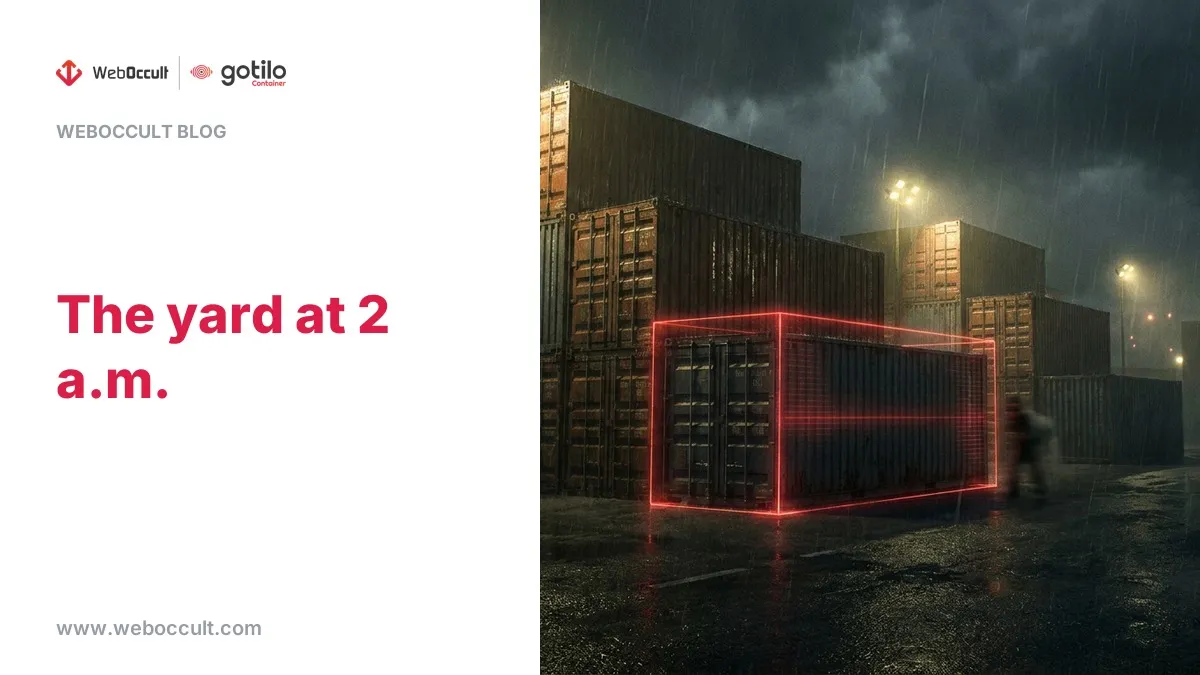
Picture your entry gate at 2:00 AM during a torrential downpour. A tired gate inspector wearing a high-visibility vest walks around a 40-foot steel box with a flashlight and a damp clipboard. There are five angry truck drivers blaring their horns in the queue behind him. He is rushed, he is cold, and he misses a structural crack near the roofline. He signs the gate-in receipt.
In that exact second, your terminal legally accepts liability for a broken asset.
Human beings are incredible at many things, but performing flawless, high-speed visual inspections of massive steel structures in terrible weather is not one of them. Relying on human eyesight and handwritten notes to protect your multi-million dollar business is an unacceptable risk. You are bringing a clipboard to a data fight.
The only way to win a dispute is to never have one in the first place. You achieve that through absolute, undeniable visual proof.
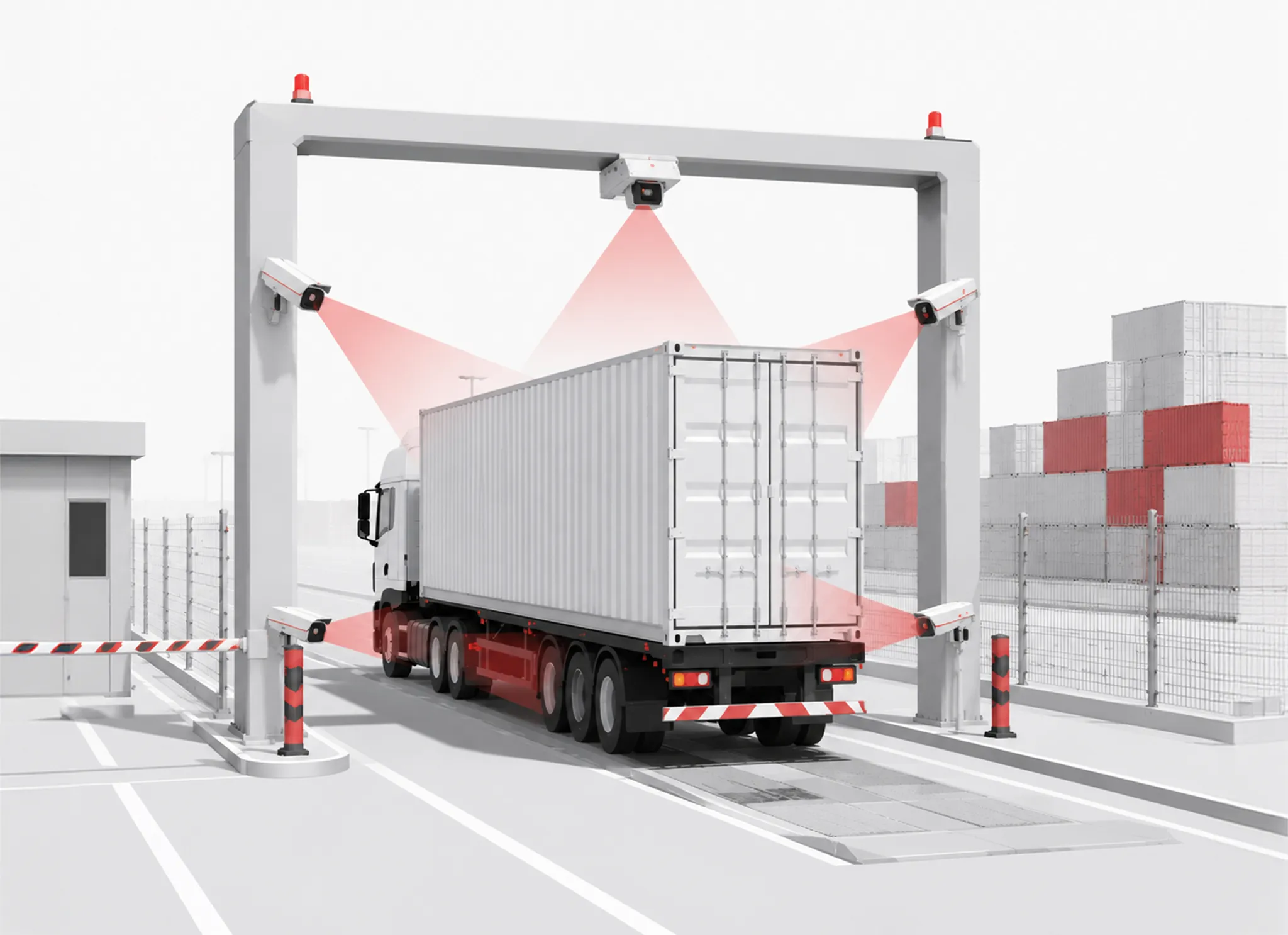
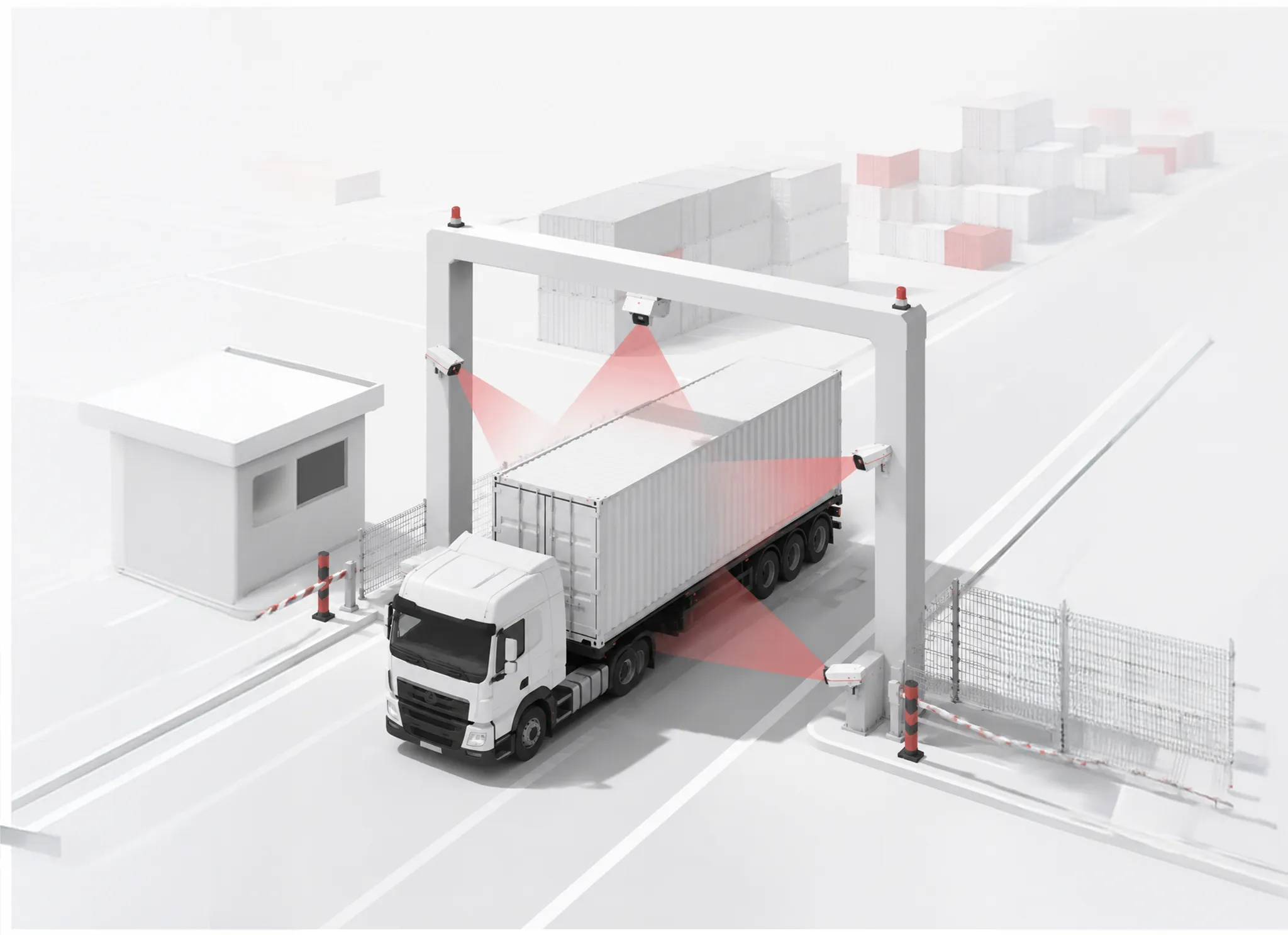
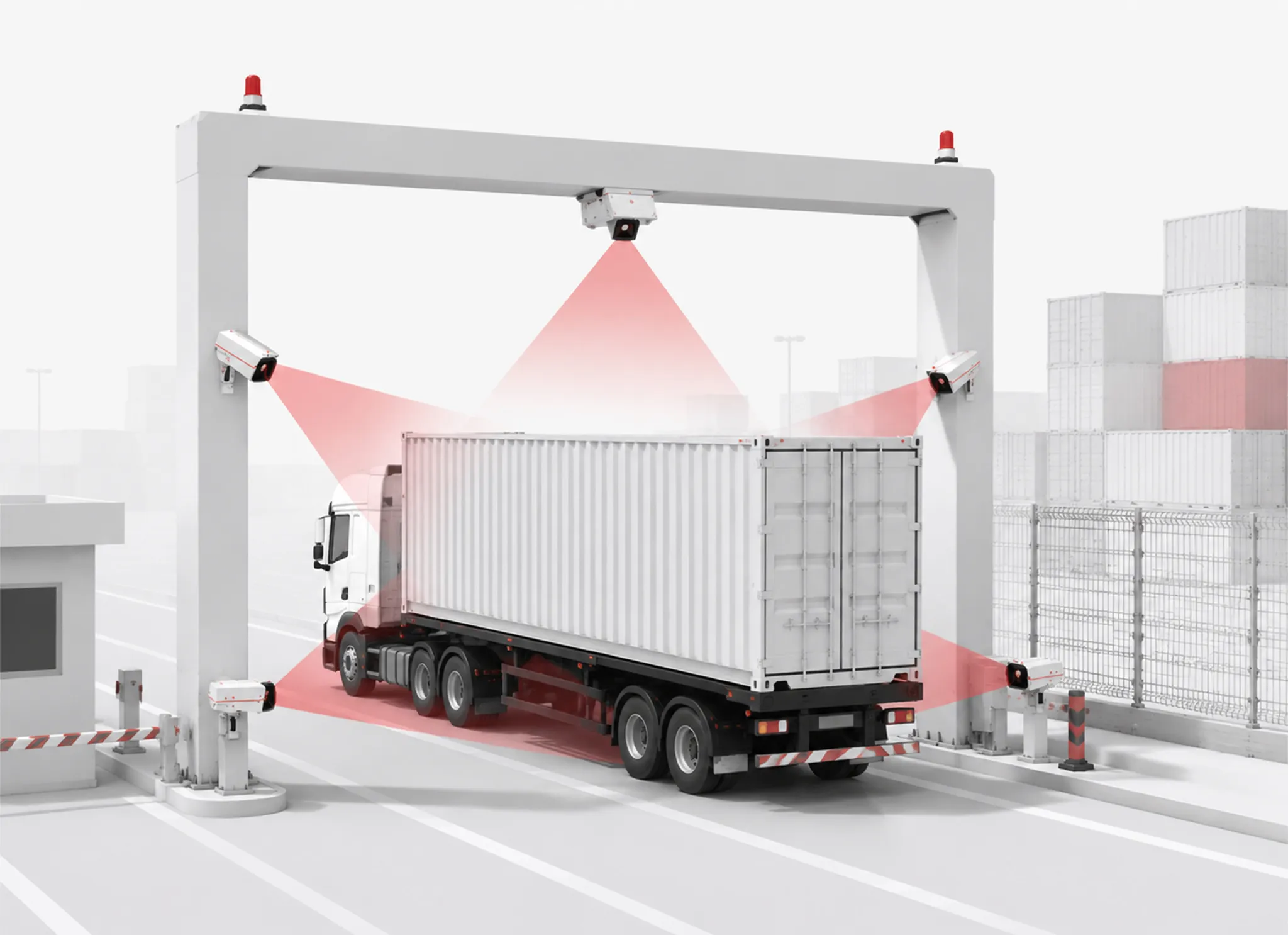
This is where automated Container Damage Detection fundamentally changes the power dynamic at your gate. By replacing the manual walk-around with high-definition, AI-powered cameras, you instantly remove human error from the equation.
As a truck rolls through the gate, the system doesn’t blink. Multiple camera angles instantly scan the exterior of the box. The visual AI is trained to detect specific structural anomalies in milliseconds. It highlights holes, flags deformations, and pinpoints dents. Crucially, it also verifies seal detection, instantly logging whether a security seal is present or missing.
This data is immediately paired with the license number, container ID, and weight details, creating a pristine, timestamped digital record. When that email arrives three weeks later blaming you for a dent, your response takes thirty seconds. You simply send back the high-definition gate-in image showing the dent was already there when the truck arrived. The argument ends immediately. You pay nothing.
Implementing visual AI at the gate is the ultimate exercise in Logistics Risk Management. It represents a philosophical shift from playing defense to playing offense.
You are no longer relying on trust, assumptions, or the fading memory of a night-shift gate operator. You are relying on immutable data. This level of rigorous documentation creates a chilling effect on fraudulent claims. When trucking companies and shipping lines realize your facility has an airtight digital gate, they stop trying to pass their damaged assets off on your balance sheet. The frivolous claims simply disappear.
This proactive approach is the cornerstone of modern Operational Loss Prevention. You stop the financial bleeding at the perimeter of your yard. You don’t manage the dispute; you eliminate the conditions that allow the dispute to exist. Your team spends zero hours investigating claims because the system has already conducted a super-fast damage inspection survey automatically.
The financial risk doesn’t stop at the exterior steel. The cargo inside, particularly when dealing with refrigerated units, carries an even higher liability. A single spoiled load can result in catastrophic claims.
True loss prevention requires continuous Container Condition Monitoring. Your digital infrastructure must extend from the gate to the stack. If a reefer loses power or the internal temperature spikes, you cannot wait for a manual yard check to discover the problem. AI-powered reefer monitoring provides real-time status updates directly to your dispatcher’s dashboard. If the Temp. Status drops from OK to critical, your team is alerted instantly, allowing them to save the cargo before the liability falls on your shoulders.
If you look closely at your annual budget, you will find a massive amount of capital allocated to covering other people’s mistakes. You are subsidizing the carelessness of the broader supply chain simply because your gate lacks the technology to defend itself.
It is time to stop paying the tax. The technology required to secure your perimeter is no longer science fiction, nor does it require a massive capital expenditure. Modern gate automation relies on smart app integration and intelligent cloud processing, meaning you can achieve instant digitization with zero hardware required.
You do not have to accept damage disputes as a cost of doing business. You can choose to operate with absolute certainty.
Are you ready to stop paying for damage you didn’t cause? The Gotilo Container system, powered by Weboccult, delivers AI damage detection and 0% disputes with zero CAPEX required. Protect your margins today. Visit www.weboccult.com or contact our team to upgrade your gate intelligence.