





















Certified information security and AI. Your Data secured and Private to you.
Talk with us

CEO & Co-founder
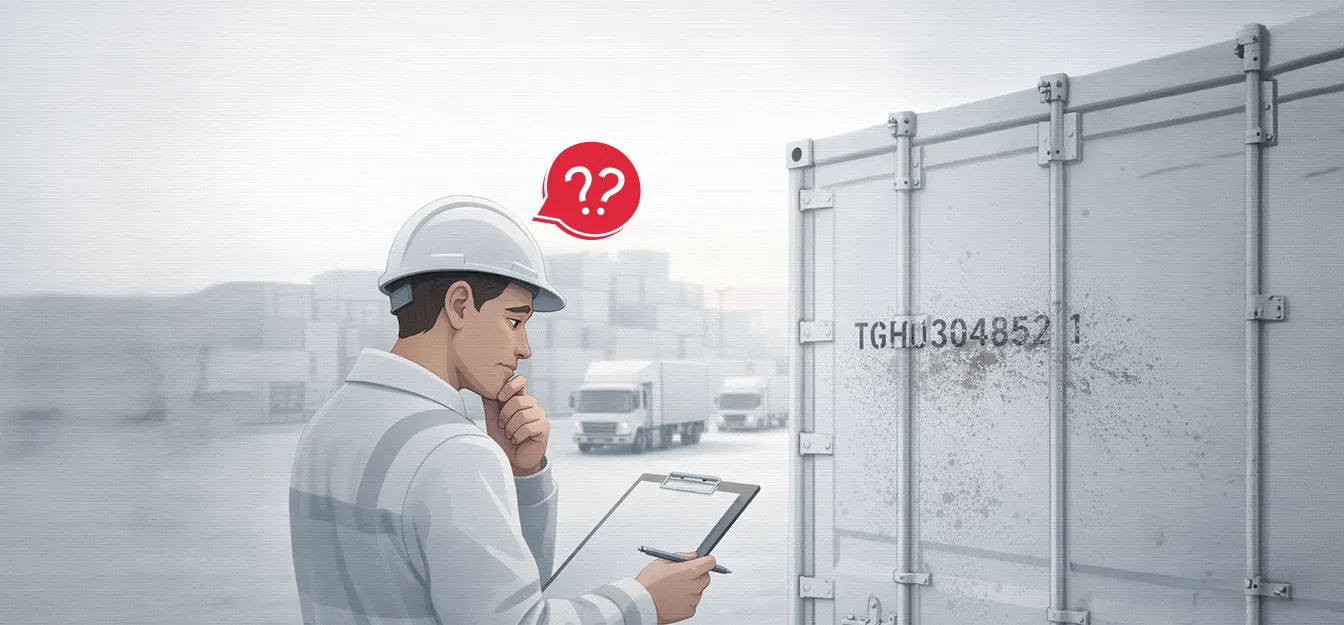
Busy container terminal at 6 AM. Trucks queuing at the gate, vessels berthing, yard equipment moving in every direction, and somewhere in the middle of all that organized chaos, a gate clerk squinting at a container number that’s half-obscured by road grime, trying to type it correctly into a system that will not forgive a single transposed digit.
TGHU3048521. Or was it TGHU3048251?
That two-second uncertainty? It cascades. The wrong container logged at entry. Misrouted in the yard. Eventually, someone spends an average forty minutes physically hunting for it. And that’s on a good day.
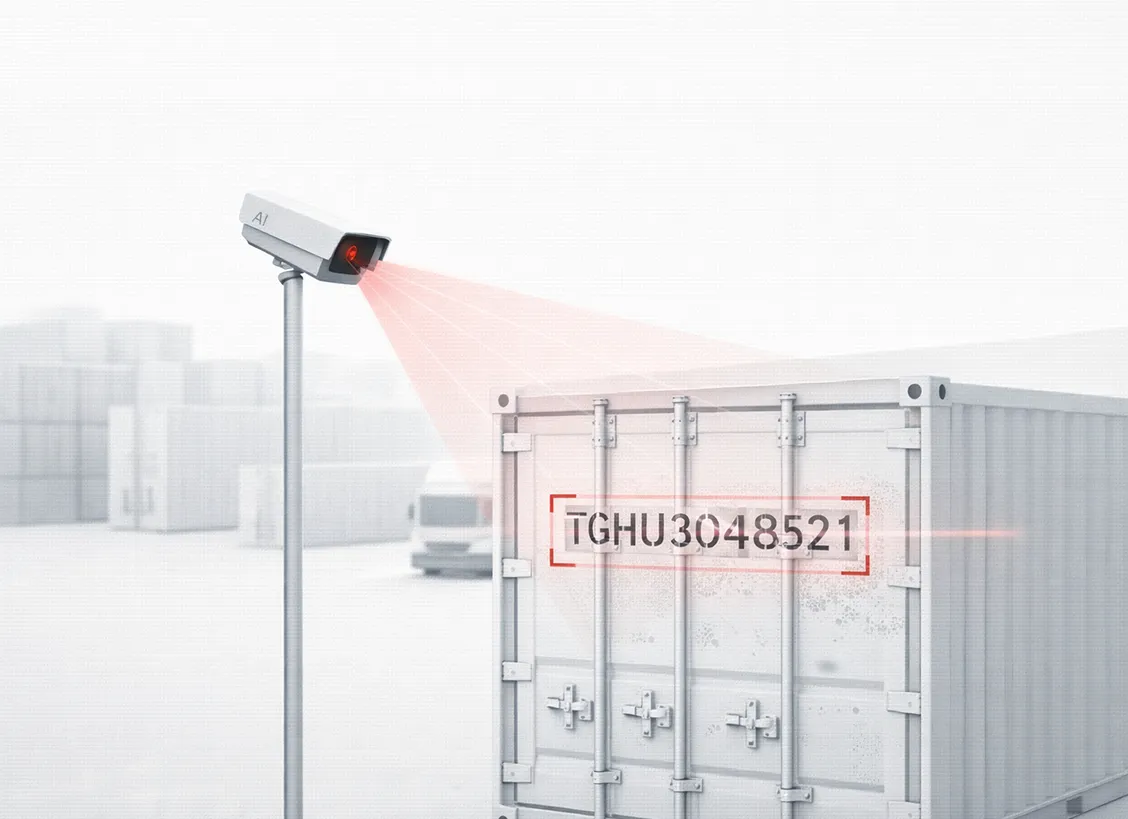
Here’s what’s funny. The container identification seems like it should’ve been solved ages ago. We’re talking about a standardized ISO format, painted in large characters on the side of a steel box. How hard can it be?
Turns out. Very.
Weather does a number on container markings. Paint fades, peels. Mud and rust do their thing. Lighting at a gate lane at 4 AM is rarely flattering. And the human eye, no matter how experienced the clerk is, gets tired, makes assumptions, and rushes because there are 12 more trucks in the queue, too.
Manual OCR for container identification isn’t really OCR at all. It’s pattern recognition performed by an increasingly fatigued person, and it degrades over a shift in ways that no one really wants to measure.
The error rates at high-volume terminals doing manual entry are uncomfortable to look at. Some studies have put transcription errors in the range of 1-3%, which sounds small until you multiply it by 500 gate moves a day.
Let’s clear something up first, not all OCR is the same. The kind of optical character recognition that reads a scanned PDF is fairly controlled. AI OCR for logistics, especially at a container terminal gate, is a completely different proposition.
A smart system pointed at a container needs to handle: variable lighting conditions, partially obstructed characters, non-standard fonts across different container operators, angled camera positions, containers that are dirty or damaged, and still produce a confident read in under a second. Oh, and it needs to cross-validate the result against a check-digit algorithm and match it to expected arrivals in the TOS, all before the truck driver finishes rolling down his window.
That’s not simple. But modern AI-driven container number recognition OCR is genuinely doing this. Not in lab conditions. In actual yards, in rain, at night, with containers that look like they’ve had a rough crossing. The accuracy numbers, consistently above 98%, often 99%+, are the kind that make operations managers quietly emotional.
Because 99% accuracy on 500 daily gate moves is not the same as 99% accuracy on a spelling test. It’s the difference between 5 exceptions a day versus 50. Between a gate lane that flows and one that bottlenecks.
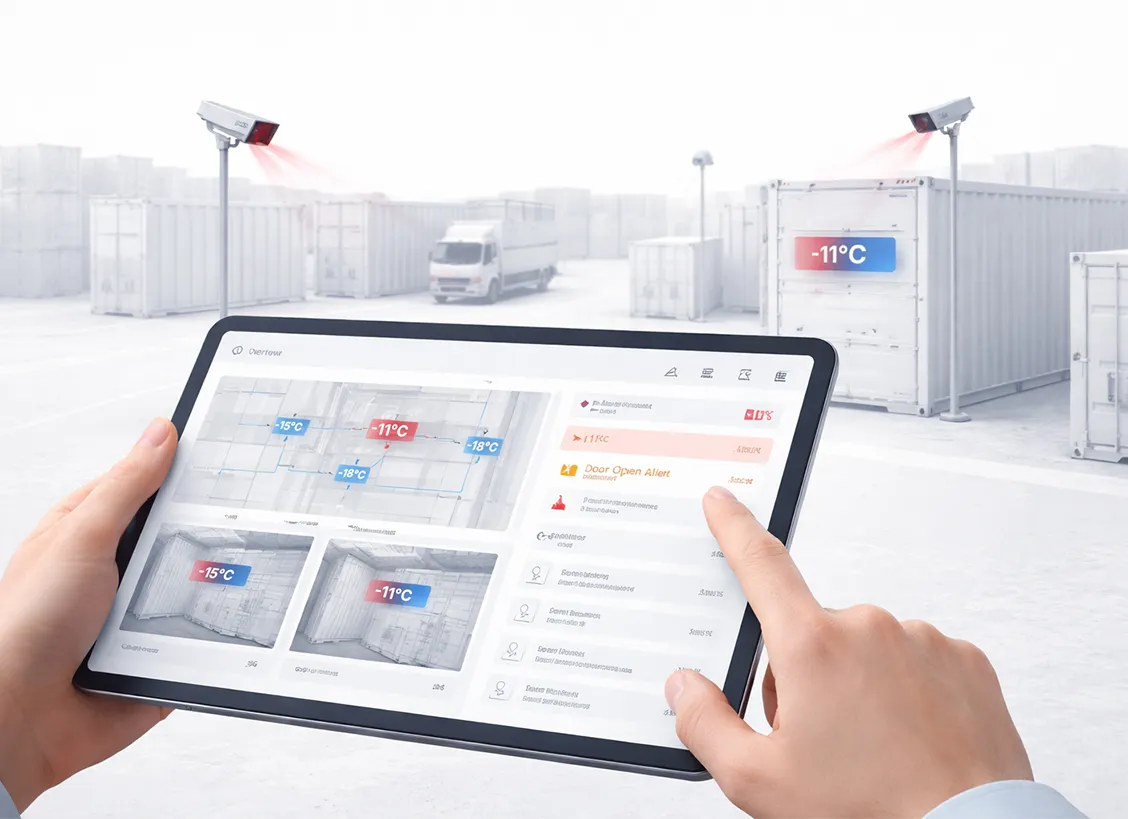
Now here’s where it gets particularly interesting for cold chain operations specifically.
Refrigerated containers are temperature-sensitive, time-sensitive, and increasingly, from a regulatory standpoint, documentation-sensitive. The moment a reefer enters or exits a terminal, there’s a chain of events that needs to kick off- power connection confirmation, temperature setpoint verification, monitoring activation, pre-trip inspection scheduling. All of it depends on knowing, with certainty, which container just arrived.
If gate identification is wrong? That whole chain breaks. A reefer might sit un-powered for two hours while someone reconciles a data discrepancy. That’s not a hypothetical, it happens. Regularly. And depending on what’s inside, two hours without power can be the difference between compliant cargo and a very expensive problem.
Automated OCR for container tracking at the gate is, in this sense, the first domino in a much longer sequence. Get that right, and everything downstream becomes more reliable. Get it wrong, and you’re playing catch-up for the rest of the container’s yard stay.
This is where we want to spend some time talking about what good implementation actually looks like, because there’s a real gap between “we have AI OCR at the gate” and “we have a system that makes our yard genuinely smarter.”
Gotilo Container, built by WebOccult, is one of the more thoughtfully designed platform. The AI-powered gate scanning isn’t bolted on as an afterthought, it’s integrated into a broader automated container yard management framework that includes real-time container search, CHE geo-tracking, yard occupancy mapping, seal detection, and the reefer monitoring we were just talking about.
Why does that integration matter? Because smart yard management is about what happens between features.
When Gotilo’s OCR reads a container number at the gate, that identification flows immediately into container search and yard positioning, so the system already knows where that box should go before the truck’s even cleared the gate lane. When it’s a reefer, the reefer monitoring module picks up the unit, associates it with the right booking, and starts tracking temperature from the moment it’s connected. Movement history is logged automatically. Occupancy maps update in real time.
That’s a meaningful operational loop. Not a series of separate systems that someone has to manually synchronize.
We want to be fair here, because we think some of the marketing around AI yard management has gotten a bit breathless.
Yes, AI OCR for logistics works well. Yes, the accuracy figures are real. But implementation isn’t plug-and-play, and anyone who tells you otherwise is either selling something or hasn’t actually been through a terminal deployment. Camera positioning matters enormously. Lighting infrastructure, in many older terminals, needs upgrading. Integration with legacy TOS platforms can be genuinely painful.
And there’s the usual organizational friction, gate staff who’ve developed their own workarounds over the years, operations managers who want to see six months of parallel running before they trust a new system, IT teams who have seventeen other priorities.
None of that means the technology isn’t worth pursuing. It absolutely is. But revolutionizing is a word that tends to describe the destination, not the journey. The journey involves some messy middle chapters.
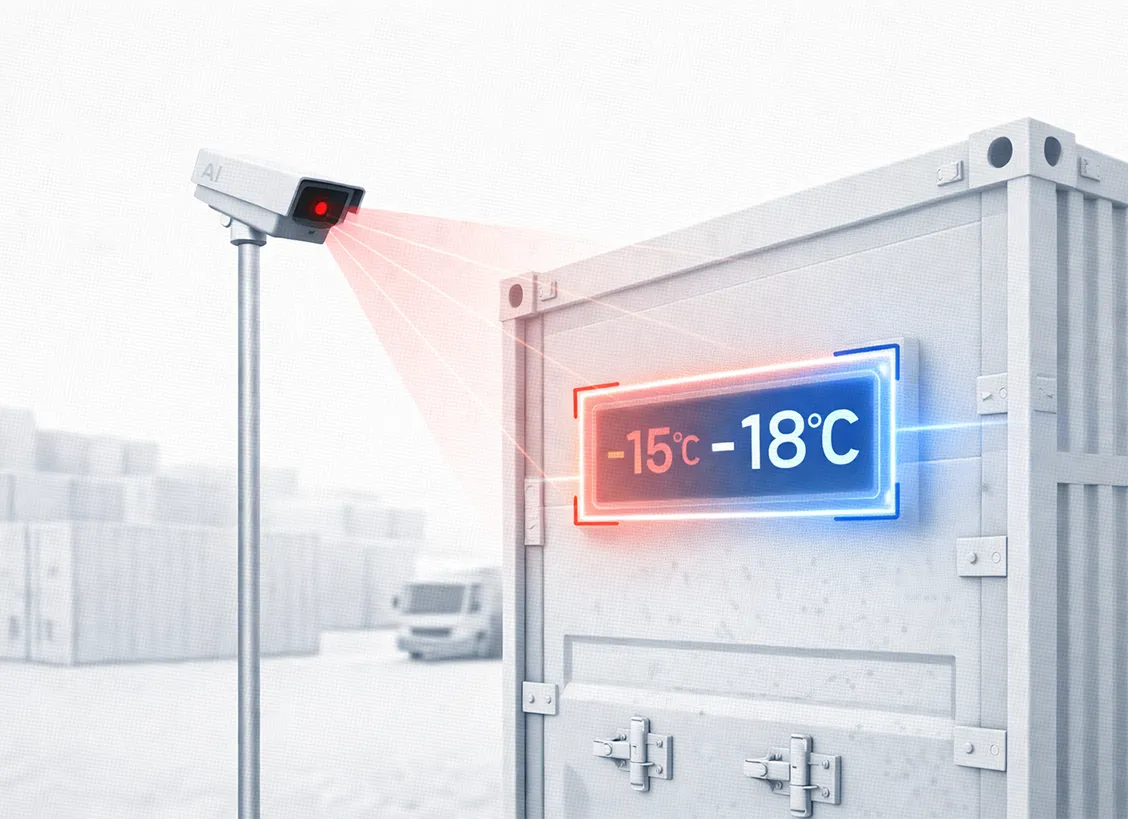
Here’s what the ROI conversation usually comes down to in practice: gate processing time.
A manual gate operation at a busy terminal might take 3–5 minutes per truck, depending on complexity. A well-implemented AI OCR gate, with automated number reading, document validation, and booking matching, regularly gets that down to under 90 seconds.
At 400 trucks a day, that math compounds quickly. Shorter dwell times at the gate mean less truck queuing outside the terminal. Less queuing means less congestion, fewer late fees, happier transport partners. Terminals running tight vessel windows have started treating gate automation not as an efficiency tool but as a capacity tool, because faster processing effectively expands throughput without expanding physical footprint.
That framing, OCR as a capacity expansion strategy rather than just an accuracy improvement, is a shift worth noting.
Honestly? The trajectory feels fairly clear, and it’s moving faster than most terminal operators expected even three years ago.
Automated container yard management is becoming a baseline expectation at major ports, not a differentiator. The conversation has shifted from “should we automate?” to “how quickly can we, and what platform do we use?” Smaller regional terminals, the ones that thought this was only for Tier 1 mega-ports, are starting to realize the economics work for them too.
The container that arrives battered and muddy at a regional terminal in the middle of the night still needs to be read correctly, logged instantly, and, if it’s a reefer, plugged in and monitored within minutes. Whether it’s moving through Rotterdam or a smaller facility, the operational requirement is the same.
Technology like Gotilo Container is making that level of operational rigor accessible without the enterprise price tag or the multi-year implementation nightmare that used to come with it.
That democratization, we think, is the bigger story here, not just that AI OCR works, but that it’s increasingly available to the operations that need it most and could historically least afford it.