


















Certified information security and AI. Your Data secured and Private to you.
Talk with us
Cameras on the handling machines read and geo-tag every container at the moment it is picked up or set down, so the yard map is a by-product of the work.
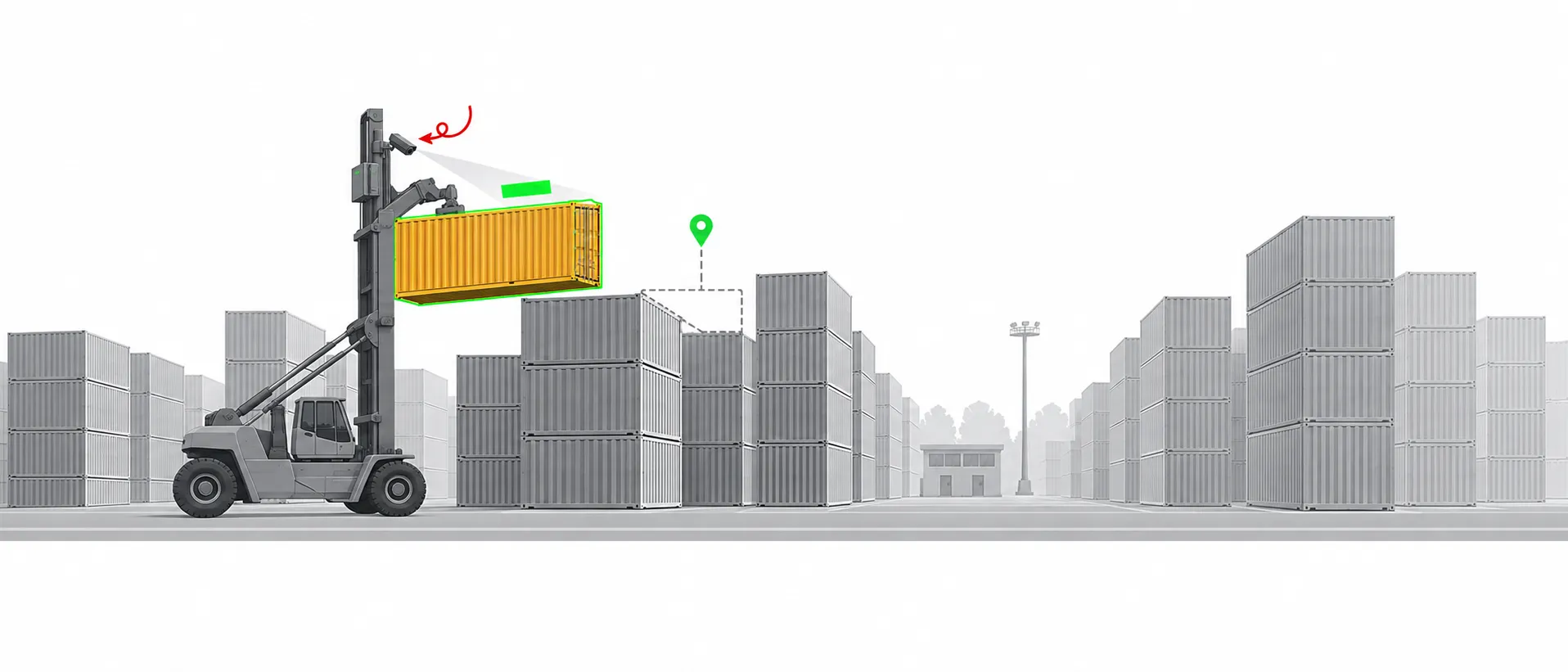
An empty depot knows what it holds. It rarely knows where. Boxes are stacked by line, size, type and grade, positions are written up after the lift or reconstructed later, and the stock report drifts away from the stack within hours of being sent. When a release order arrives, somebody walks the rows.
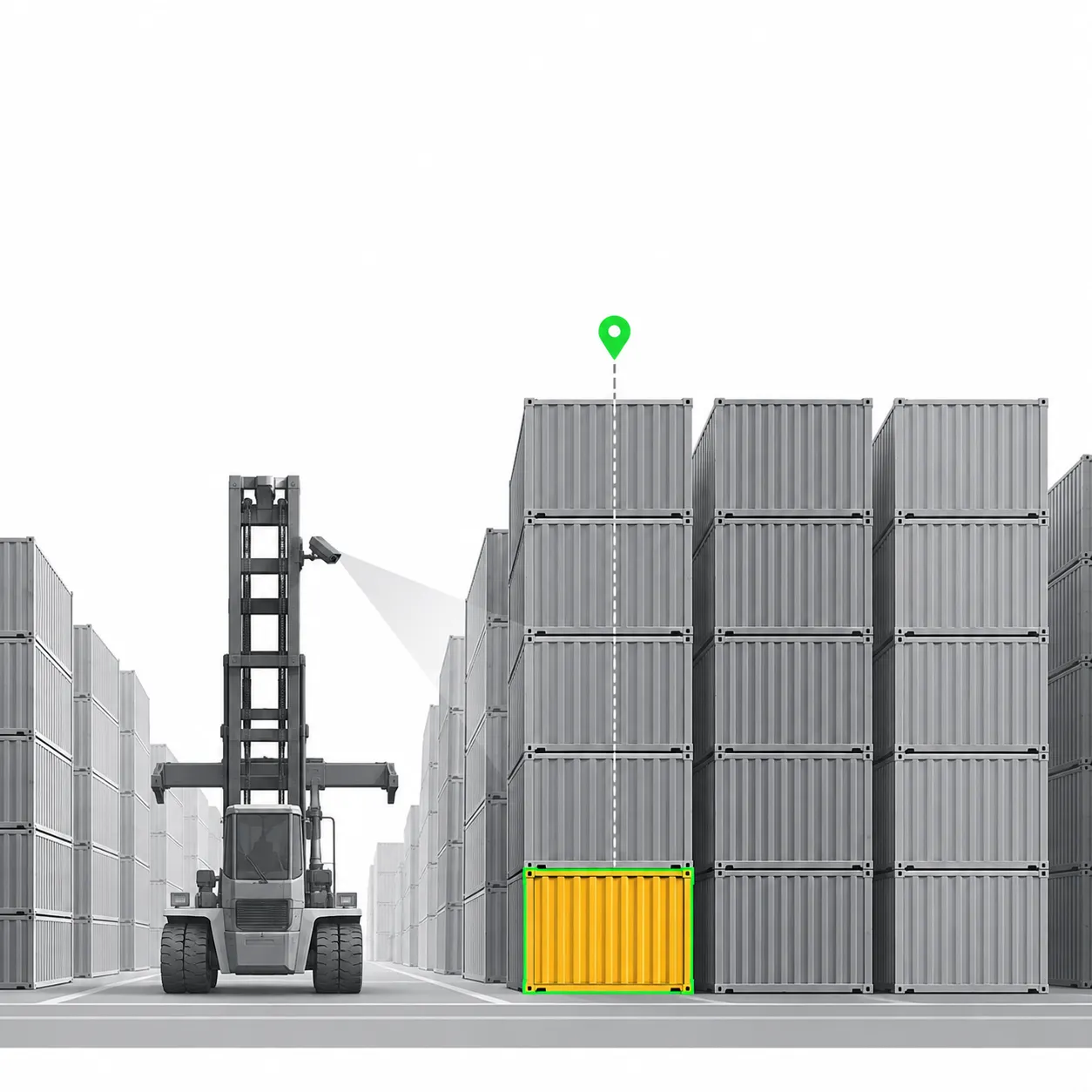
Cameras and edge units on the handling machines read the container number and record its position at every pick and every drop, building the yard map from the work itself.
Reads the number and check digit at the machine, before the box is set down, so the position and the identity are captured in the same moment.
Captures panel condition on arrival with the frame that evidences it, so grading is consistent between inspectors and a dispute has something to answer.
Captures the plate at the gate and pairs it with the container, so the interchange record names the vehicle that brought the box.
For depots holding reefers, reads set point, return air and alarm codes off the unit’s display with nothing fitted to the container.
Watches PPE use and the ground around working machines, in a yard where people and container handlers share the same aisles.

The people who answer a release order and who pay for every move that does not advance a container towards its destination.

The people who need the stock position they are sent to be the stock position that exists.

The people whose estimate has to survive an approval loop, and who need the damage evidenced rather than described.
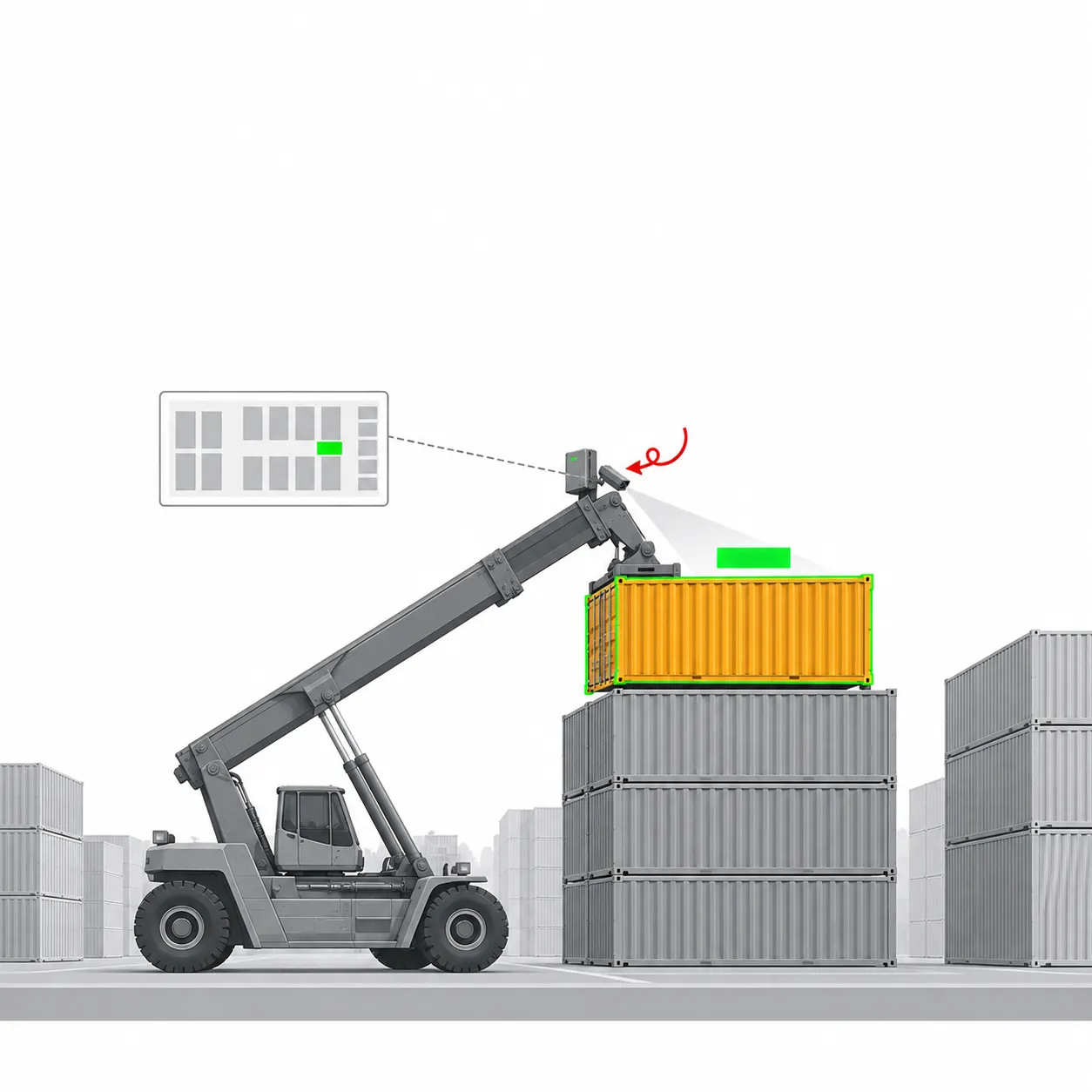

Cameras and edge units on the handling equipment itself, so there is no fixed gantry over the stacks.

A geo-tagged record at pick and at drop, on every lift, not a slot written up afterwards.

A release order answered from the map, in seconds rather than in rows.

A placement that does not match the intended slot is flagged while the operator can still correct it.

Every pick and drop leaves a timestamped image set tied to a validated container number, with no separate survey step.

An OpEx model, priced for depots rather than for marine terminals.
Because the machine is where the container is identified and positioned anyway. Instrumenting six machines covers every move in the yard, including the aisles a fixed gantry never sees, and it costs a fraction of covering the stacks.
No, and most empty depots do not have one. A depot typically runs a depot management system for gate, EIR, M&R and EDI. Gotilo supplies the position layer that system has never had.
Yes. Reach stackers, empty container handlers and forklifts have different mounting positions and different sightlines to the container marking, and each is set up accordingly.
Position is established at your yard during the proof of concept and stated with its method. Between deep rows a satellite fix alone is not enough, which is why the position is derived from the read, the fix and the known block geometry together.
Every pick and drop already produces a timestamped, geo-tagged image set tied to a validated container number. That is the evidence file a dispute needs, produced without anyone deciding to photograph anything.
Stay updated with the trending and most impactful tech insights. Check out the expert analyses, real-world applications, and forward-thinking ideas that shape the future of AI Computer Vision and innovation.