


















Certified information security and AI. Your Data secured and Private to you.
Talk with us
One deployment reads every container, plate and condition on site, and hands your systems a clean record before the truck moves.
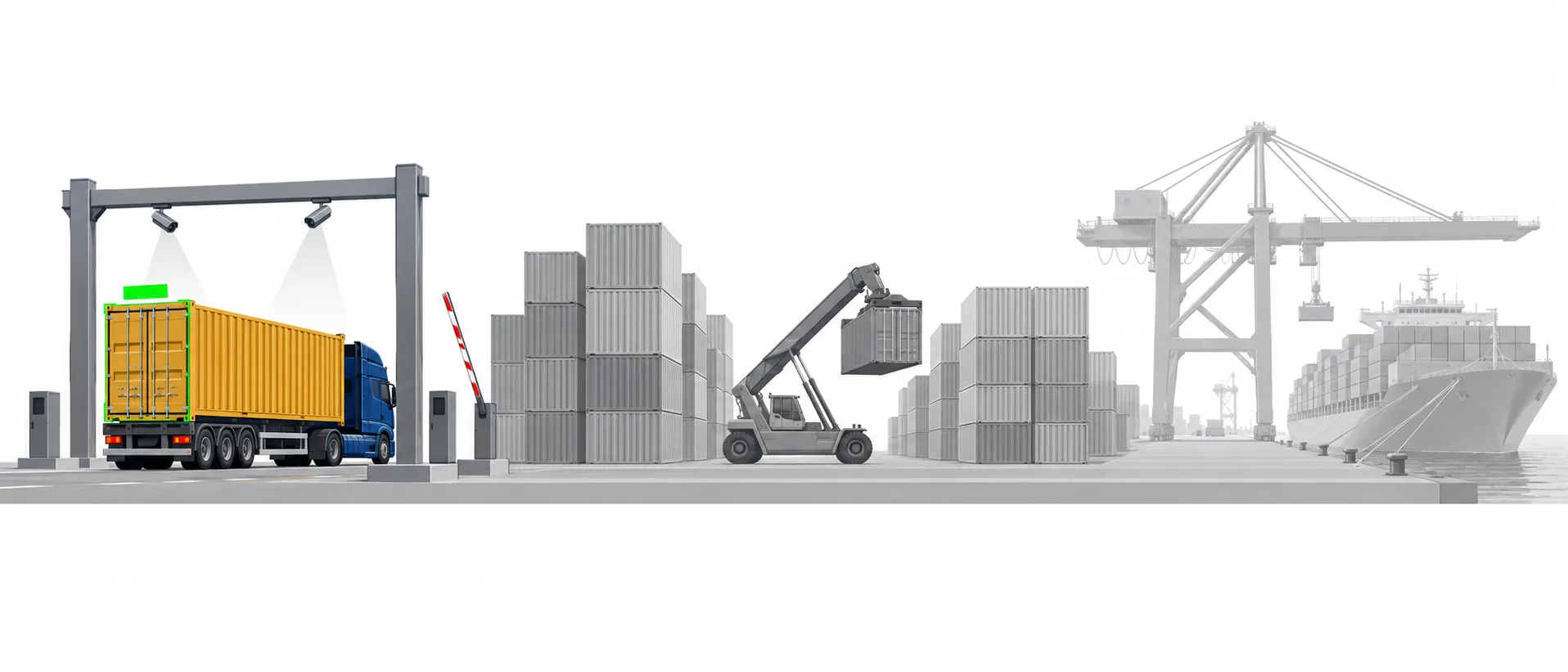
A terminal is judged on how fast a truck gets through the gate and how reliably the yard knows where a box is standing. Both depend on the same thing: whether the container was identified correctly the first time. Everything downstream, the stock report, the interchange record, the damage claim, the billing, is built on that one read.
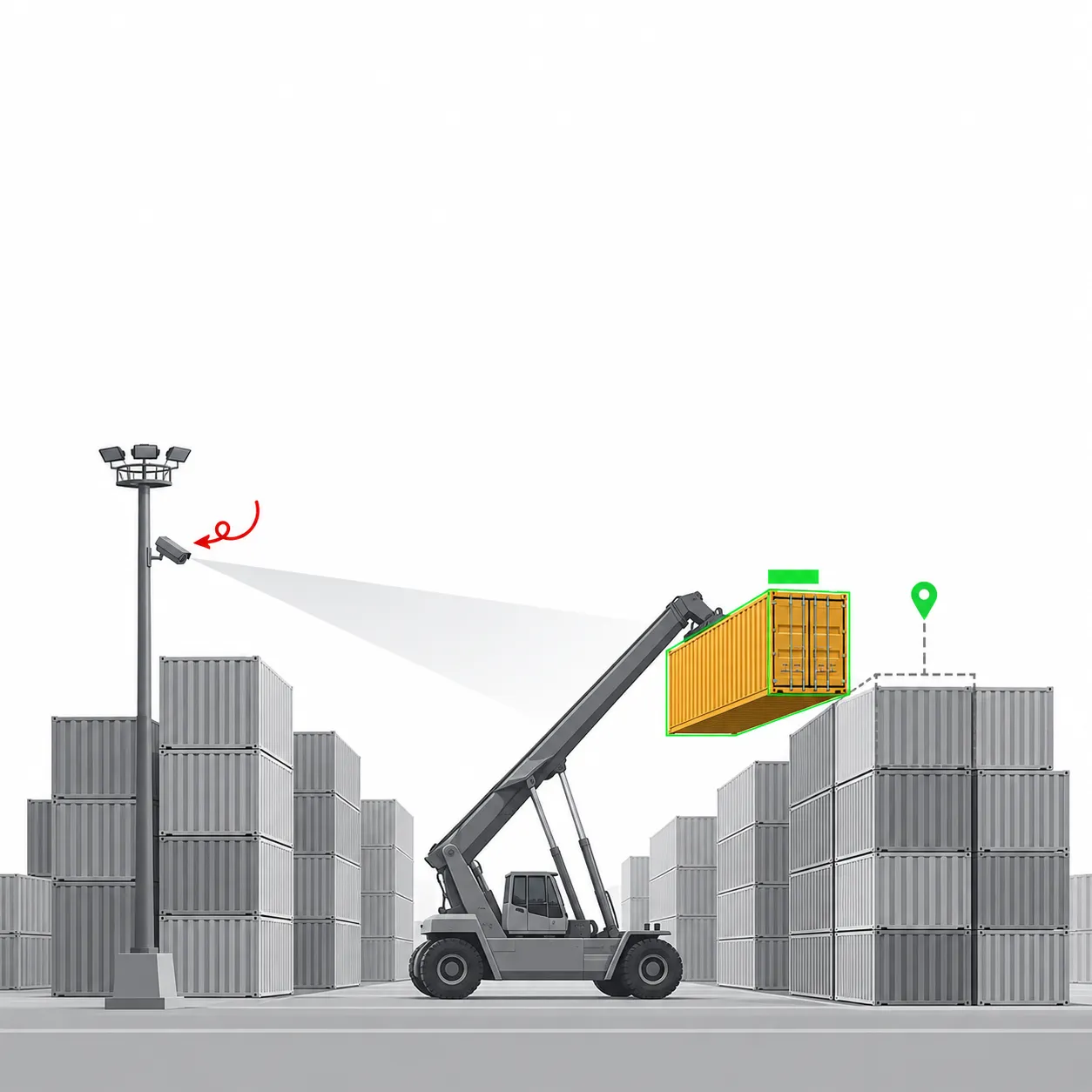
Reads the container number and its check digit off a moving box, in rain, glare and floodlight, and validates it before the record is written.
Captures the plate in the same pass as the container, ties them into one record, and controls the barrier on the result rather than on a clerk’s judgement.
Records where every container actually stands, so a release order is answered from the map rather than by walking the rows.
Captures panel condition with the frame that evidences it, at the moment custody changes, so the interchange record carries its own proof.
Reads set point, return air and alarm codes off the reefer’s own display, with no device fitted to the container.
Links every speed event to the correct vehicle and the frame that proves it, so enforcement is a record rather than an argument.
Watches PPE use and restricted zones across the terminal and raises the exception while a supervisor can still act on it.

The people who own gate turnaround and yard productivity, and who are asked why a box cannot be found.

The people who have to make a new system speak to the one they already run, on hardware they can see.

The people who need an incident to have evidence attached to it, not a witness statement.
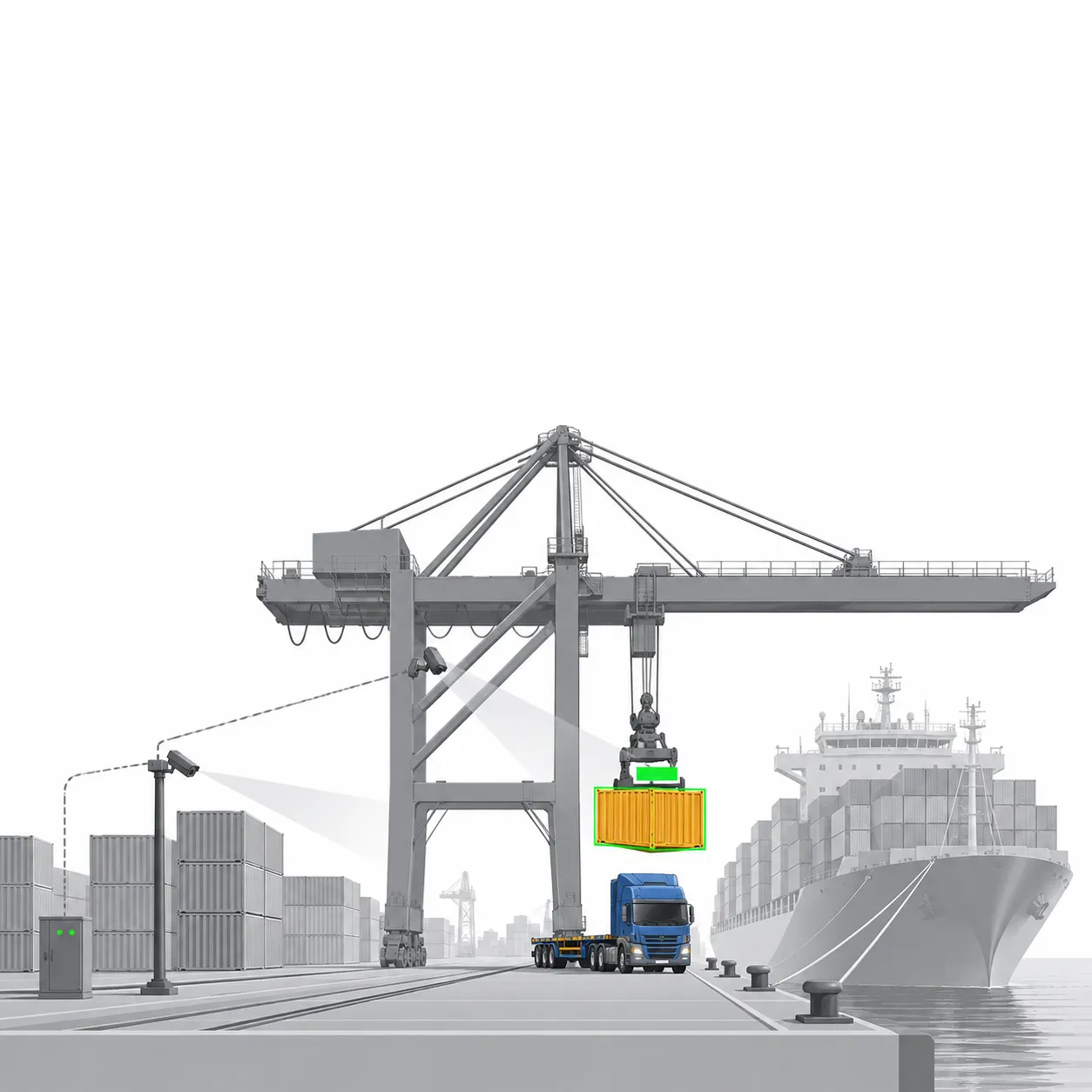

Gate, yard, quay and reefer rack on one platform, not four vendors and four contracts.

Edge inference on on-site hardware, with no cloud dependency and no footage leaving the terminal.

Every record carries the frame it was read from, so disputes are settled rather than negotiated.

Rain, glare, floodlight, night operation and weathered or damaged panels.

Records reach your TOS, ERP or gate system in the form they expect.

An OpEx model with no capital outlay on cameras or edge units.
Accuracy depends on lane geometry, lighting and panel condition, which is why it is measured at your site rather than quoted from a brochure. A proof of concept on one lane establishes the number for your conditions, day and night.
Usually not. The system is designed to work with the cameras a terminal already has where their placement and resolution allow it, and to add only what is genuinely missing.
No. A terminal with a TOS gets records written into it. A site without one gets the record and the position map from Gotilo directly, which is often the whole reason for deploying.
Nowhere. Inference runs on edge hardware on your site. Nothing depends on a cloud connection and nothing leaves the terminal unless you choose to send it.
Two to four weeks from the first camera to a working proof of concept on one lane, and six to ten weeks for a full deployment, depending on scope and site access.
Stay updated with the trending and most impactful tech insights. Check out the expert analyses, real-world applications, and forward-thinking ideas that shape the future of AI Computer Vision and innovation.