





















Certified information security and AI. Your Data secured and Private to you.
Talk with us
Verify Every Layer. Validate Every Connection. Stack with Confidence.
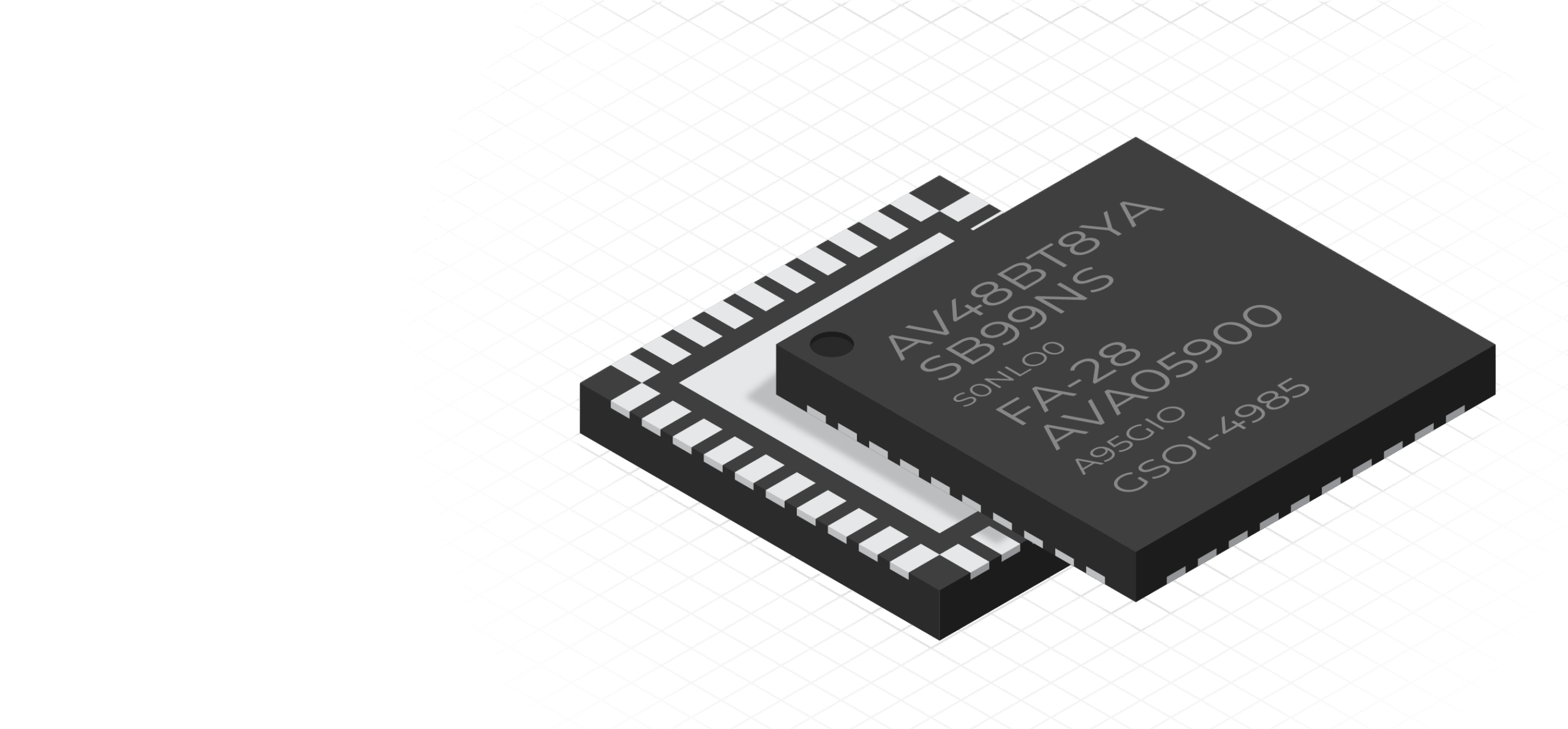
Package-on-Package (PoP) is central to high-density mobile and consumer electronics, allowing multiple dies to be vertically integrated. But even the slightest vertical misalignment, offset solder balls, or warpage can lead to latent electrical failures that are hard to catch during final testing.
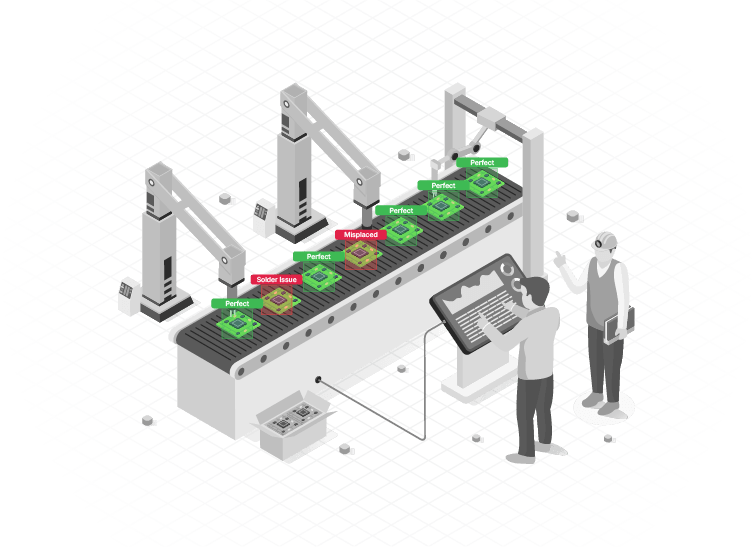
AI-powered PoP Assembly Validation uses advanced computer vision systems to inspect stacked die alignment, verify solder ball contact, and confirm Z-axis symmetry before the final reflow step. These inspections ensure mechanical integrity, electrical continuity, and proper height uniformity across units.

Even a slight X-Y or rotational offset between the top and bottom packages can compromise interconnects.

Incomplete, tilted, or shifted ball contacts often go undetected until after reflow or in final test.

Mechanical stress during stacking can deform the top die, leading to contact failure or packaging instability.

Manual or 2D inspection can’t detect vertical skew or stack height irregularities, which are critical in PoP.

Captures vertical alignment, height, and planarity using stereo or laser triangulation imaging.

AI verifies the concentricity and location of each solder ball against landing pads across layers.

Detects bowing, tilt, or sagging in the top die pre-reflow, reducing latent defect risks.

Assigns assembly units into pass/fail/rework bins based on deviation from set tolerances.
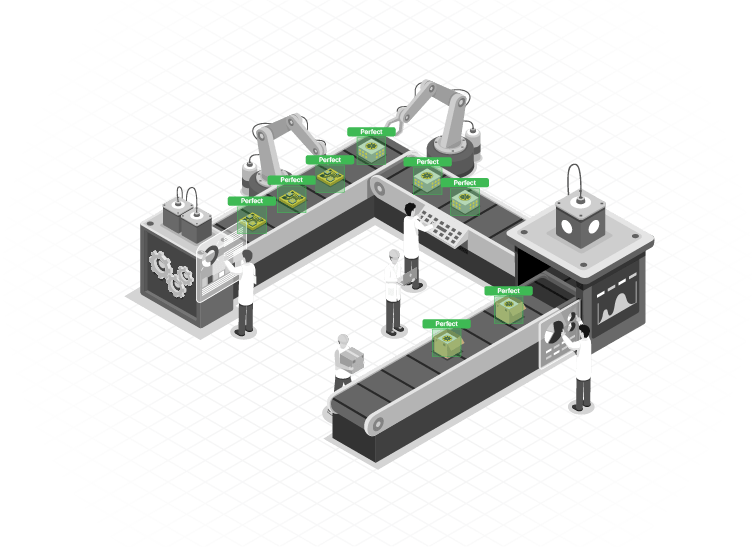
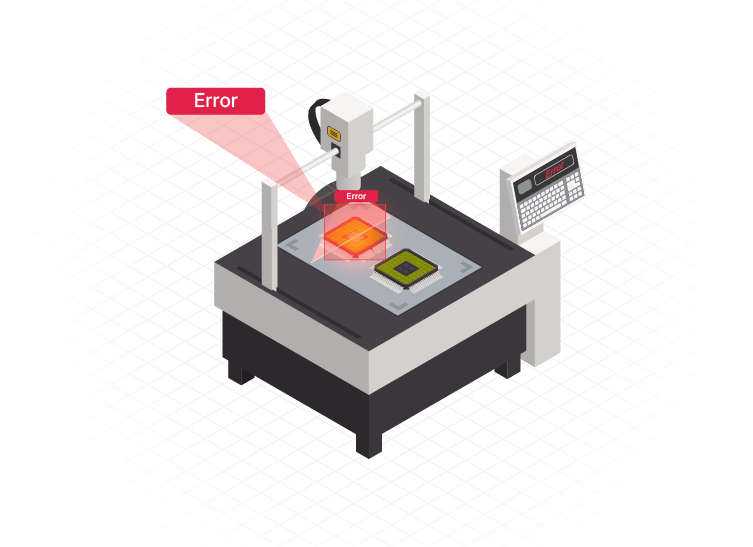

We begin by identifying the optimal point for PoP validation, usually after top package placement but before reflow. Fixture mapping includes robotic arm paths and hold time.

Combining top-down visual inspection with structured light or laser triangulation systems, we capture full X-Y-Z data of the stacked unit in motion.

Training includes past examples of vertical tilt, side-shift, solder ball misalignment, and package deformation, enabling the model to distinguish between acceptable and critical faults.

Each inspected unit is tagged with height maps and alignment metrics. Results are pushed into the MES for traceability, and robotic sorters are triggered to route the unit based on tolerance bins (pass/rework/fail).
Stay updated with the trending and most impactful tech insights. Check out the expert analyses, real-world applications, and forward-thinking ideas that shape the future of AI Computer Vision and innovation.
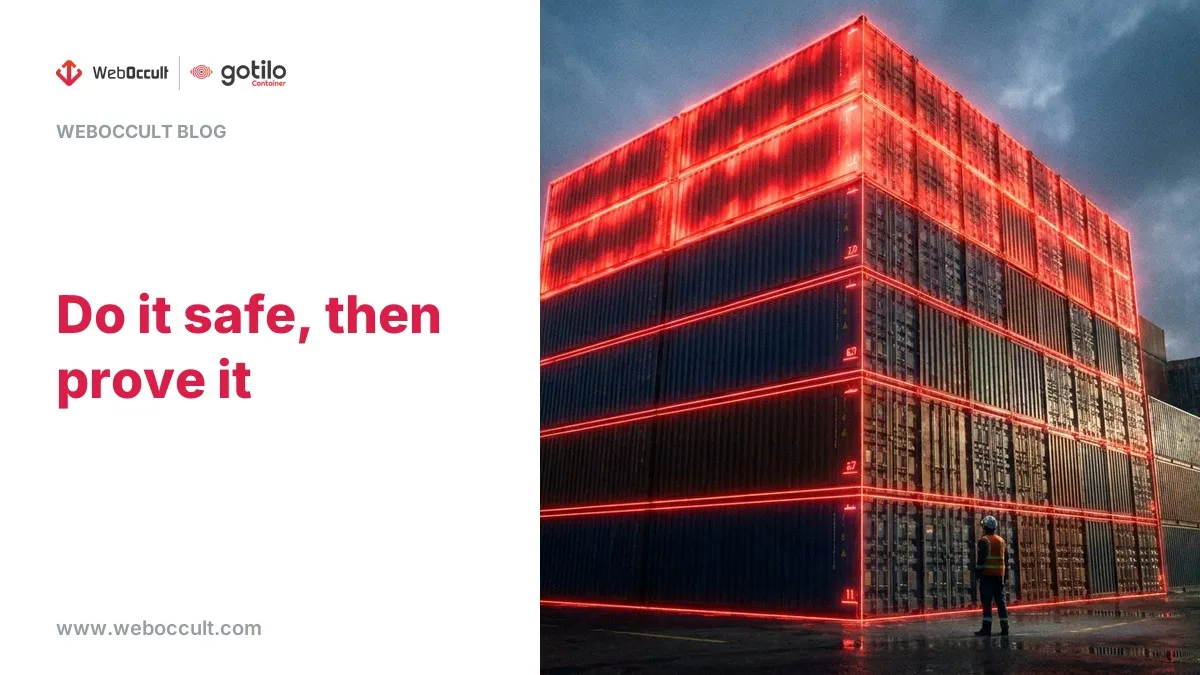
Three months after the incident, the assessor sits across from Meera, the operations manager, and slides a form over the desk. She is ready for questions about helmets, about whether the supervisor was present, about protocol. He asks none of them. He asks one thing instead: show me the footage. Meera’s yard runs safety well. […]

CEO & Co-founder
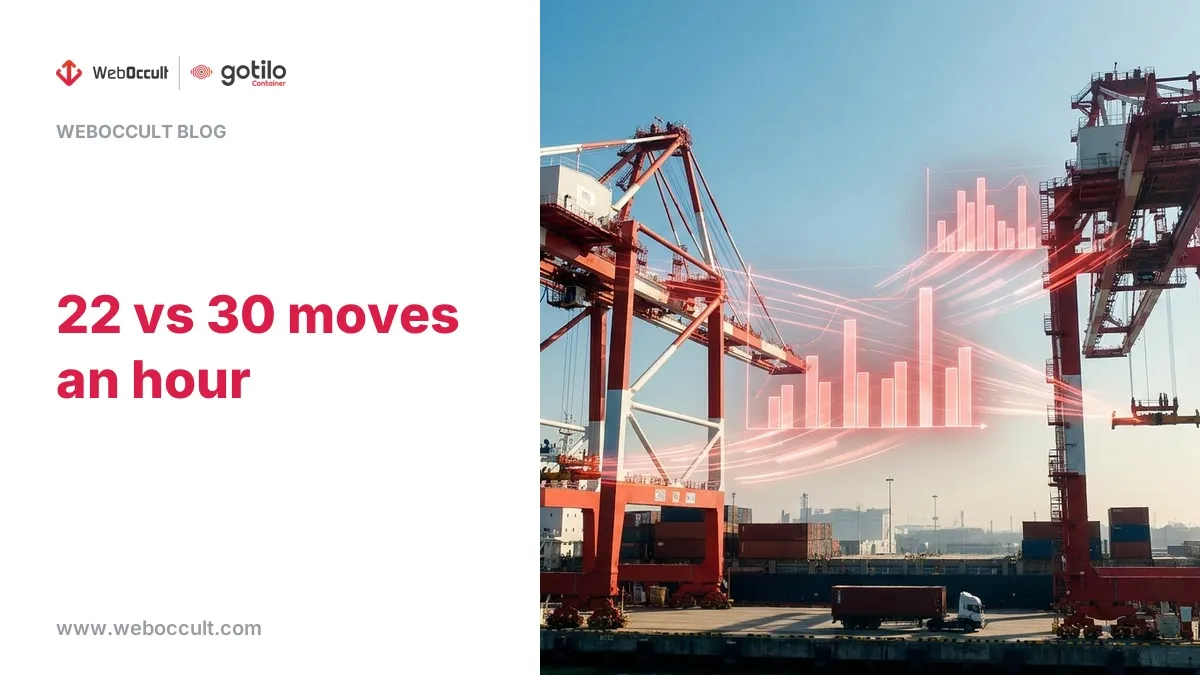
Deepak runs operations at a mid-size terminal, and one number has bothered him for a month. Two ship-to-shore cranes, side by side. Same model, same year, same maintenance schedule. Crews rotate between them every shift. One averages 22 moves an hour. The other averages 30. He sends a maintenance team over the slow one. They […]
CEO & Co-founder
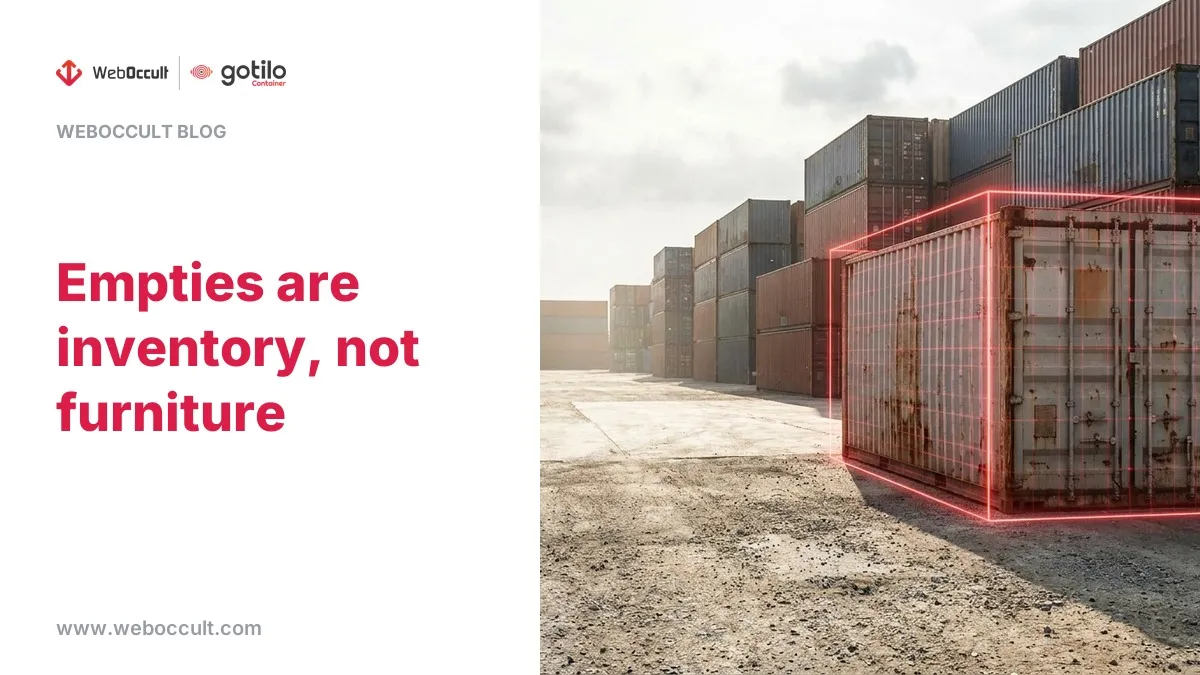
Pravin has run the empty depot for nine years, and he will tell you he knows every box in it. Then he walks you to the far corner, points at a container furred with dust, a small spider web in the corner casting, and goes quiet. It came in months ago. Nobody remembers the booking. […]
CEO & Co-founder
