





















Certified information security and AI. Your Data secured and Private to you.
Talk with us

CEO & Co-founder
How to Speed Up Yard Operations
In any container yard, time behaves like currency. Every minute a truck waits at the gate, every container that sits idle without clear movement, quietly adds to operational cost. Yet, many yards continue to function with fragmented visibility, delayed coordination, and reactive decision-making. The result is predictable: longer turnaround times, strained resources, and dissatisfied clients.
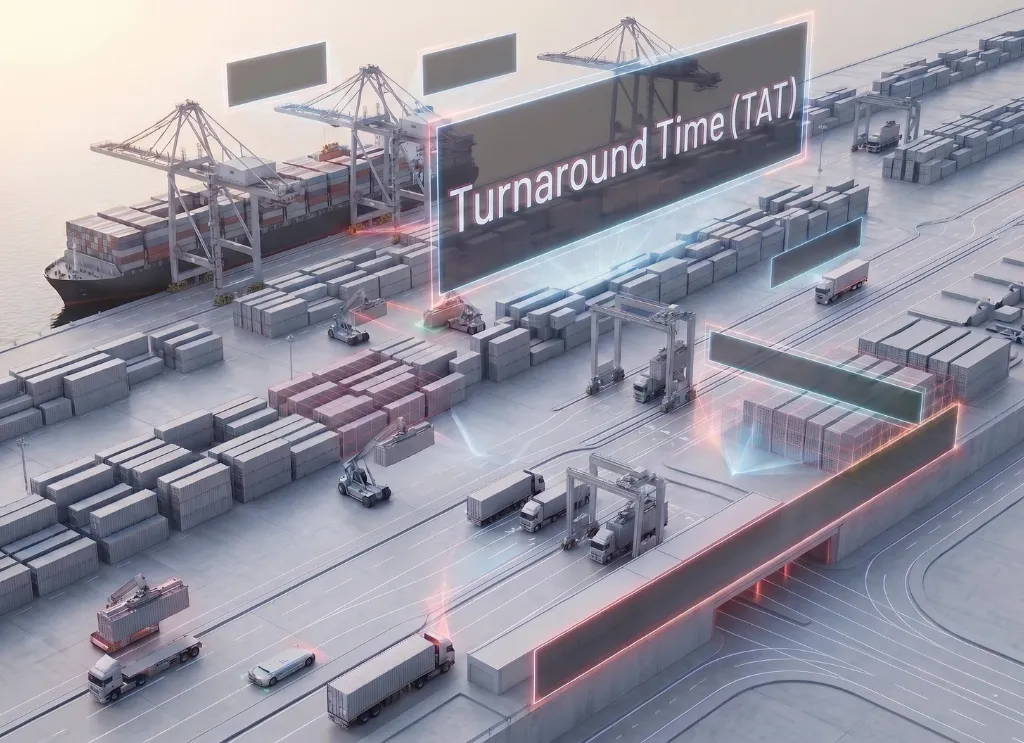
Turnaround Time (TAT), whether for vehicles or containers, sits at the center of yard performance. It is a direct indicator of how efficiently a yard operates, how well processes are aligned, and how effectively data is being used. Improving TAT is not about pushing teams to work faster; it is about removing friction from the system.
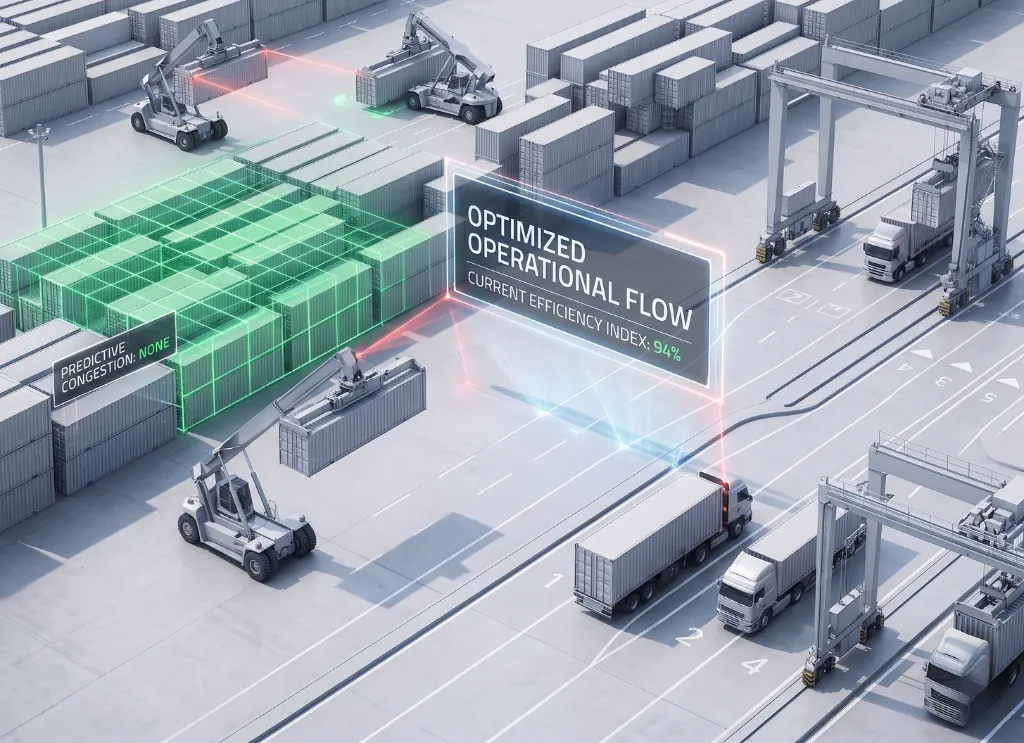
Slow yard movement rarely appears as a single obvious issue. It builds quietly through small inefficiencies, manual gate entries, unclear container locations, miscommunication between teams, and lack of scheduling discipline.
When a truck enters the yard and spends excess time waiting for instructions or container allocation, the delay doesn’t stay confined to that single transaction. It creates a ripple effect. Queues begin to form at entry points, yard cranes get overloaded with unplanned moves, and outbound schedules begin to slip.
Over time, these inefficiencies begin to show up in measurable ways. Fuel costs rise due to idle vehicles. Labour productivity declines as workers spend more time searching or waiting than executing. Equipment usage becomes uneven, with some assets overutilized while others remain underused.
Most importantly, client trust takes a hit. Logistics is a time-sensitive industry. When promised timelines are not met, clients begin to question reliability. In competitive environments, this often leads to a gradual loss of business.
Sluggish operations are rarely caused by a lack of effort. They stem from a lack of clarity, coordination, and real-time insight.
You cannot improve what you cannot see. This principle holds especially true in container yard operations.
Every container entering the yard carries a lifecycle. From gate-in to stacking, from repositioning to gate-out, each movement contributes to its total turnaround time. Without a structured way to capture this journey, operations rely heavily on assumptions.
Logging container movement history provides more than just a record; it creates visibility. It allows operators to trace where time is being spent, identify repetitive delays, and understand patterns that would otherwise go unnoticed.
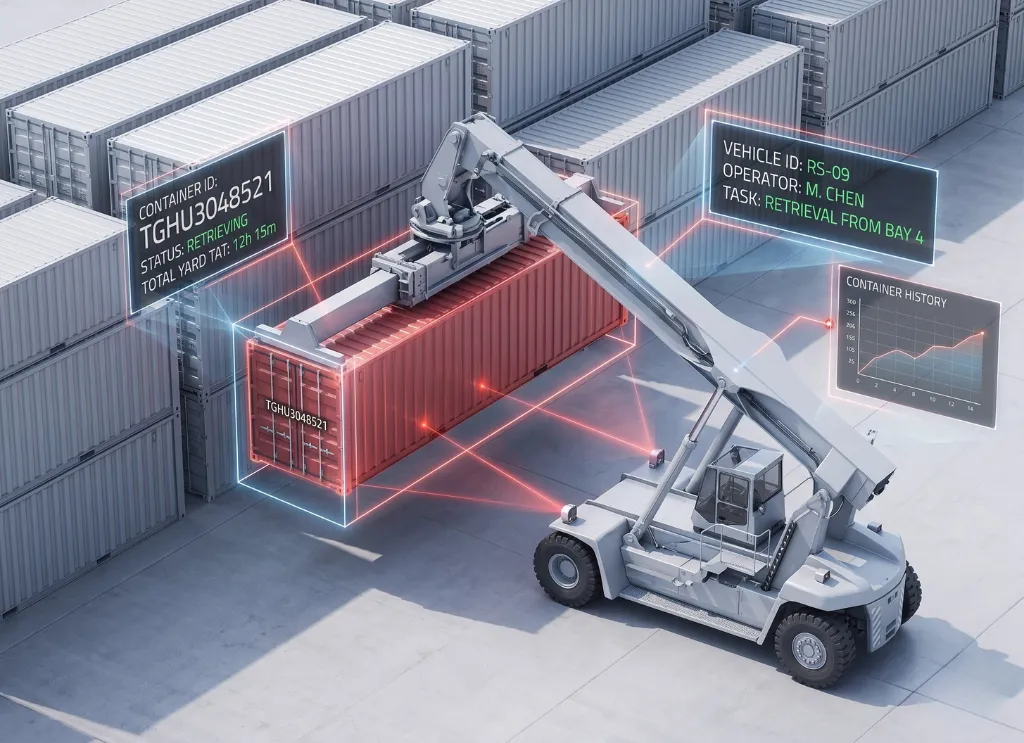
For example, if certain containers consistently take longer to move from stacking zones to dispatch areas, the issue may lie in yard layout or equipment allocation. If trucks frequently wait at gates during specific hours, it could point toward scheduling bottlenecks.
Vehicle tracking is equally critical. Knowing when a vehicle enters, how long it waits, when it is assigned a task, and when it exits provides a complete picture of vehicle turnaround time.
This level of tracking shifts operations from reactive to informed. Instead of responding to complaints or delays after they occur, teams can proactively identify and resolve inefficiencies.
A common mistake in yard optimization is focusing on a single metric. While overall efficiency may improve slightly, blind spots remain. This is where dual metrics, Vehicle TAT and Container TAT, become essential.
Vehicle TAT measures the time taken for a truck to complete its entire cycle within the yard. This includes entry, waiting time, loading or unloading, and exit. High Vehicle TAT usually signals issues in gate management, task allocation, or coordination between teams.
Container TAT, on the other hand, tracks how long a container stays within the yard from arrival to departure. It reflects storage efficiency, planning accuracy, and movement coordination.
By measuring both metrics simultaneously, operators gain a more balanced understanding of yard performance.
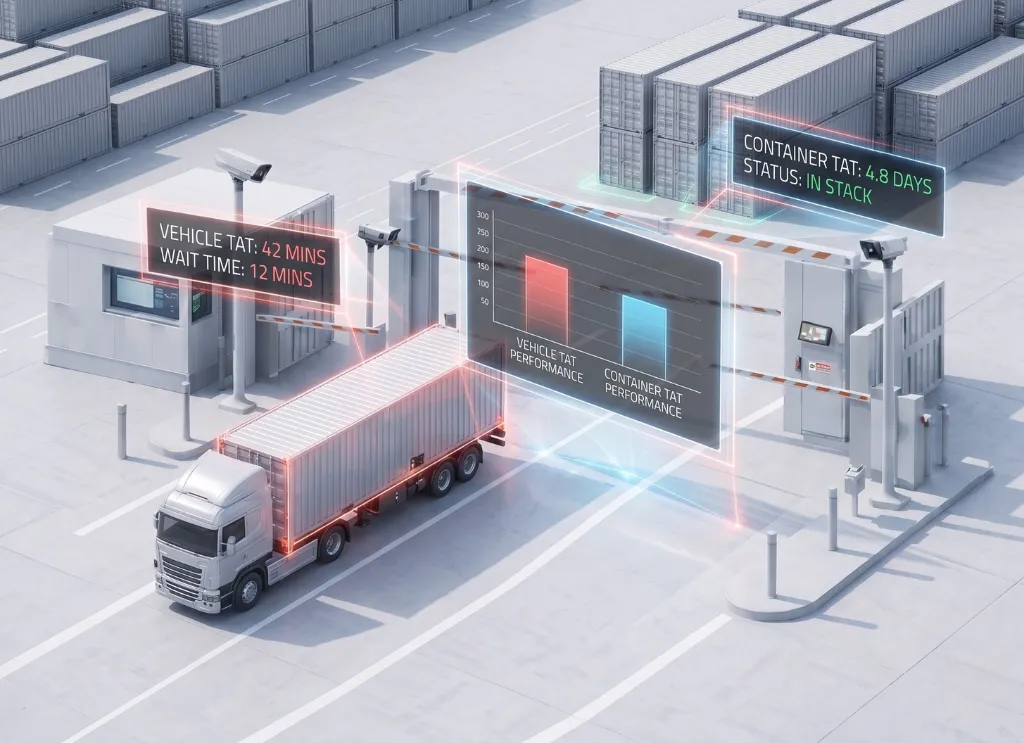
For instance, a yard may show improved Vehicle TAT due to faster gate processing, but if Container TAT remains high, it indicates that containers are still sitting idle within the yard. Similarly, low Container TAT with high Vehicle TAT could point toward inefficiencies in vehicle handling rather than storage.
Systems that actively track and analyze both metrics provide actionable insights. They highlight where delays originate and where intervention is needed. This enables targeted improvements rather than broad, unfocused changes.
Efficiency in yard operations is not achieved through speed alone. It is achieved through clarity.
When operators have a 360-degree view of yard activities, decision-making becomes faster and more accurate. Real-time visibility into container locations, equipment availability, and vehicle status removes uncertainty from the process.
With complete visibility, yard managers can allocate resources more effectively. Cranes can be directed to areas with higher demand. Vehicles can be routed based on real-time conditions rather than static plans. Congestion can be anticipated and avoided before it builds up.
This level of coordination directly reduces waiting time. Trucks spend less time idle, containers move through the yard more predictably, and overall flow improves.
Visibility also improves accountability. When every movement is logged and measurable, teams become more aligned with operational goals. Performance can be tracked, benchmarks can be set, and continuous improvement becomes part of daily operations.
In the long run, yards that invest in visibility are better positioned to scale. As volumes increase, structured systems ensure that efficiency does not decline under pressure.
Improving Turnaround Time is not a one-time fix. It is an ongoing process of observation, analysis, and refinement. It requires the right systems, clear metrics, and a commitment to operational discipline.
The difference between an average yard and a high-performing one often comes down to how well time is managed. Every minute saved is a gain in efficiency, cost, and client satisfaction.
Don’t let slow, unplanned yard movements cost you clients. Start optimizing your Vehicle and Container TAT with the Gotilo Container solution.
Ready to transform your container yard operations?