




















Certified information security and AI. Your Data secured and Private to you.
Talk with us
Stop at the Right Moment. Control Every Nanometer.
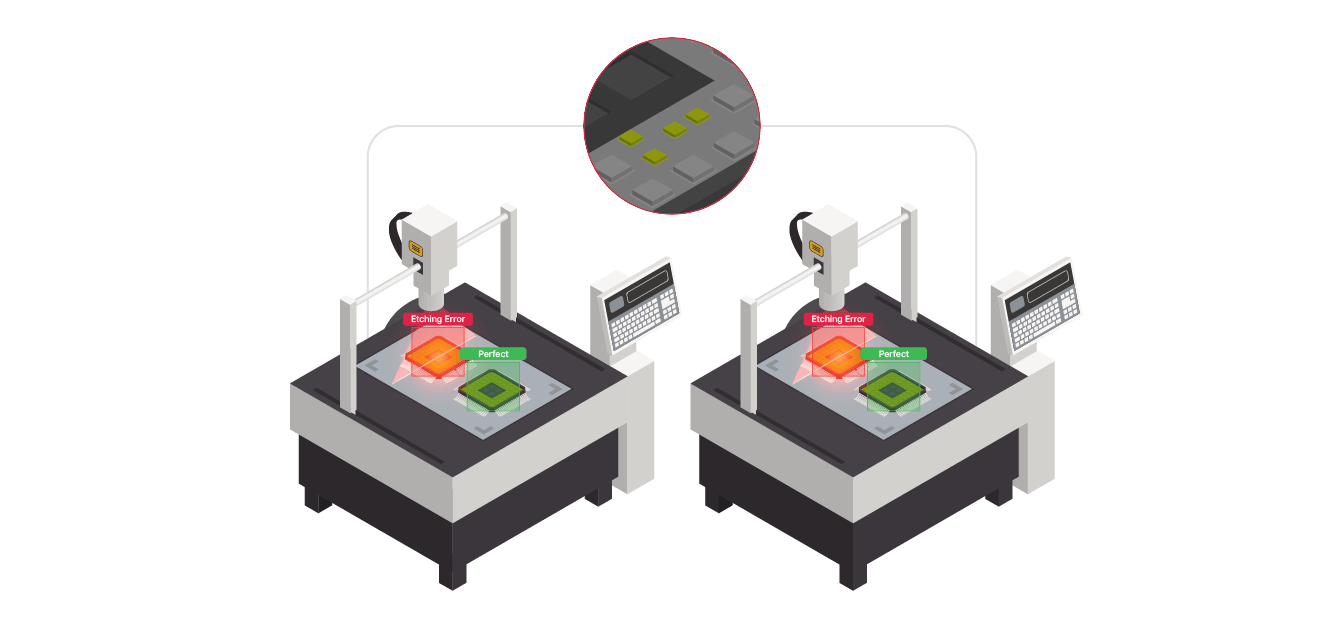
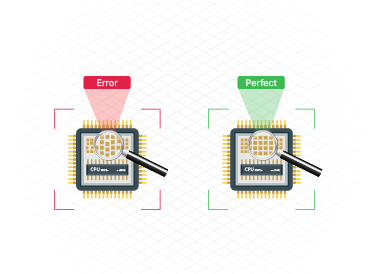
In plasma etching, precision is everything. Etching for too long or stopping too early can compromise critical dimensions, reduce layer selectivity, and ruin yield. Traditional endpoint detection methods, like time-based controls or optical emission spectroscopy (OES), are often reactive, not predictive. AI-powered Plasma Etching Endpoint Detection leverages real-time camera feeds to visually monitor plasma characteristics. By analyzing glow patterns, intensity shifts, and arc behavior using machine learning, it predicts when to stop the etch, improving accuracy and protecting underlying layers.

Static timers don’t account for batch variation, chamber condition, or etch rate drift.

Emission-based or pressure-based systems often detect endpoint after it’s already passed.

Subtle anomalies in plasma arcs or intensity gradients can signal defects, if you can see them.

Operators lack real-time visual understanding of chamber dynamics during critical steps.

Tracks changes in plasma color, intensity, and pattern using high-contrast vision feeds.

Learns typical endpoint behavior across recipes and alerts for deviation or completion.

Adapts to different gases, pressures, and materials (e.g., Si, GaN, III-V) with retrainable models.

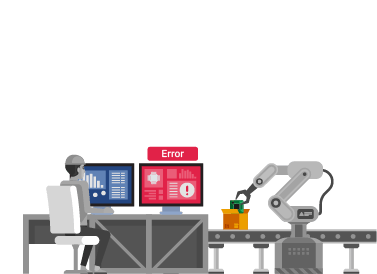
Triggers system alerts and interacts with tool PLC to suggest or automate etch stop action.
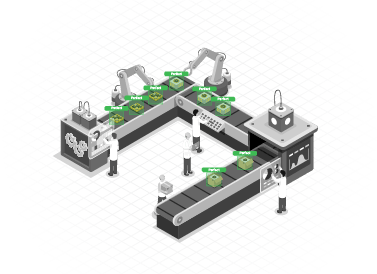

We collaborate with your tool vendor or internal automation team to identify optimal camera mount points within or outside the plasma chamber viewport, ensuring thermal safety and visibility.

Each etch recipe is captured and analyzed to build a baseline library of endpoint glow patterns, pressure shifts, and color transitions under different gases and process parameters.

The model is trained on known endpoint glow profiles across Si, SiN, SiO₂, and other layers, helping detect subtle shifts that indicate true endpoint vs. noise.

Once the AI model predicts an endpoint, it sends real-time flags to the tool controller, triggering a suggestive or automatic stop action. All endpoint data is logged for traceability and process audits.
Stay updated with the trending and most impactful tech insights. Check out the expert analyses, real-world applications, and forward-thinking ideas that shape the future of AI Computer Vision and innovation.
Three months after the incident, the assessor sits across from Meera, the operations manager, and slides a form over the desk. She is ready for questions about helmets, about whether the supervisor was present, about protocol. He asks none of them. He asks one thing instead: show me the footage. Meera’s yard runs safety well. […]

CEO & Co-founder
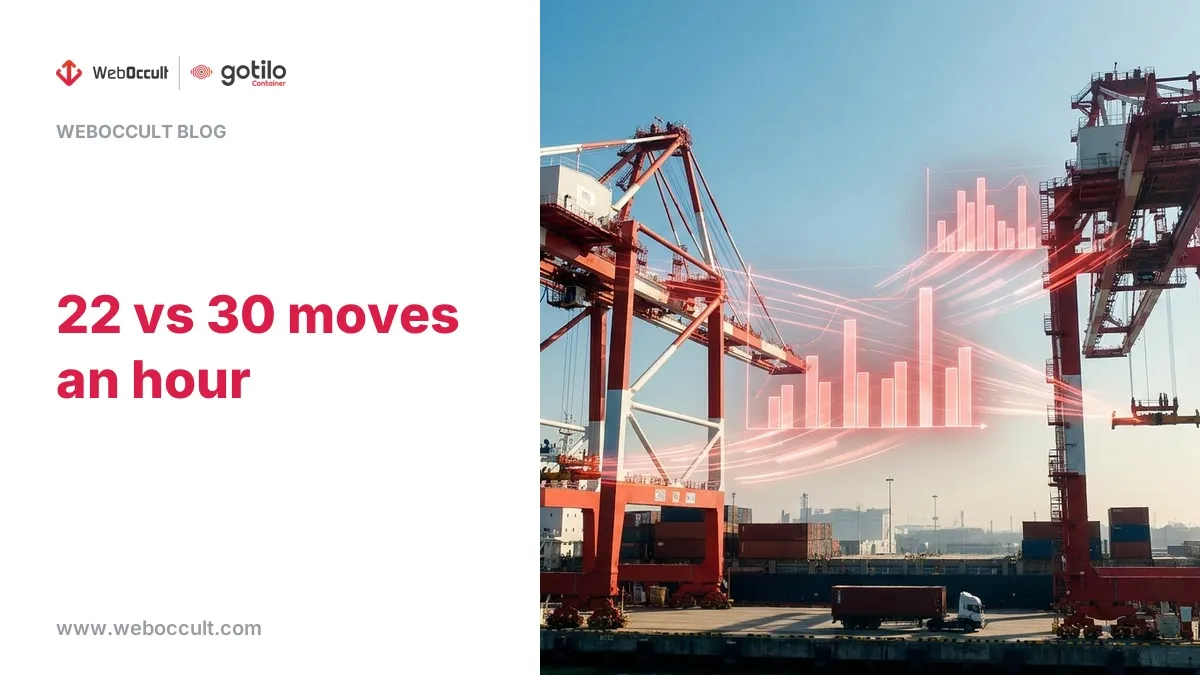
Deepak runs operations at a mid-size terminal, and one number has bothered him for a month. Two ship-to-shore cranes, side by side. Same model, same year, same maintenance schedule. Crews rotate between them every shift. One averages 22 moves an hour. The other averages 30. He sends a maintenance team over the slow one. They […]
CEO & Co-founder
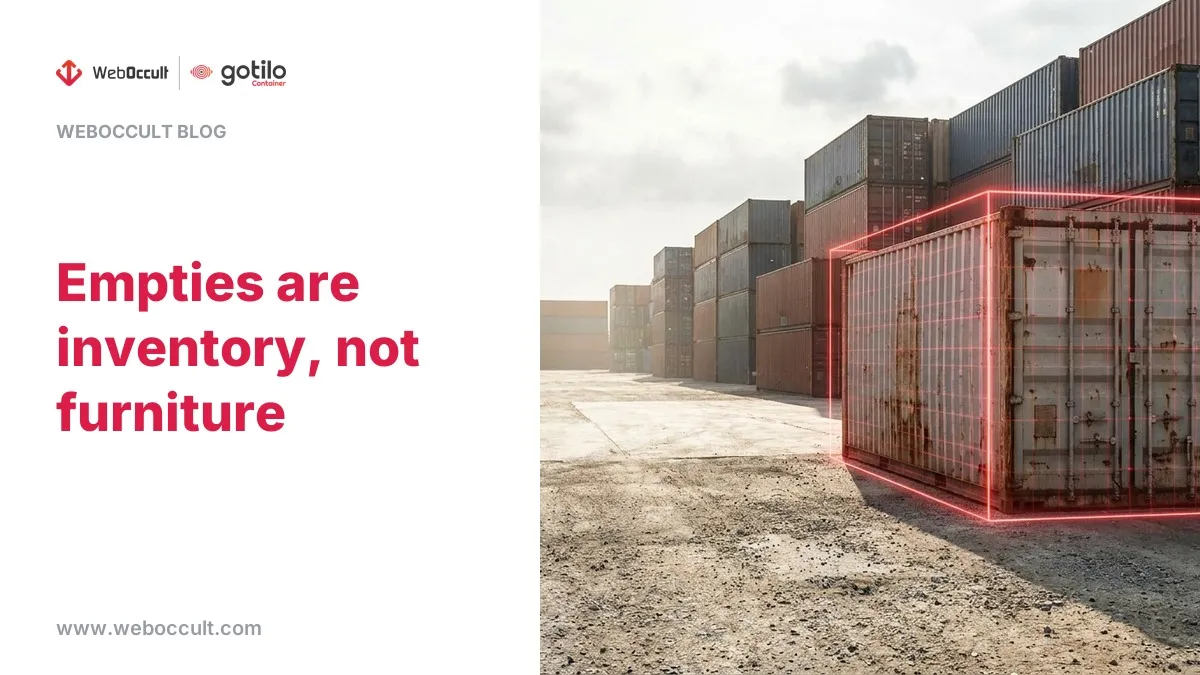
Pravin has run the empty depot for nine years, and he will tell you he knows every box in it. Then he walks you to the far corner, points at a container furred with dust, a small spider web in the corner casting, and goes quiet. It came in months ago. Nobody remembers the booking. […]
CEO & Co-founder
